

June 16, 2026 – Elon Musk’s rocket-and-satellite giant just delivered the largest stock market debut in history.
In Summary
SpaceX raised about $75 billion, the biggest IPO ever recorded.
Shares priced at $135, then jumped 19% to close near $161.
The debut pushed the valuation above $2 trillion on the Nasdaq.
Starlink now drives roughly 61% of total SpaceX revenue.
Analysts remain split on whether this valuation can hold.
SpaceX has rewritten Wall Street history. On Friday, the company completed the largest initial public offering ever recorded. Moreover, the stock surged on its very first day of trading. Investors clearly wanted a piece of Elon Musk’s space empire. As a result, the debut reignited a long-quiet market for new listings.
A record-breaking debut
SpaceX raised roughly $75 billion through the offering. The company sold about 555 million shares at $135 each. Therefore, the deal easily topped Saudi Aramco’s 2019 record of $25.6 billion. In fact, no earlier listing comes anywhere close to this scale.
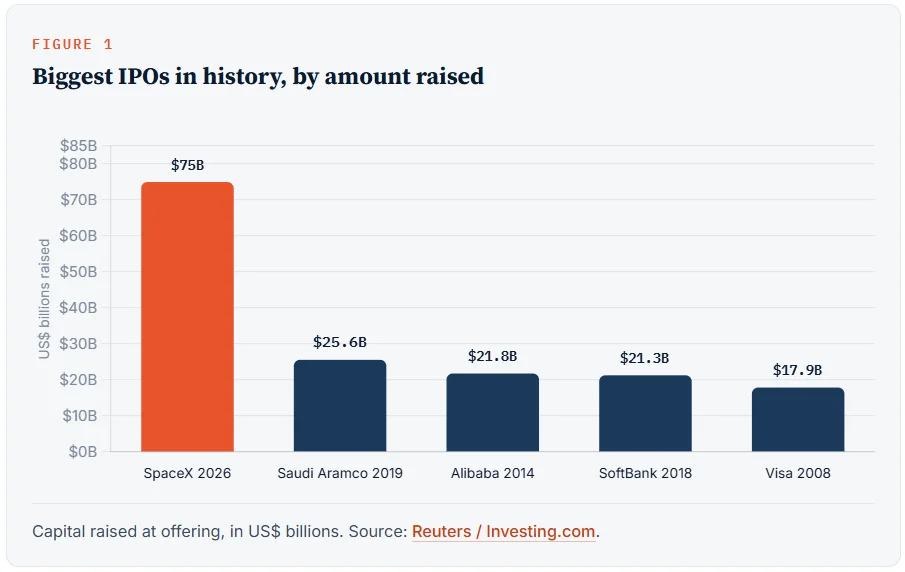
The numbers tell a striking story. SpaceX raised nearly three times as much as Aramco. Furthermore, it dwarfed past tech debuts such as Alibaba and Visa. Consequently, market watchers are calling it a generational event.
The offering also used an unusual structure for its size. SpaceX set a fixed share price before investor presentations. Most companies instead let banks build a price range first. This bold approach signaled deep confidence in demand. In the end, that confidence proved well placed.
Why the stock jumped
The first session delivered fireworks for early buyers. Shares opened strong and climbed 19% by the close. The price finished near $161, up from its $135 offer. Meanwhile, the company’s value pushed above $2 trillion. On Monday, the rally even continued before the bell. Shares added about 6% in premarket trading. Clearly, investor demand has not cooled yet.
The frenzy lifted the company market value sharply higher. Trading volume stayed heavy through the opening sessions. Roughly 16 million shares changed hands after Friday’s close. Such activity points to strong interest from retail buyers. Still, seasoned investors urge caution after this rapid run.
Starlink powers the numbers
Behind the hype sits a real and growing business. Starlink, the satellite internet arm, drives most revenue today. It generated $11.4 billion in 2025, up 48% from the prior year. In addition, it now accounts for roughly 61% of total sales. Rapid subscriber growth explains much of that momentum.
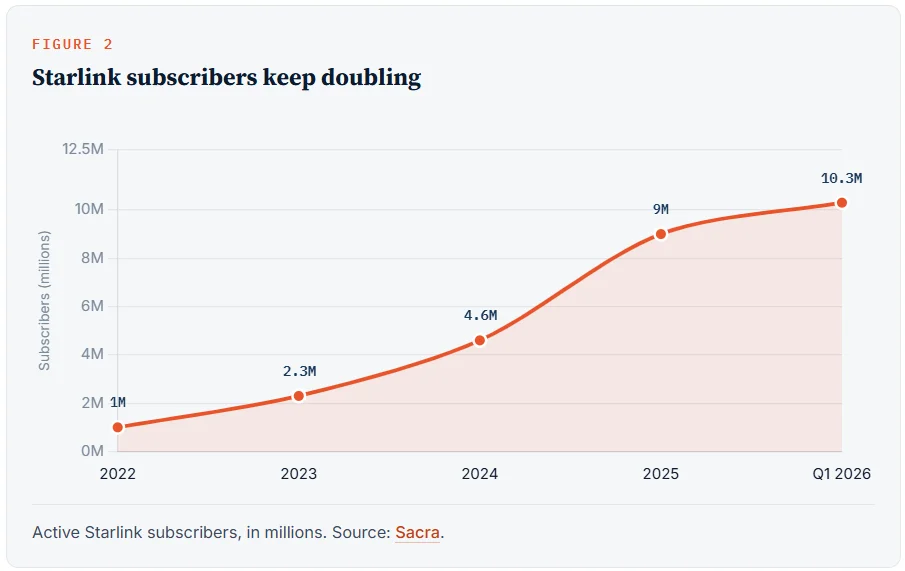
Starlink served just 1 million users in 2022. By early 2026, that figure reached 10.3 million. The customer base therefore doubled almost every year. As a result, recurring revenue continues to climb rapidly.
Geography also strengthens the growth story here. Starlink now reaches customers across more than 150 countries. New markets continue to open for the service each quarter. Demand spans homes, ships, planes, and remote work sites. Such breadth gives the revenue base real resilience.
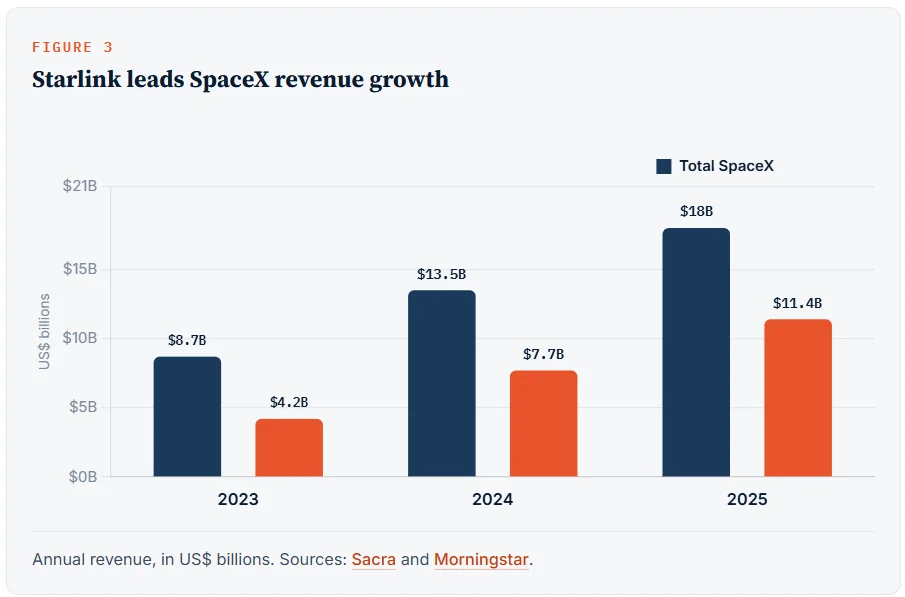
SpaceX disclosed $18 billion in total 2025 revenue. However, the company still posted a $4.9 billion net loss. Its February 2026 purchase of xAI added high new costs. That AI segment alone lost about $6.35 billion last year.
Starlink margins now resemble a software business, not hardware. Each new subscriber adds revenue at very low extra cost. The unit delivered about $4.4 billion in operating profit in 2025. That cash helps fund the rest of the company. Therefore, Starlink remains the clear engine behind SpaceX.
The valuation debate heats up
Not everyone shares the market excitement. Some analysts warn the price runs ahead of fundamentals. Morningstar values SpaceX at just $63 per share. That estimate sits far below the day-one close.
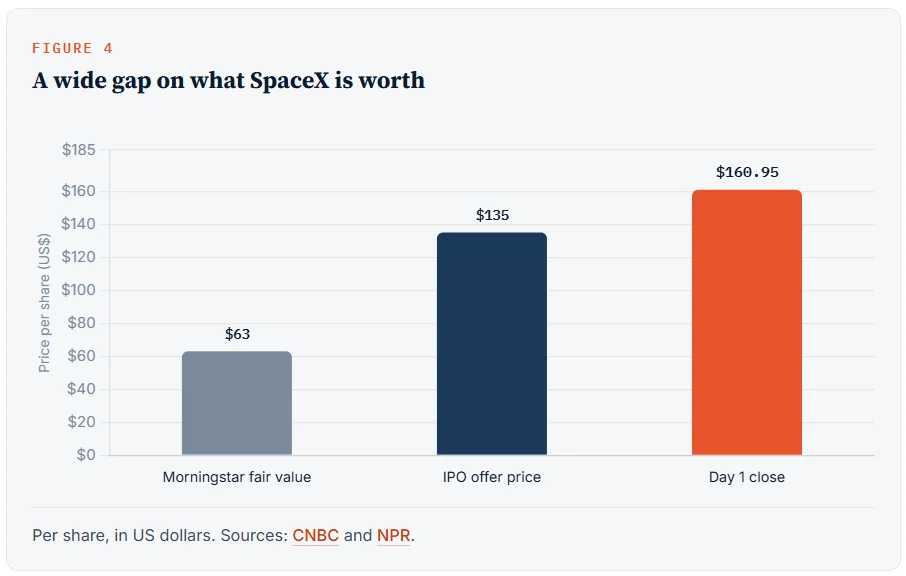
The chart shows a sharp disagreement over fair value. Bulls point to Starlink’s quick growth and fat margins. Bears question whether bold promises will turn into cash. Therefore, volatility could follow in the coming weeks. History also offers a clear warning. SoftBank’s mobile unit fell about 14.5% on debut. Facebook then traded below its offer price for a year.
The huge debut also sparked a sharp political reaction. Senator Elizabeth Warren renewed her call for a wealth tax. Critics linked the listing to wider worries about inequality. Supporters, by contrast, praised the milestone as a testament to American innovation. Either way, the offering has clearly touched a nerve.
What comes next for tech IPOs
SpaceX may have reopened the door to the public market. Analysts now expect other giants to follow this lead. OpenAI and Anthropic both sit high on that watch list. A strong debut signals fresh appetite for innovation. Consequently, more large private firms may soon file. The coming months should reveal whether the window stays open. For now, SpaceX stands alone at the very top.