

July 25, 2026 – Tesla and Alphabet posted record sales, yet both stocks sank. Wall Street has stopped rewarding growth and started billing Big Tech for its AI spending spree.

In Summary
The Magnificent 7 shed $767 billion in a single session, its worst day since April 2025.
Tesla sank over 13% after profit missed forecasts despite record revenue and deliveries.
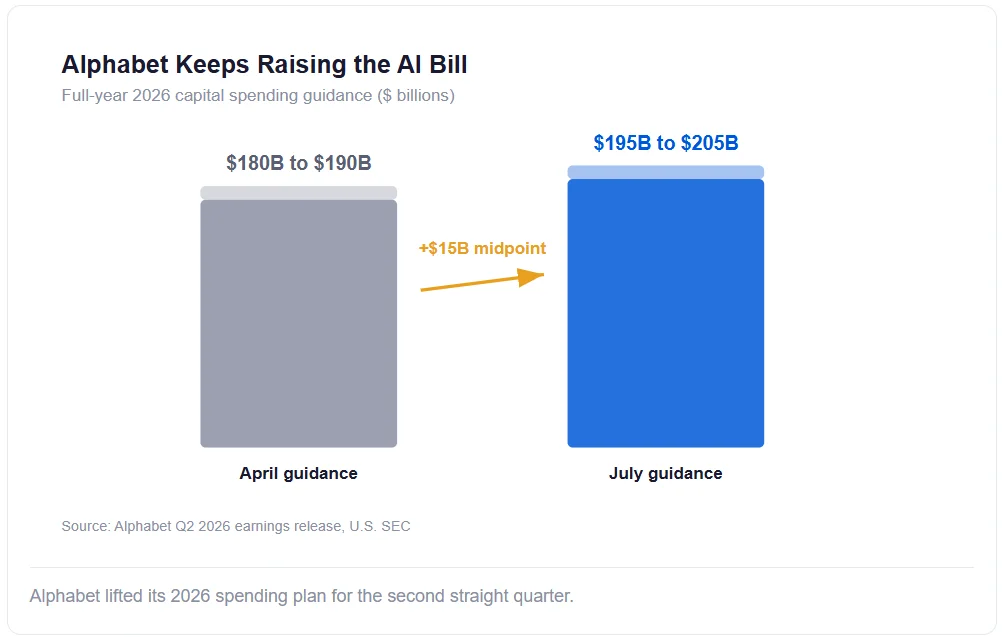
Alphabet fell almost 7% after raising its 2026 capital budget to as much as $205 billion.
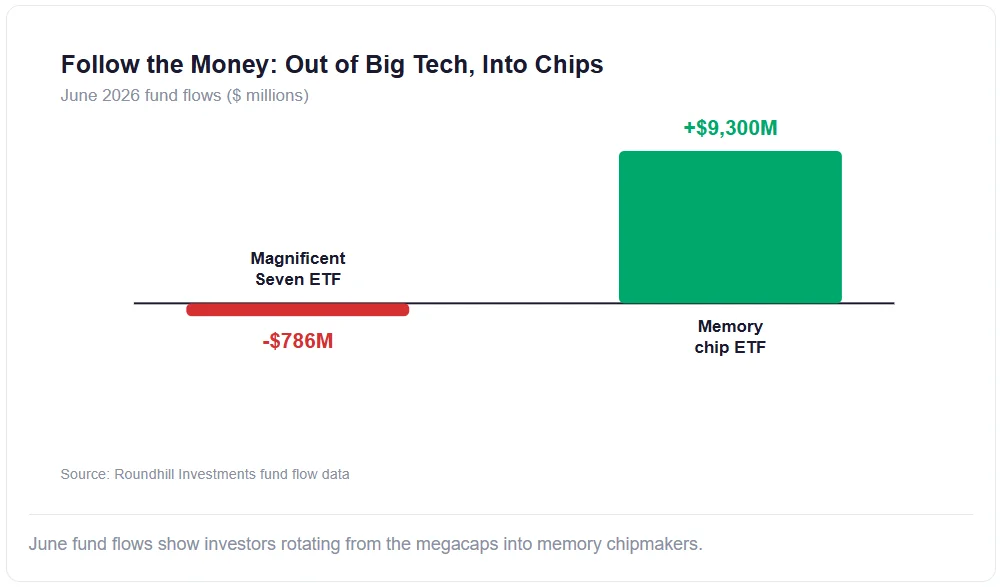
Investors keep rotating from the AI spenders toward chipmakers that collect those checks.
The Magnificent 7 selloff wiped $767 billion off the group in one session on Thursday. Investors punished Tesla and Alphabet after both firms reported results late Wednesday. Notably, the pain came despite record sales at both companies. The market no longer rewards growth alone. Instead, it now demands proof that huge AI spending can turn into cash.
Earnings Sparked the Rout
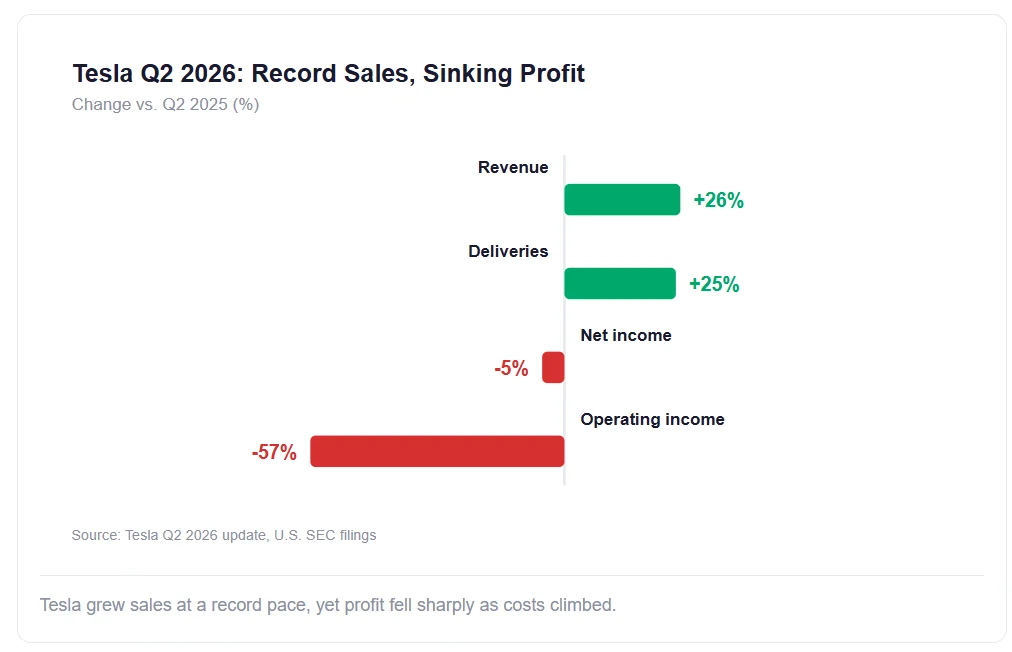
Tesla led the slide with a drop of more than 13%. The carmaker posted record revenue of $28.2 billion, up 26% from a year earlier. Moreover, it delivered a record 480,126 vehicles, far above forecasts near 397,000. Yet the profit line told a darker story. Adjusted earnings came in at 33 cents per share, well below the 51 cents analysts expected. Operating income sank 57% to $398 million. As a result, the operating margin collapsed to 1.4% from 4.1% a year ago.
The results were not all bad, since deliveries jumped 25% and energy storage grew fast. Investors, however, focused on the shrinking profit engine that funds every other bet.
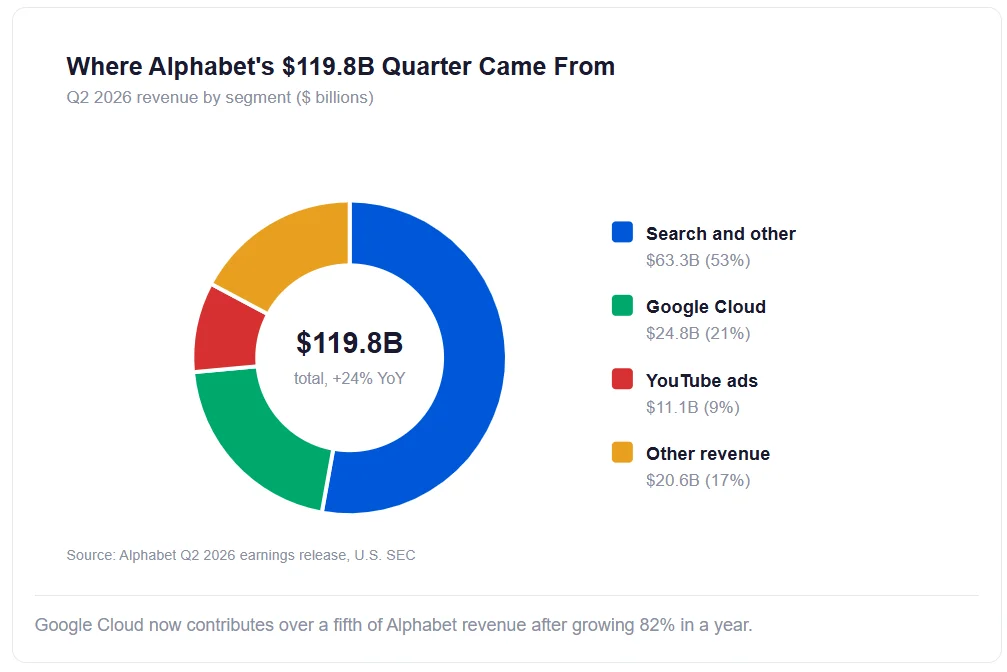
Alphabet fell almost 7% despite one of its best quarters in years. Revenue climbed 24% to $119.8 billion, its twelfth straight quarter of double-digit growth. Google Cloud stood out, as sales surged 82% to $24.8 billion. In addition, the cloud unit’s operating margin jumped to 35.6% from 20.7%. Still, none of that mattered once the spending plan landed.
Spending Overwhelmed Strong Sales
The Google parent raised its 2026 capital budget to between $195 billion and $205 billion. That range sits well above the prior forecast of up to $190 billion. Furthermore, management warned that outlays will rise again in 2027. Alphabet spent $44.9 billion on plants and gear in the quarter alone. Consequently, its free cash flow swung to negative $5.9 billion. Put simply, about 37 cents of every revenue dollar went straight into the AI buildout.
Tesla faces the same squeeze on a smaller scale. The firm burned $1.09 billion in free cash during the quarter. Meanwhile, its chief financial officer confirmed capital spending above $25 billion this year. Those funds flow to Optimus robots, the Cybercab ramp, and new AI data centres. Such bets may pay off later. For now, however, they drain cash just as auto margins shrink.
The pattern matters because both firms beat on revenue. Traders sold anyway, which marks a clear shift in mood. Earlier in the AI boom, bigger spending plans lifted these stocks. Today, the same headlines sink them.
A Rotation, Not a Retreat
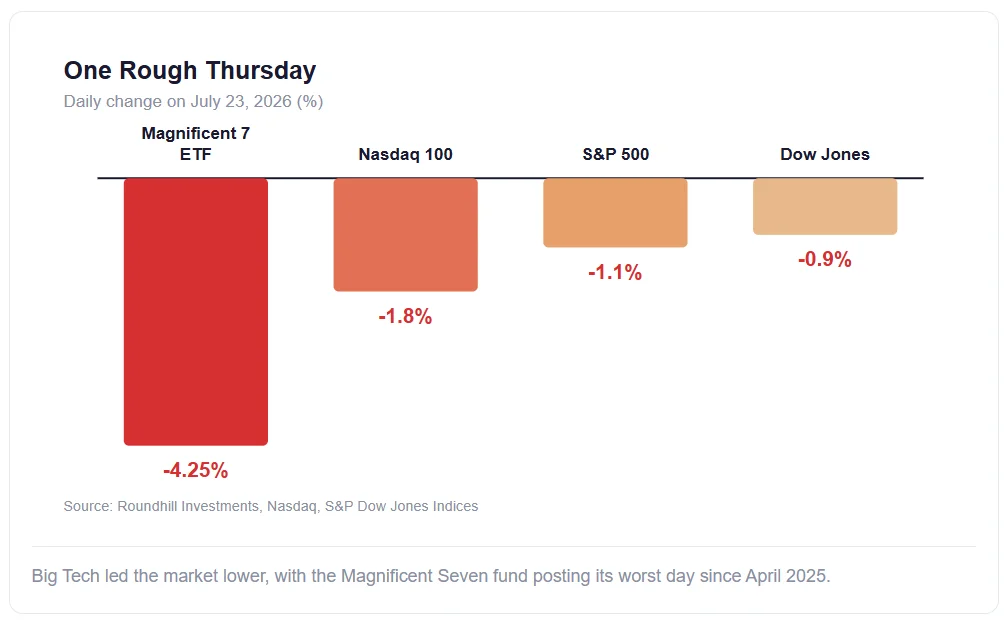
Thursday’s damage extended across the whole group. The Roundhill Magnificent Seven ETF slid 4.25%, its worst session since April 2025. Likewise, the Nasdaq 100 lost 1.8% while the S&P 500 slipped 1.1%. The one-day hit equals roughly a third of June’s record $2.3 trillion monthly wipeout.
Zoom out, and the longer trend looks even starker. The Nasdaq 100 has gained 16% in 2026, and the S&P 500 has risen 10%. In contrast, an index of the seven megacaps is up less than 2% this year. That gap would have seemed impossible a year ago, when the group drove nearly every rally. Money keeps moving toward the firms that collect the AI checks. For example, investors pulled a record $786 million from the Magnificent Seven ETF in June. At the same time, they poured $9.3 billion into a fund tracking memory chipmakers.
The funding side adds another wrinkle. Alphabet raised $49.6 billion through a stock sale in June, plus $20.3 billion in bonds. Cash-rich giants rarely tap markets like that. Therefore, the move shows how heavy the AI bill has become, even for them.
Cheaper valuations tell the same story. The group now trades near 24 times expected profits, down from 33 last October. Skeptics call that a healthy reset. Bulls, however, see a rare discount on the market’s strongest businesses.

What Comes Next
The next test arrives fast, since the rest of the group reports within days. Microsoft, Meta, Amazon, and Apple will each face the same question. Can they show revenue from AI rising faster than the cost of building it?
Alphabet offered a partial answer this week. Its cloud backlog swelled to $514 billion, a sign of deep enterprise demand. Additionally, its cloud margins tripled, suggesting early spending has started to pay off. Tesla could not offer similar proof, so its stock paid a steeper price.
History suggests these episodes cut both ways. Some strategists already frame the Magnificent 7 selloff as a buying window. After all, demand for AI computing still far outstrips supply, by Alphabet’s own account. Others see the start of a longer repricing for the biggest spenders.
Either way, the split now defines this market. Companies that turn AI checks into profit keep their premium. Meanwhile, companies that only write the checks trade under a cloud of doubt. Until the cash shows up, every capital budget hike will carry a price.




