

June 16, 2026 – New Fed Chair Kevin Warsh opens his term this week. He faces three-year-high inflation and a job market that refuses to cool.
In Summary
The FOMC meets June 16 to 17, in Warsh’s first decision as Chair.
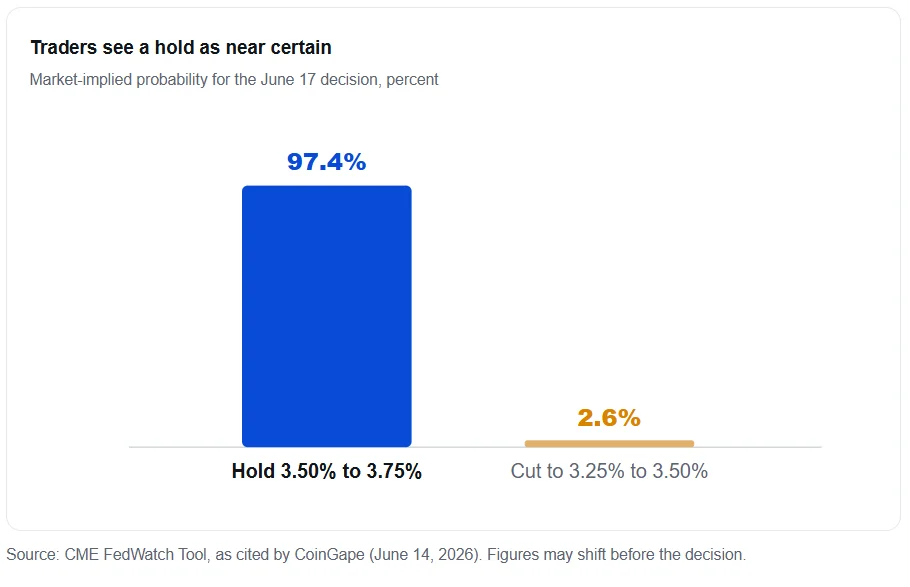
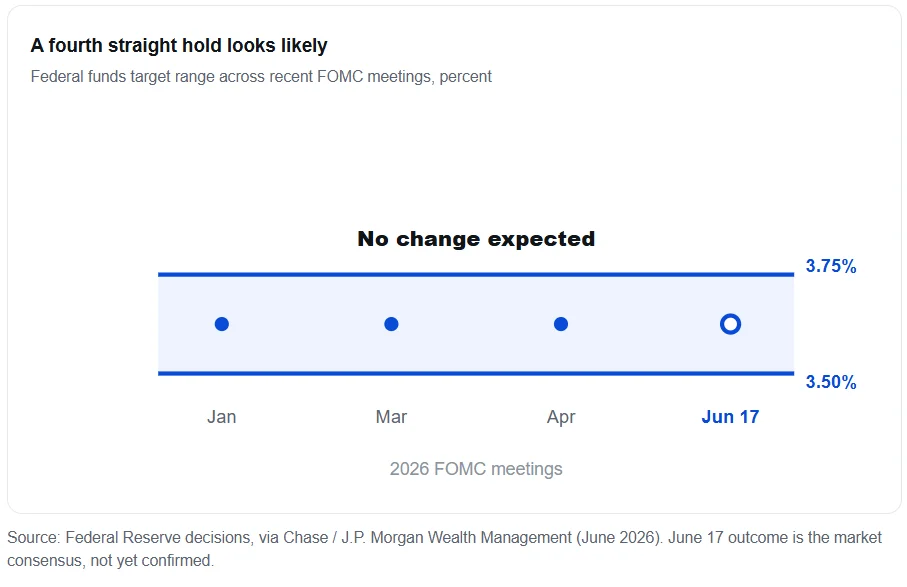
Traders price a 97.4% chance the Fed holds rates at 3.50% to 3.75%.
May inflation hit 4.2%, its highest annual reading since April 2023.
Employers added 172,000 jobs in May, more than double the forecast.
The updated dot plot and Warsh’s tone will steer market expectations.
A new Chair inherits a hot economy
Kevin Warsh takes the Fed’s top job at a tense moment. Officials swore him in as the 17th Chair on May 22, 2026. This week, he leads his first Federal Open Market Committee meeting. The two-day session runs from June 16 to 17.
Investors see almost no chance of a rate cut. Therefore, attention shifts from the decision to the messenger. Warsh’s first press conference could reshape expectations for 2026. In short, his tone now matters more than the number.
Inflation keeps climbing toward 4%
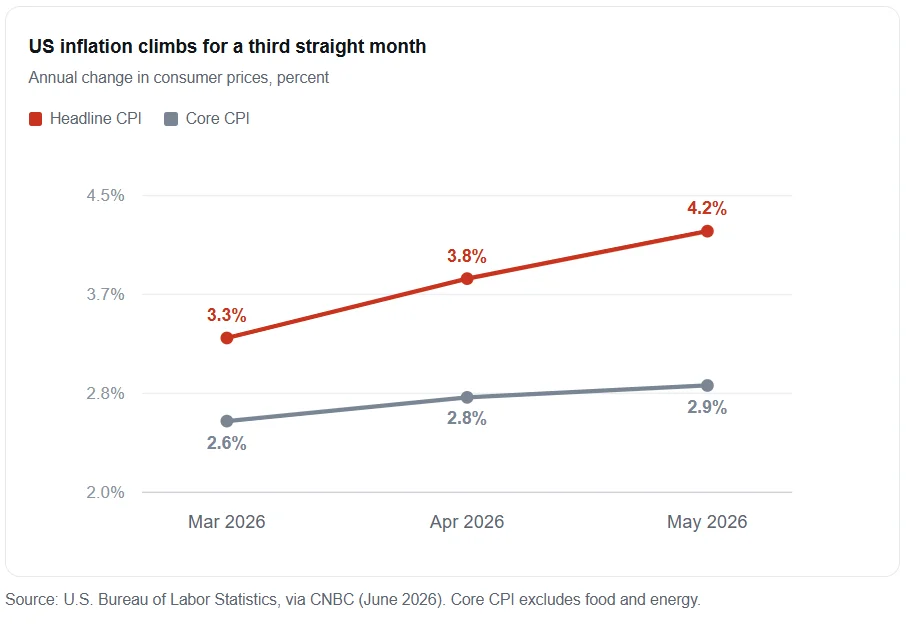
Inflation remains the committee’s biggest headache. Consumer prices rose 4.2% in May from a year earlier, CNBC reported from Bureau of Labor Statistics data. That reading marked the highest annual rate since April 2023. Moreover, it climbed from 3.8% in April and 3.3% in March.
Energy costs drove much of the jump. Gasoline prices surged as the conflict with Iran squeezed supply. However, core inflation stayed calmer at 2.9%. This gap leaves policymakers with a tricky balance.
The Fed aims for 2% inflation over the long run. Today’s headline rate sits at roughly double that goal. The Fed’s preferred gauge tells a similar story. The PCE price index reached 3.8% in April. Consequently, the committee has little room to ease.
A strong job market ties the Fed’s hands
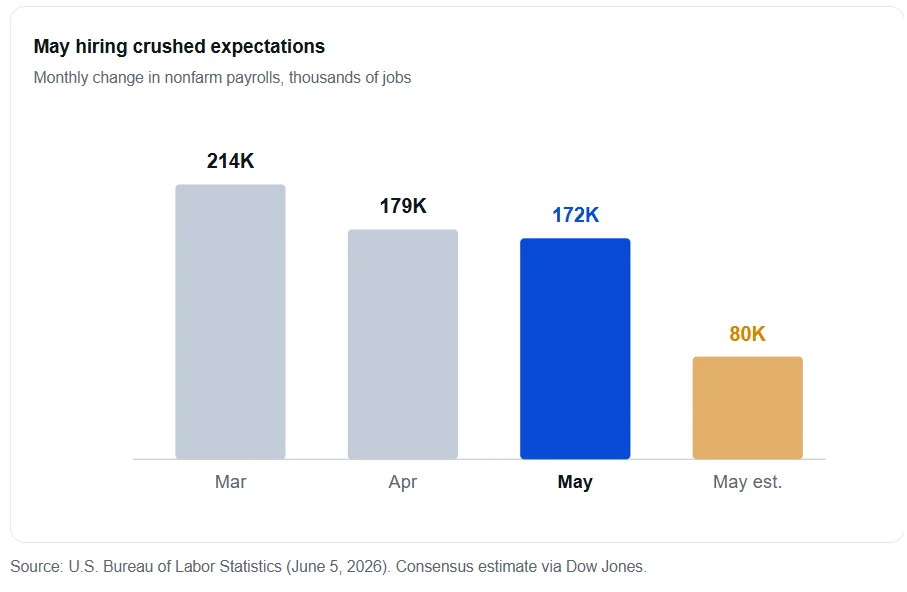
A resilient labor market further complicates the outlook. Employers added 172,000 jobs in May, the Bureau of Labor Statistics reported. That total more than doubled the consensus forecast near 80,000. Furthermore, officials revised March and April hiring higher.
The unemployment rate held steady at 4.3%. Average wages grew about 3.4% over the year. Strong hiring removes any urgency to support growth. As a result, the case for a quick cut weakens.
What the market expects on June 17
Most analysts expect one clear message: patience. The CME FedWatch Tool shows a 97.4% chance of a hold. Only 2.6% of traders expect a cut to 3.25%-3.50%. Meanwhile, a few investors now even float a possible hike.
J.P. Morgan strategists also see rates steady through year-end. They expect a shift away from easing toward a neutral stance. Wells Fargo’s chief economist sees no easy path to cuts. Morgan Stanley analysts echo that caution. Therefore, the Fed looks set to wait and watch.
Rates have not moved since late 2025
The federal funds rate sits at 3.50% to 3.75%. The committee has held that range for three straight meetings. It last trimmed rates in late 2025. Since then, sticky inflation has kept officials on pause.
The dot plot and Warsh’s words take center stage
This meeting includes fresh economic projections. The updated dot plot reveals where officials expect rates to land. Investors will study those dots for direction.
Warsh’s communication style adds genuine suspense. He has criticized the Fed for speaking too often. In fact, he has urged a “regime change” in how the bank communicates. Therefore, his debut press conference carries unusual weight.
He must also unite a divided committee. April’s meeting produced sharp internal disagreement. Notably, former Chair Jerome Powell still serves as a governor. That overlap is rare in modern Fed history.
Politics raises the stakes
President Donald Trump has repeatedly demanded lower rates. Warsh, by contrast, has stressed the Fed’s independence. He insists that data, not politics, will guide policy. The independence question now colors market sentiment.
A firm hold would signal that credibility comes first. A softer tilt, however, could revive concerns about pressure. J.P. Morgan’s strategists expect a steady hand for now.
Why crypto and risk markets care
Rate expectations ripple straight into digital assets. Higher-for-longer rates tend to pressure Bitcoin and tech stocks. Traders therefore watch the Fed for shifts in liquidity. A hawkish hold could cap risk appetite near term.
Yet clear guidance can also calm volatile markets. If Warsh signals a steady path, traders may relax. In contrast, mixed messaging could spark sharp swings. Every word from the new Chair will move prices.
The bottom line
Warsh begins his term with little room to maneuver. High inflation and strong jobs point toward a steady hold. Even so, his tone will define the market reaction. Investors across stocks, bonds, and crypto will listen closely.




