


August 15, 2026 – Wholesale costs flatlined in July. Traders promptly trimmed the odds of a September rate rise, and long bond yields slipped.

In Summary
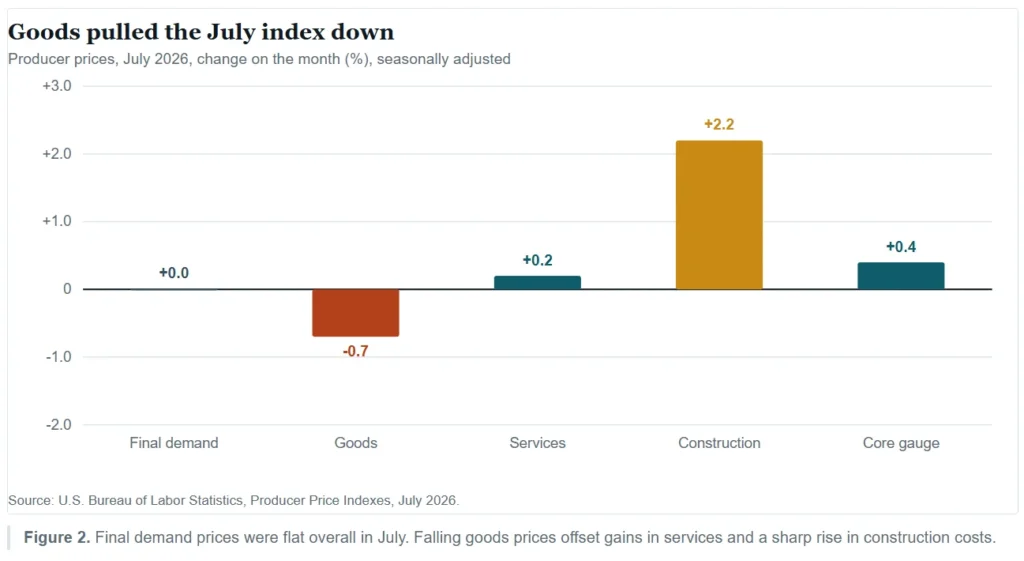
Final demand producer prices were unchanged in July, after a 0.1 percent fall in June.
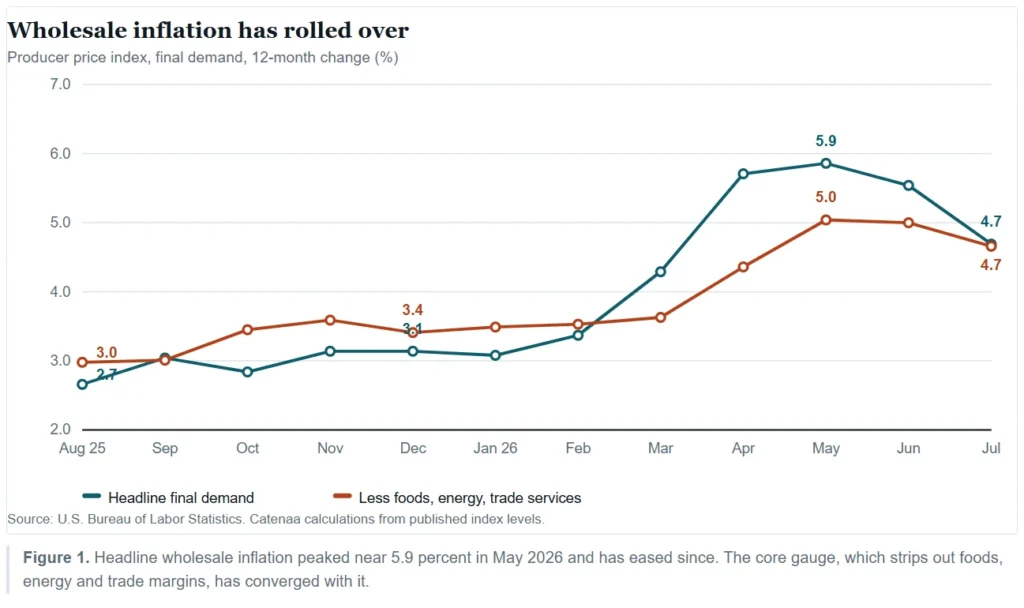
Wholesale inflation ran at 4.7 percent over twelve months, down from a spring peak.
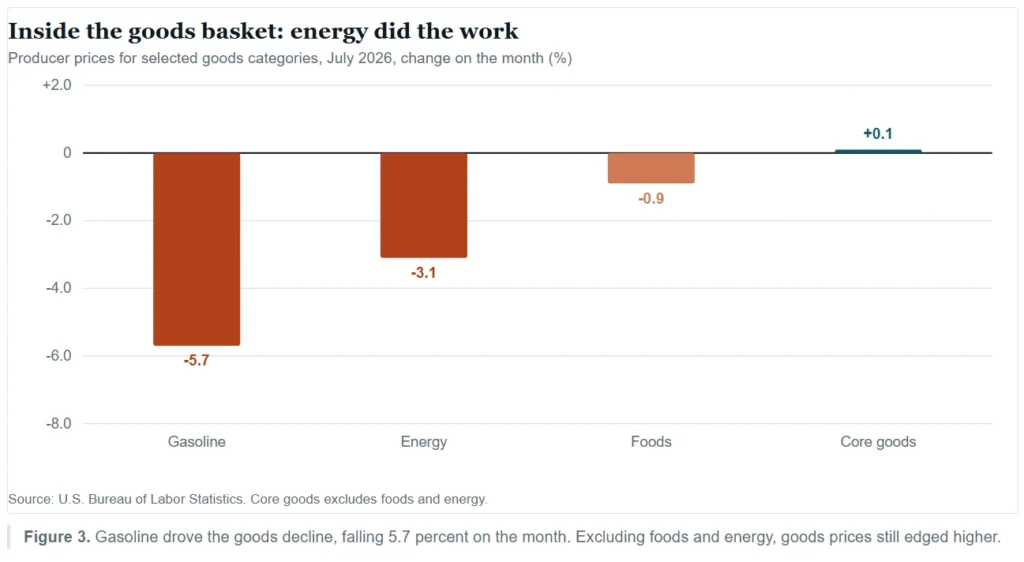
Goods prices dropped 0.7 percent as gasoline slid 5.7 percent across the month.
The core gauge rose 0.4 percent, so underlying pressure has not disappeared.
Treasury yields fell across the curve, and September hike odds retreated.
US producer prices held flat in July, and that pause reshaped the interest rate debate. The Bureau of Labor Statistics published the reading on Thursday morning. Final demand prices neither rose nor fell across the month. Moreover, June had already delivered a 0.1 percent decline. May, by contrast, produced a hefty 0.5 percent jump.
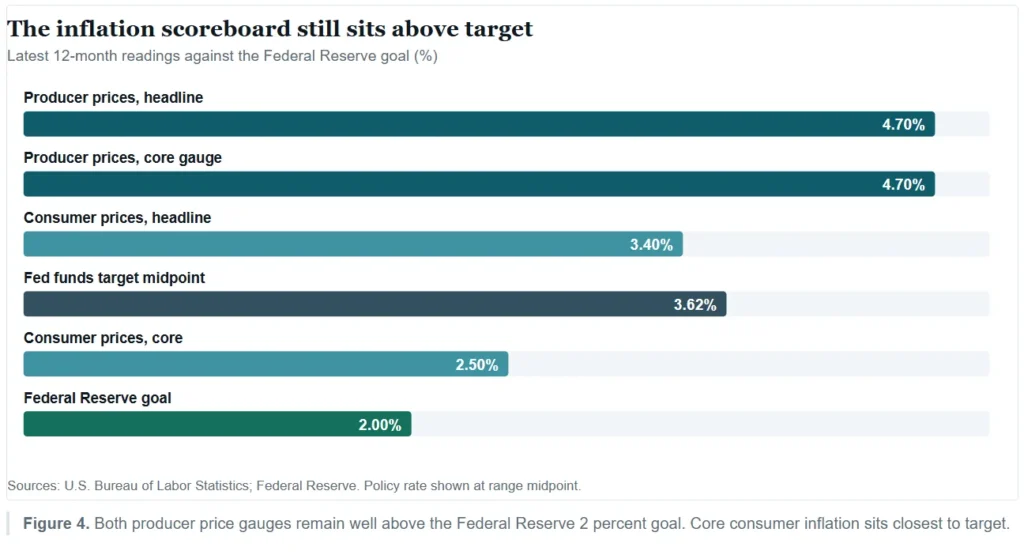
Over the year to July, the index climbed 4.7 percent before seasonal adjustment. That pace still sits far above the Federal Reserve target of 2 percent. However, it marks a clear retreat from the spring peak near 5.9 percent.
Producer prices matter because they sit upstream of the shopping basket. Firms usually pass higher input costs along within a few months. Therefore, a flat wholesale month hints at gentler consumer inflation later this year.
What drove the flat US producer prices reading
Energy did most of the work. Prices for final demand goods dropped 0.7 percent during July. Furthermore, gasoline alone slid 5.7 percent. Food producers also trimmed prices, by 0.9 percent. Strip out those two categories and goods prices edged up 0.1 percent.
Services moved the other way, although only slightly. The services index rose 0.2 percent. Meanwhile, construction prices surged 2.2 percent, the sharpest gain in the release.
One line stands out inside the services detail. Portfolio management fees jumped 6.5 percent in July. Consequently, buoyant equity markets fed straight into the inflation data. Truck freight rates moved the opposite way and fell 1.8 percent.
That freight decline carries a useful signal. Hauliers rarely cut rates when goods volumes run hot. In other words, physical demand looks softer than the equity rally suggests.
The core gauge tells a tougher story
Now strip out food, energy and trade margins. That core measure rose 0.4 percent in July. Previously, it had inched up just 0.1 percent during June. Across twelve months it also advanced 4.7 percent.
Therefore the headline calm masks stubborn underlying pressure. Policymakers watch this series closely because it filters out the wildest swings. Energy relief, after all, can vanish inside a single month.
Margins add a further wrinkle. Trade services, which track wholesale and retail markups, dipped 0.1 percent. Retailers therefore absorbed part of the July squeeze themselves. Such restraint rarely lasts through a full quarter.
Consumer prices echoed the same message
Households saw a similarly muted month. The consumer price index rose 0.1 percent in July. Annual inflation eased to 3.4 percent from 3.5 percent. Additionally, core consumer inflation slowed to 2.5 percent.
Shelter drove roughly two thirds of the monthly increase. Energy costs fell 1.5 percent over the month. Nevertheless, they remain 14.7 percent higher than a year earlier. That gap explains why officials still sound cautious.
Why the Federal Reserve gained breathing room
The Fed has kept its target range at 3.50 to 3.75 percent. July delivered a fifth straight hold, on a 9-3 vote. Notably, all three dissenters wanted a quarter point increase instead.
That split matters for September. Beth Hammack, Neel Kashkari and Lorie Logan each pushed for tighter policy. Yet two soft July prints weaken their immediate case.
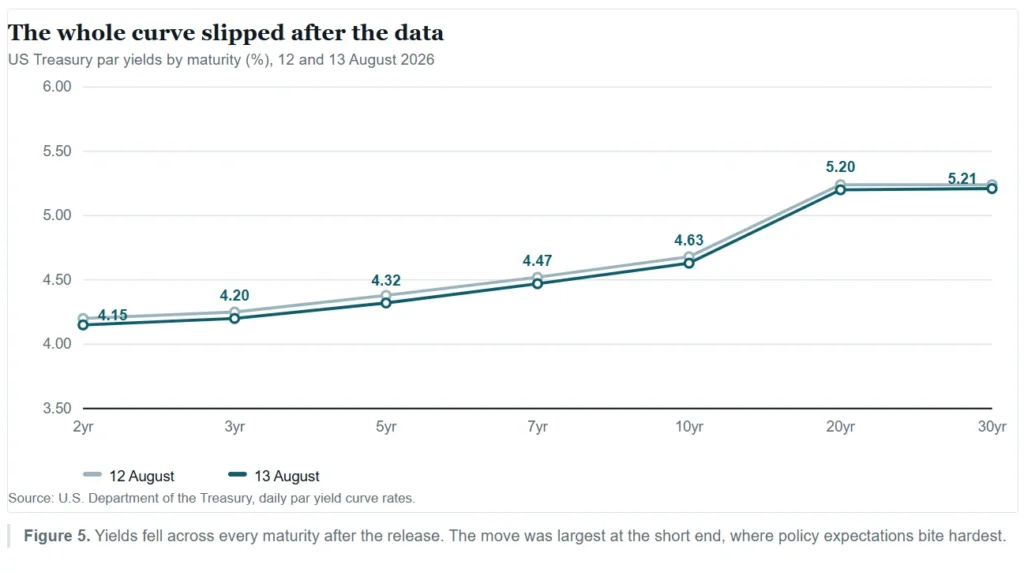
Bond traders reacted within hours. The two year yield slipped to 4.15 percent from 4.20 percent. Similarly, the ten year eased to 4.63 percent. Longer maturities followed, and the thirty year settled at 5.21 percent.
Short rates have moved furthest this year. Since early January the two year yield has climbed roughly 68 basis points. Meanwhile the thirty year added about 35 basis points. As a result, the curve has flattened while shifting higher.
Chair Kevin Warsh has pressed colleagues to signal less between meetings. Investors consequently lean harder on each data release. Thursday showed exactly how that dynamic plays out.
What investors should watch next
Attention now turns to the September meeting. The committee gathers on 15 and 16 September. Meanwhile, the next US producer prices release lands on 10 September.
Investors should treat July as one data point rather than a trend. Oil markets remain volatile, and construction costs keep climbing hard. Should energy rebound, the headline number would jump again quickly.
Services inflation deserves particular attention. Wage sensitive lines drive that component, and they cool slowly. By comparison, energy swings unwind within weeks.
Still, the direction of travel has improved. Both major inflation gauges cooled inside the same week. For now, that combination buys the Fed valuable time.