

August 10, 2026 – A surprise drop in July payrolls pushed Treasury yields lower, lifted stocks to a record, and shifted bets away from a Federal Reserve rate hike.

In Summary
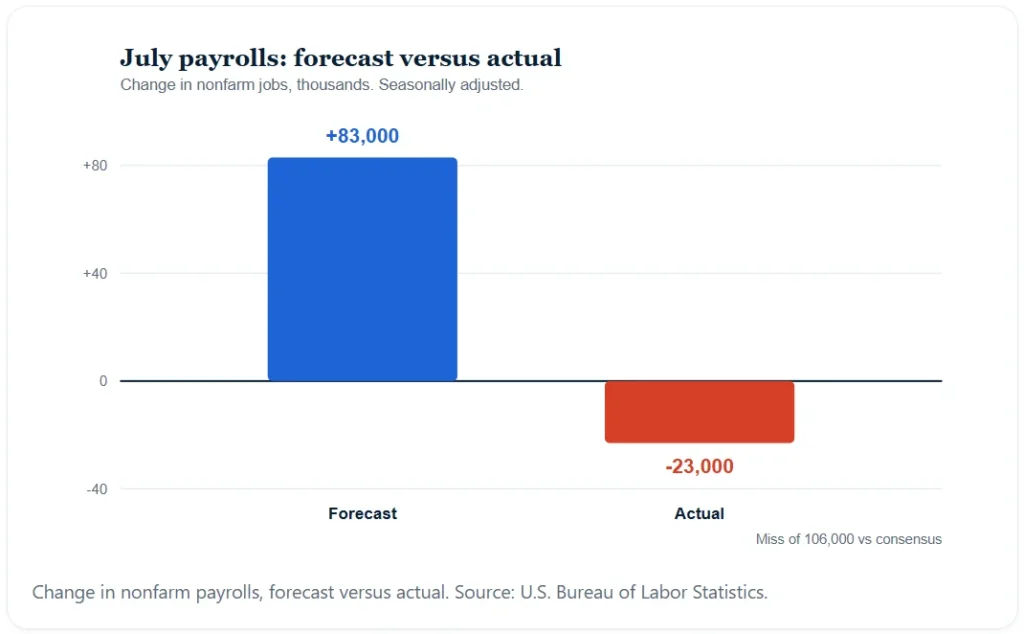
July payrolls fell by 23,000, far below forecasts near a gain of 83,000.
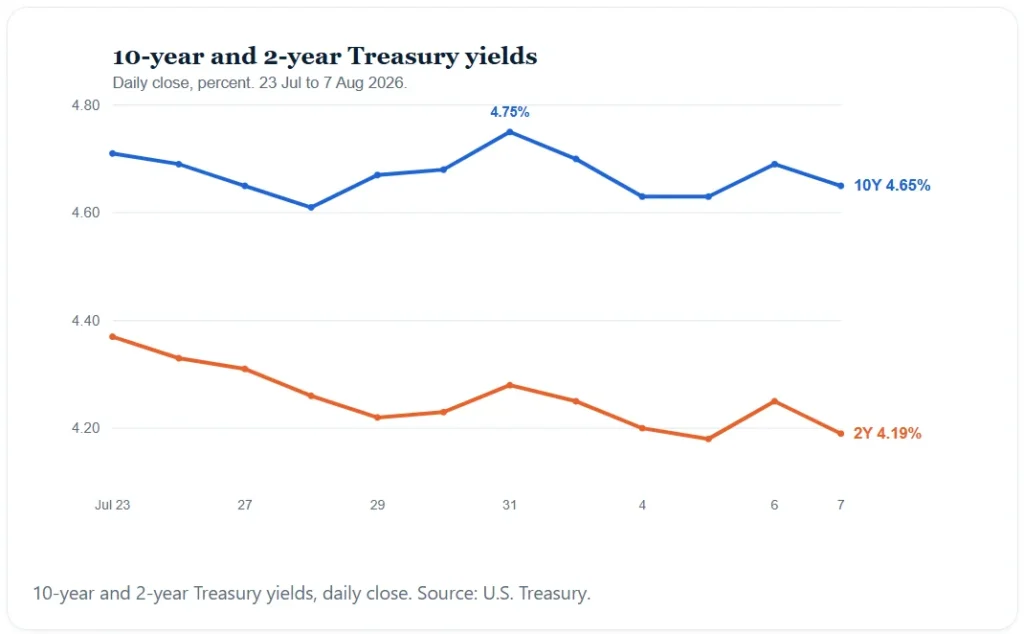
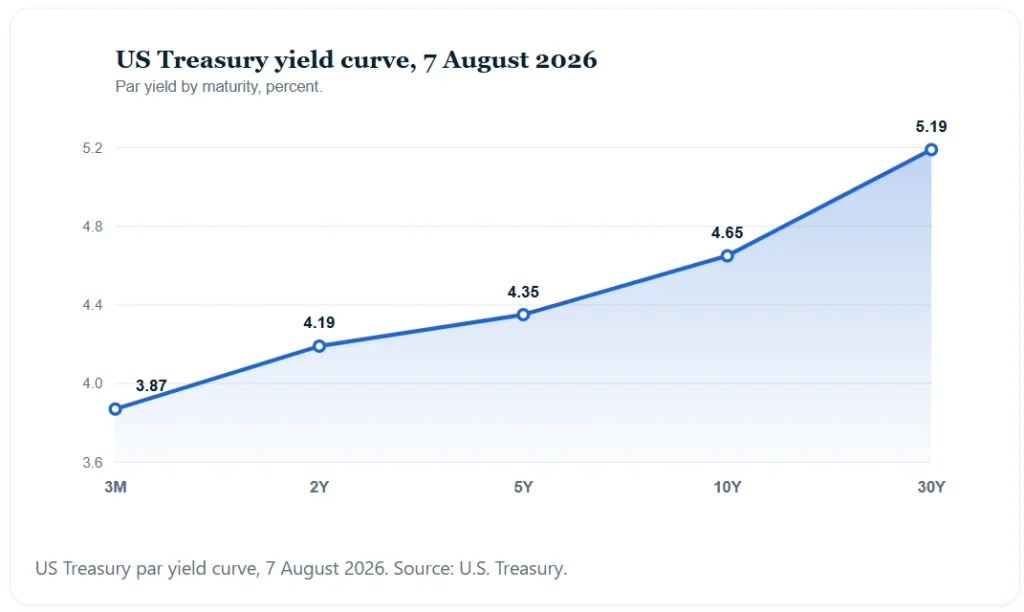
The 10-year Treasury yield eased to 4.65% as bond prices rose.
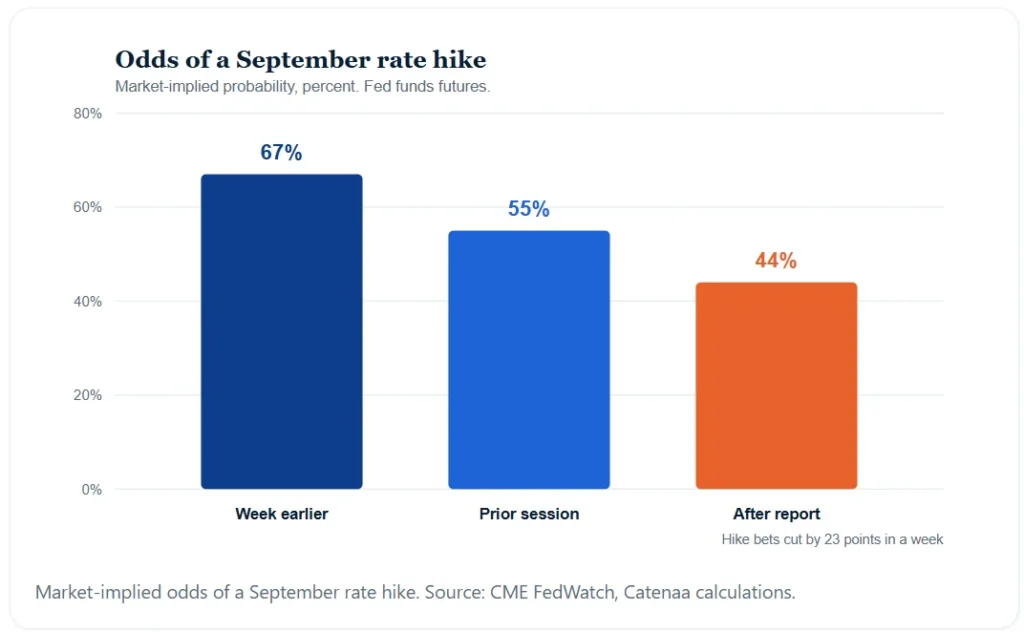
Traders cut September Fed hike odds toward 44%, down from about 55%.
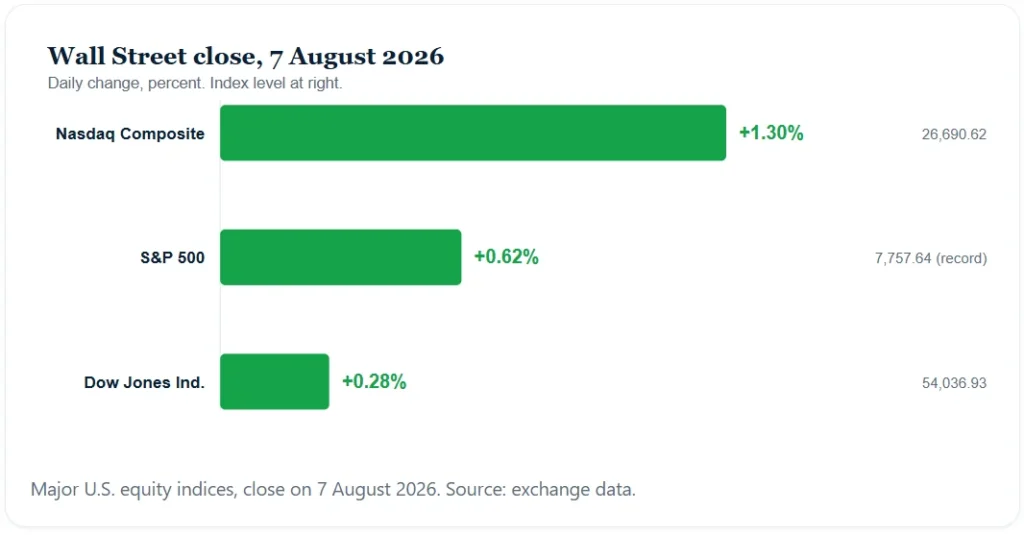
The S&P 500 closed at a record, with technology shares leading gains.
Treasury yields drop after a weak jobs print
Treasury yields fell on Friday after the July payrolls report stunned traders. The economy shed 23,000 jobs during the month. Forecasts had pointed to a gain near 83,000, so the miss landed hard.
The benchmark 10-year Treasury yield eased to 4.65%. Meanwhile, the policy-sensitive 2-year yield slipped to 4.19%. Both fell as bond prices climbed higher.
Yields and prices move in opposite directions. Therefore, lower yields signal stronger demand for government debt. Investors clearly wanted safety and rate relief at once.
The move capped a volatile stretch for the bond market. Only a week earlier, the 30-year yield touched 5.19%. That level sat near a two-decade high for the long bond.
A softer job market beneath the surface
The headline jobs number told only part of the story. Unemployment actually edged down to 4.1%. However, that drop came mostly from people leaving the workforce.
Labor force participation slid to 61.4%. Furthermore, annual wage growth cooled to 3.2%, its slowest pace since 2021. Revisions also cut May and June payrolls by 103,000.
Private employers still added modest jobs during July. Government roles, by contrast, fell by 53,000 on the month. Retail and local education led the broad decline.
Consequently, the report showed a softer job market than the surface suggested. Traders read it as a clear reason for Fed patience. Such shifts rarely arrive so abruptly.
The Fed pivot in market pricing
Just last week, policymakers held rates steady in a 9-3 vote. The target range stayed at 3.50% to 3.75%. Notably, three officials dissented and preferred a rate hike.
That hawkish split had lifted September rate-hike odds above 55%. After the jobs data, those odds slid toward 44%. Such repricing happened within a single trading session.
The chair has trimmed the Fed’s forward guidance sharply this year. As a result, each data release now carries outsized weight. Markets lean harder on numbers than on speeches.
Stocks climb to a record close
The shift matters because expectations drive bond pricing daily. Moreover, lower hike odds ease pressure across the yield curve. Growth and technology shares tend to gain the most.
Equities welcomed the softer data quickly. The S&P 500 rose 0.6% to a record close. Meanwhile, the Nasdaq Composite jumped 1.3%, led by chips and software.
Lower yields shrink the present cost of future earnings. As a result, richly valued growth names benefit first. The dollar slipped, while gold advanced on the day.
Risk appetite spread well beyond big technology names. Rate-sensitive sectors such as utilities and property also climbed. Cheaper financing tends to lift those groups first.
What the yield curve signals now
Still, the picture holds real tension underneath. A cooling job market can dent consumer spending later. Investors are cheering rate relief and weighing growth risks together.
The Fed faces a two-sided problem right now. Inflation has stayed above the 2% goal for years. Yet the labor market suddenly looks fragile and uneven.
What comes next for rates
Attention now turns to inflation data due next week. Both consumer and producer price readings arrive within days. These figures will shape the September decision heavily.
A hot inflation print could revive the hawkish camp fast. Conversely, soft prices would strengthen the case for a hold. Traders therefore face another pivotal week ahead.
Policymakers meet again on September 15 and 16. Until then, every release carries extra market weight. One soft print rarely settles a heated debate.
For now, bonds and stocks agree on direction together. Both rallied as traders trimmed their hike bets. The next policy move still looks wide open.




