

August 16, 2026 – July inflation came in softer than forecast. Futures markets then cut the odds of a September Fed rate hike. However, a 9-to-3 committee vote and a blocked Strait of Hormuz keep the tightening case alive.
In Summary
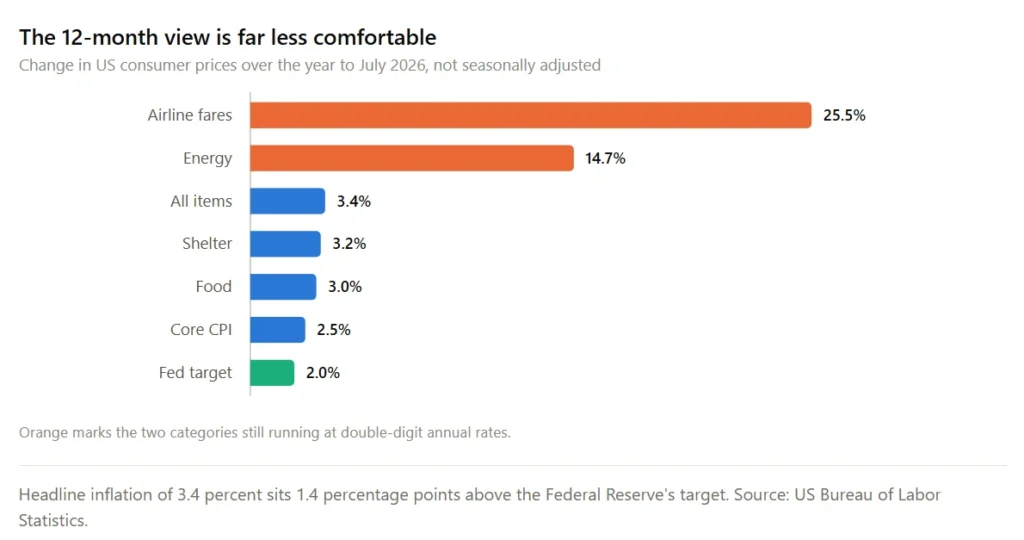
Headline inflation eased to 3.4% over the year to July 2026, while core CPI ran at 2.5%. Monthly gains were 0.1% and 0.2%, respectively.
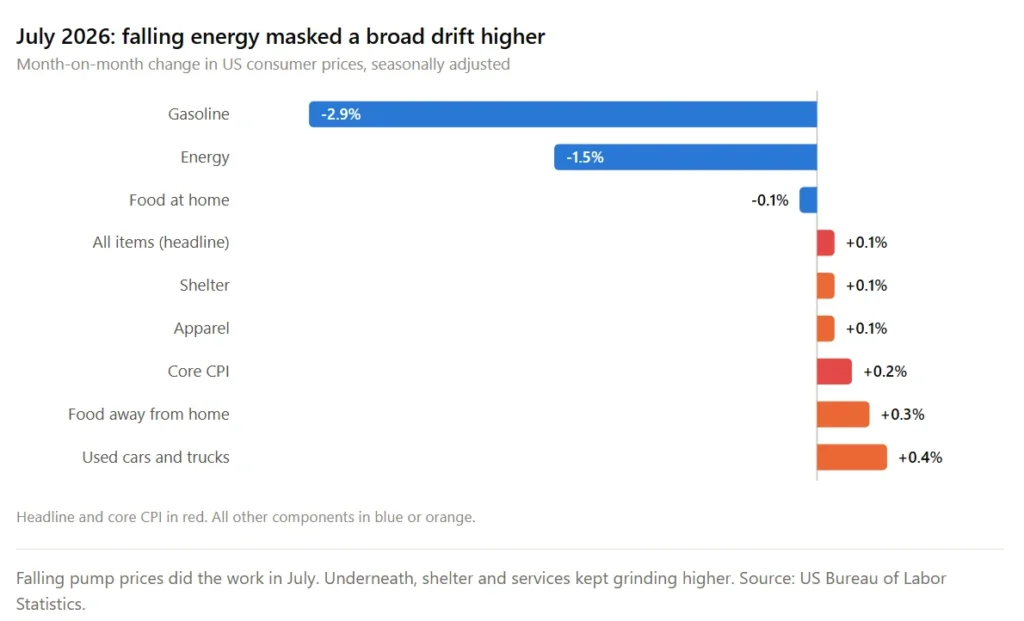
Shelter drove about two-thirds of the monthly rise, even though it gained only 0.1%. Falling pump prices, down 2.9%, hid the drift underneath.
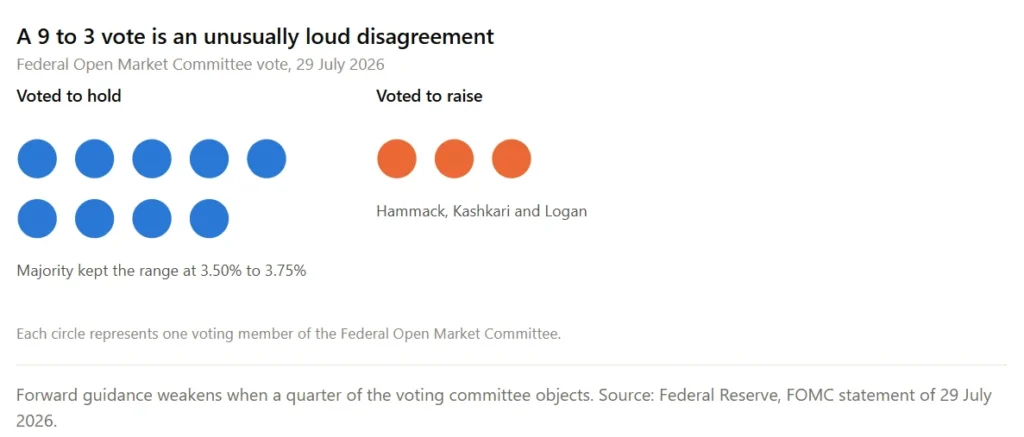
The Fed held at 3.50% to 3.75% on 29 July, yet the vote split 9 to 3. Hammack, Kashkari, and Logan all wanted a quarter-point rise.
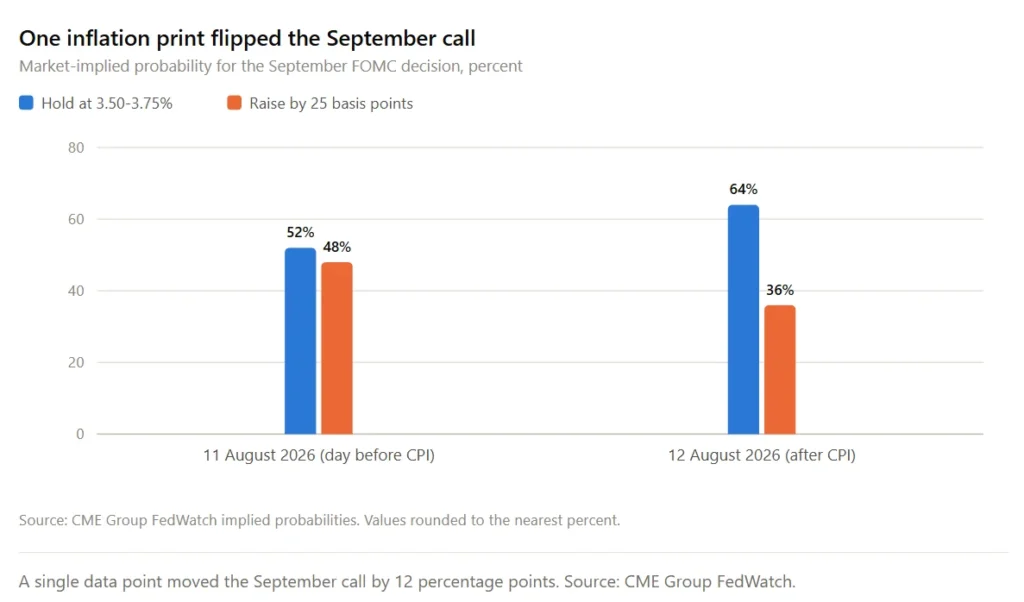
September hold odds jumped to 64% from 52% in a single session after the CPI release.
Energy remains the swing factor. Costs sit 14.7% higher year on year. Hormuz traffic has fallen to about 10 vessels a day from roughly 130.
For investors: the path to rate cuts has flattened. Meeting risk has risen too, and long bonds carry more danger than the market assumed.
US consumer prices rose just 0.1% in July. Annual inflation eased to 3.4%, according to the Bureau of Labor Statistics. Core inflation, meanwhile, ran at 2.5% for the year. Investors welcomed the softer print. Within hours, futures traders slashed the odds of a September Fed rate hike. Yet the Fed itself remains split. Three of its own officials voted to tighten in July.
Inflation cooled, but it has not gone away
The Bureau of Labor Statistics put out its July report on 12 August 2026. The all items index rose 0.1% in the month, once adjusted for the season. Over the past 12 months, prices climbed 3.4%.
Core inflation told a friendlier story. Strip out food and energy, and prices gained just 0.2% in July. The annual core rate came in at 2.5%. Forecasters had pencilled in a 0.3% monthly rise. So the miss carried real weight for rate bets.
Shelter did most of the heavy lifting. That index rose only 0.1%. Even so, it drove about two-thirds of the monthly rise in all items. Energy fell 1.5%, while gasoline dropped 2.9%. Food nudged up 0.1%.
Energy is still the wild card
Look past the monthly figures, though, and the picture darkens. Energy costs sit 14.7% above their level a year ago. Airline fares have surged 25.5% over the same period. Those are not the marks of a settled inflation problem.
The cause lies in the Gulf. Shipping through the Strait of Hormuz remains badly disrupted. Roughly 10 vessels crossed the waterway on a single recent Monday. Before the conflict, about 130 transits a day were normal. Crude flows have collapsed to between 7 and 9 million barrels daily, down from around 20 million.
Brent crude traded near $88 a barrel in mid-August. Prices have climbed about 34% over the past year. What is more, the International Energy Agency warns that 2026 will bring the widest global supply gap in five years. That backdrop keeps upside inflation risk very much alive.
Three Fed officials wanted to raise rates
On 29 July, the Federal Open Market Committee held its target range at 3.50% to 3.75%. That marked a fifth straight hold. However, the vote split 9 to 3.
Beth Hammack, Neel Kashkari, and Lorie Logan each wanted a quarter-point rise. A three-way split of this kind is rare. It signals real unease inside the committee about how long inflation has stayed high.
The official statement admitted the tension openly. Officials called growth solid, even though risks stayed high. Yet they also said plainly that inflation still sits above the 2% goal.

For investors, that framing matters more than the decision itself. A central bank arguing about hikes rather than cuts reshapes every discount rate in a portfolio.
Markets repriced September within hours
The July report reset bets almost at once. On 11 August, futures markets put the odds of a hold at 52%. By the close on 12 August, those odds had jumped to 64%. Earlier in the month, some strategists had gone further still. They priced roughly 65% odds of an outright rise.
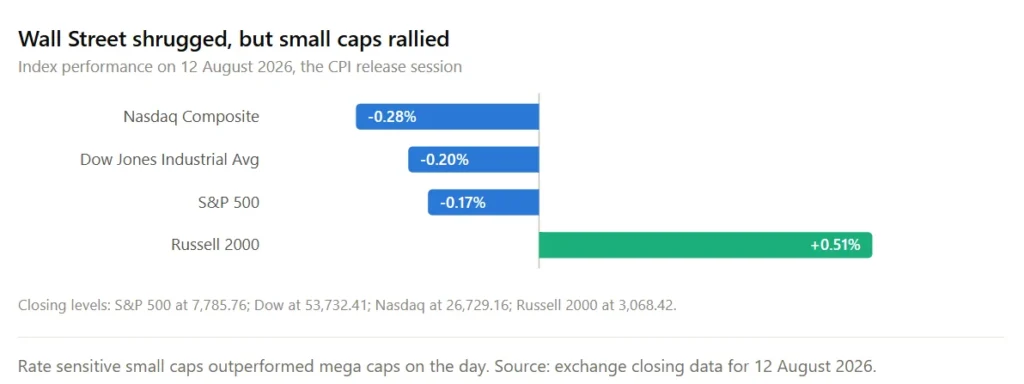
Equity markets barely blinked. The S&P 500 closed at 7,785.76 on 12 August, down 0.17%. Small caps went the other way, however. The Russell 2000 climbed 0.51%. That move fits a market quietly relieved about borrowing costs.
Bond markets stayed cautious. The 10-year Treasury yield stood at 4.68% on 12 August, according to Fed data. Such a level shows investors who still want to be paid for inflation and term risk.
What this means for portfolios
Three practical conclusions follow from the week’s data.
The bar for rate cuts has risen
Anyone who built positions around a 2026 easing cycle now faces a flatter path. Long dated bond bets therefore carry more risk than they did a year ago. Short and medium term maturities look better balanced today.
Energy has become the master variable
Any flare-up around Hormuz would lift headline inflation and revive hike bets fast. A credible peace deal, by contrast, would ease both crude and yields together. Strategists have flagged $120 a barrel as a real pressure point. A move beyond $140 would raise outright recession risk.
Meeting risk has gone up
When a quarter of the committee objects, forward guidance loses its grip. As a result, each data release now carries outsized market impact. Position sizing around CPI and payroll dates deserves fresh care.

The bottom line
July’s data supports patience at the Fed. Patience, however, is not the same thing as easing. Headline inflation of 3.4% still sits well above target. Energy risk has not cleared either. Careful investors should therefore plan for rates that stay higher for longer. They should also accept that the next move could go the other way.