


July 15, 2026 – Cooling inflation and bank earnings lifted U.S. stocks. However, investors still face an uncertain policy path.
In Summary
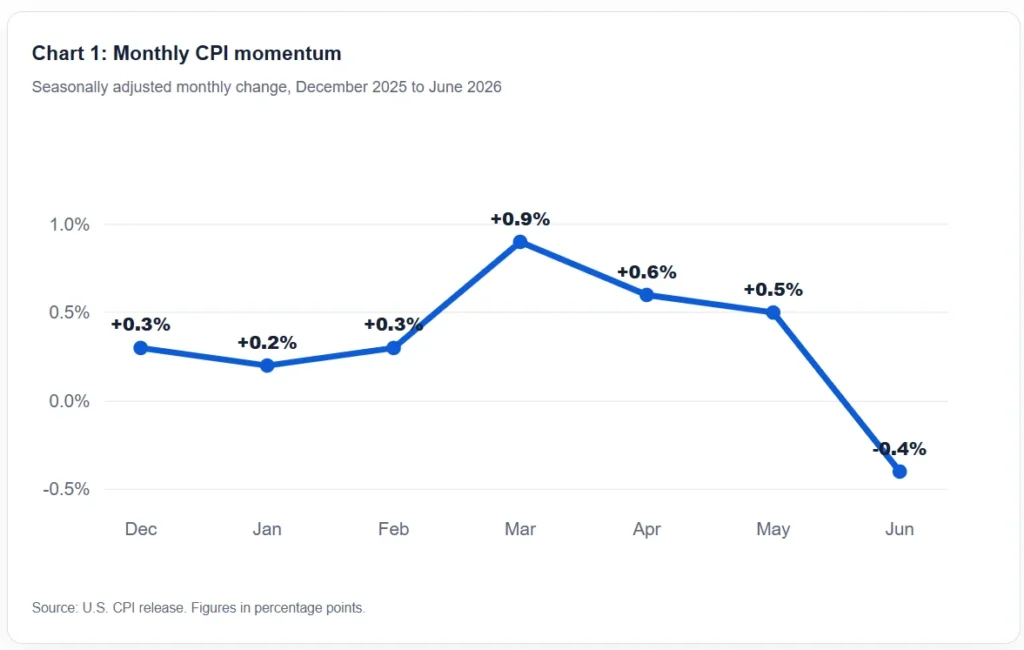
Headline CPI fell 0.4% in June, while core prices were unchanged.
Citi and Wells Fargo posted stronger profits.
JPMorgan’s reported income included major one-time gains.
The S&P 500 gained 0.38%, showing optimism without a full risk rally.
Inflation gives markets breathing room
Cooling inflation gave equity investors a clearer reason to buy. The Consumer Price Index fell 0.4% in June. That followed a 0.5% increase in May.
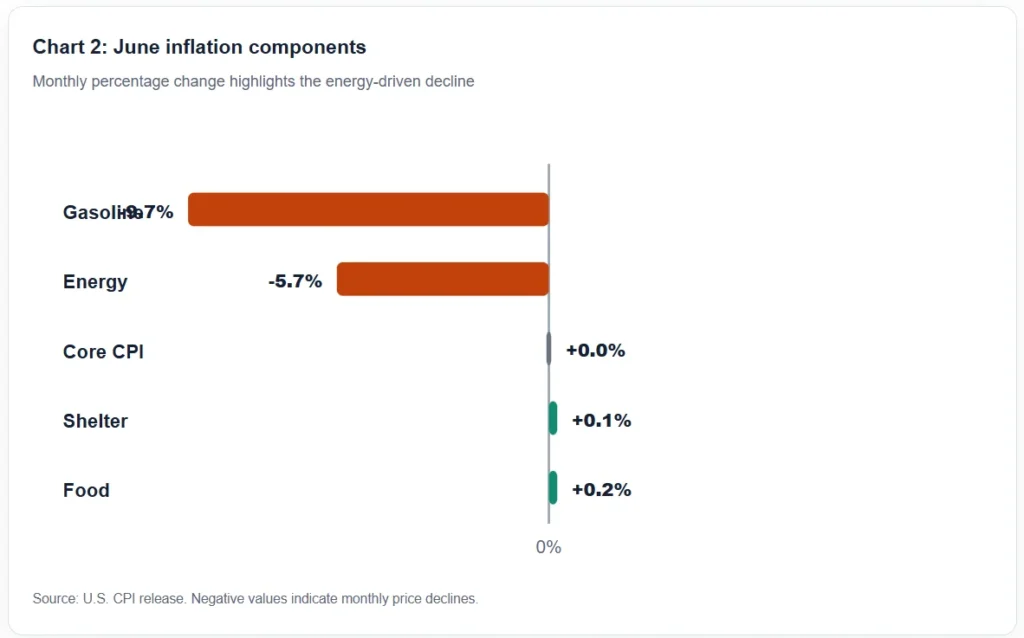
The decline marked the largest monthly drop since April 2020. Energy prices drove most of the reversal. They fell 5.7% during June.
Gasoline prices dropped 9.7%, while electricity costs declined 1.0%. Food prices still increased by 0.2%. Shelter prices rose only 0.1%.
More importantly, core CPI was unchanged during the month. Core inflation slowed to 2.6% over twelve months. Headline inflation eased to 3.5%.
These figures reduce immediate pressure for tighter monetary policy. However, they do not prove inflation has disappeared.
Energy inflation remained 15.7% higher than one year earlier. Therefore, another commodity shock could quickly reverse June’s improvement.
Bank earnings strengthen the risk case
Strong bank earnings added a second support for stocks. Large lenders showed revenue, credit quality, and capital generation.
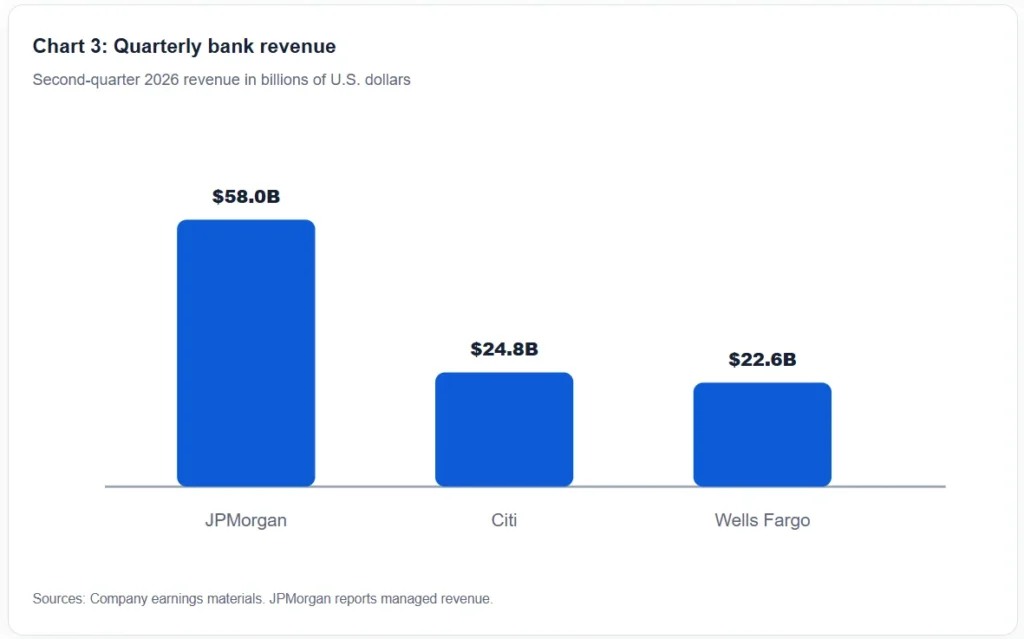
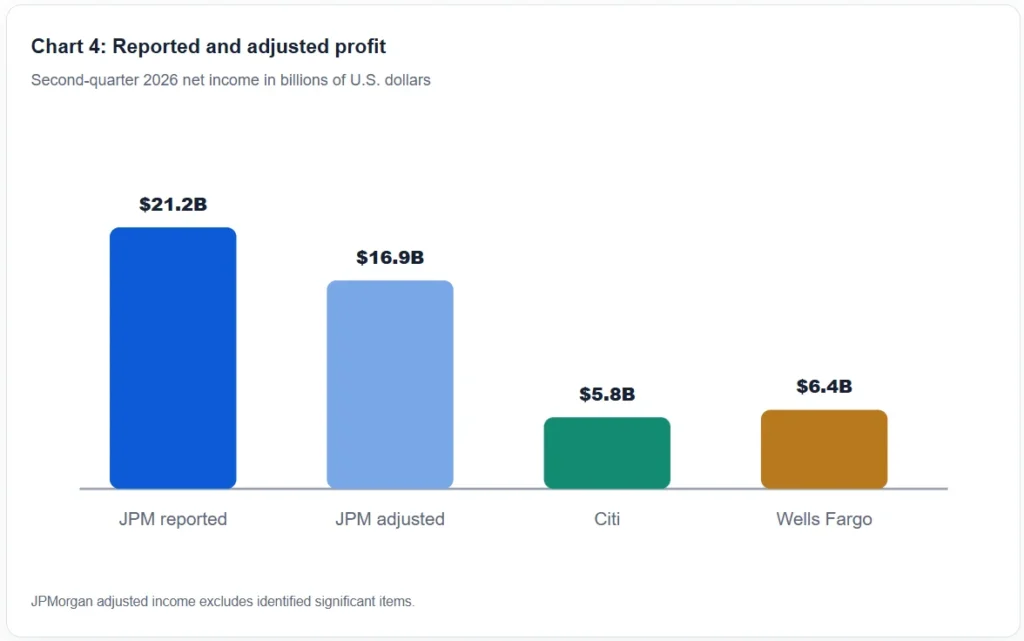
JPMorgan reported $21.2 billion in quarterly net income. Its earnings reached $7.70 per share, while managed revenue totalled $58.0 billion.
However, significant gains lifted the headline result. Excluding those items, net income was $16.9 billion. Adjusted earnings were $6.14 per share.
That distinction matters for valuation. Investors should not treat one-time gains as recurring operating income.
Citi delivered operating momentum. Quarterly revenue increased 14% to $24.8 billion. Net income climbed 45% to $5.8 billion.
Earnings per share rose to $3.15 from $1.96. Moreover, the bank returned about $5.0 billion through dividends and repurchases.
Wells Fargo also produced stronger results.
Capital distributions also supported the sector. Buybacks reduce share counts, while higher dividends signal management confidence and surplus capital. That combination can improve per-share returns.
Revenue increased 9% to $22.6 billion. Net income reached $6.4 billion.
Its earnings rose 25% to $2.00 per share. Average loans increased 12%, while average deposits expanded 10%.
Those figures point toward resilient household and corporate activity. Nevertheless, loan growth can become risky when economic momentum slows.
The market reaction stayed controlled
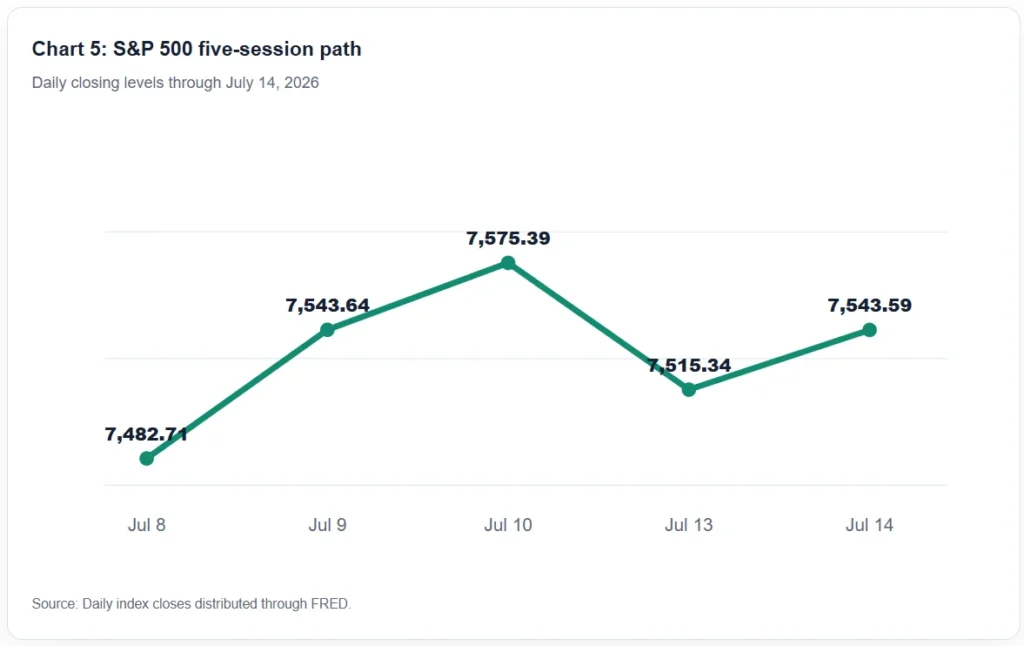
The S&P 500 closed at 7,543.59, up 0.38% from the previous session. The gain reversed part of Monday’s decline.
Still, the index remained below its July 10 close. That pattern suggests investors welcomed the data without abandoning caution.
Why cooling inflation and bank earnings matter
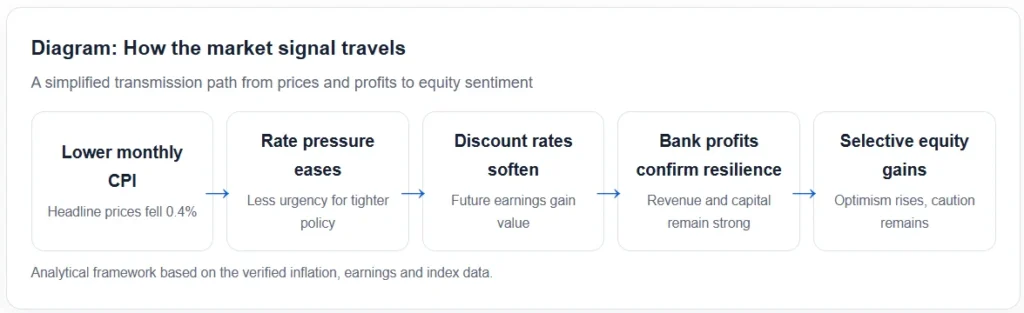
Cooling inflation supports higher equity valuations through lower expected discount rates. Strong bank profits also improve confidence in credit conditions.
However, markets must separate temporary relief from durable disinflation. Energy created much of June’s headline decline.
Meanwhile, core services remain important for future policy decisions. Shelter inflation slowed, but it still increased 3.3% over twelve months.
What investors should watch next
Investors should track three signals. First, core inflation must stay subdued after June’s flat reading.
Second, bank credit losses should remain contained as loan balances grow. Rising provisions would weaken the earnings narrative.
Third, market breadth must improve. A sustainable rally needs gains beyond a narrow group of large companies.
The current setup favours selective risk-taking rather than aggressive positioning. Bank earnings support confidence, while inflation offers policy relief.
Therefore, investors may reward lenders with durable fee growth, strong deposits, and disciplined credit costs.
The main risk remains a renewed energy shock. Another sharp increase could lift inflation expectations and pressure equity valuations.
For now, cooling inflation and bank earnings have improved sentiment. Yet the market still requires confirmation from upcoming data.




