


April 30, 2026 – The JPMorgan CEO raised the alarm at Norway’s sovereign wealth fund conference. Rising global debt is the trigger. The clock, he says, is already ticking.

Jamie Dimon does not issue warnings lightly. The CEO of JPMorgan Chase, the world’s largest bank, spoke bluntly in Norway on April 28. He said a bond market crisis is no longer a distant risk. It is a likely outcome.
“The way it’s going now, there will be some kind of bond crisis, and then we’ll have to deal with it.”
— Jamie Dimon, CEO, JPMorgan Chase · April 28, 2026
Dimon spoke at a conference hosted by Norges Bank Investment Management. It is the world’s largest sovereign wealth fund. The venue itself signals how seriously this warning should be taken.
The Debt Problem in Numbers
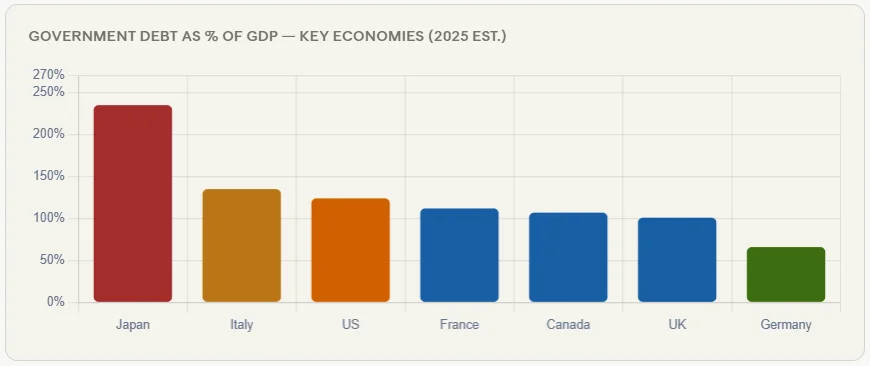
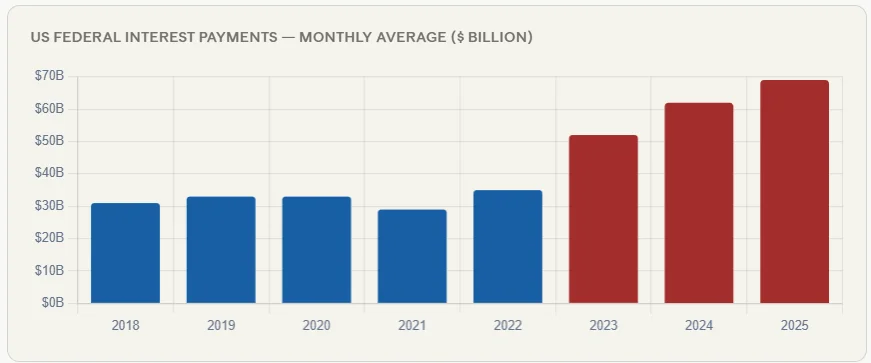
The US national debt now stands at approximately $39.2 trillion. That equals roughly 124% of gross domestic product. The federal government pays around $21 billion per month in interest alone.
The US is not the only offender. Japan’s debt exceeds 235% of GDP. Italy carries a ratio of 135%. Several major European economies have crossed the 100% mark. The global debt burden is becoming structurally unsustainable.
What Is a Bond Crisis?
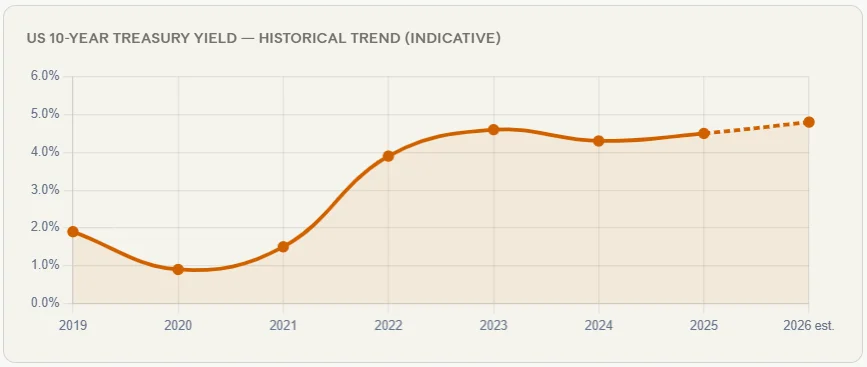
A bond crisis begins when investors lose confidence in government bonds. They sell rapidly and in large volumes. Bond prices drop sharply. Yields, which move inversely to price, spike without warning.
Rising yields force governments to pay far more to borrow. Household and business borrowing costs climb simultaneously. Existing bondholders suffer losses. Corporate earnings weaken. Stock markets often follow bonds downward.
A recent precedent already exists. In 2022, the UK gilt crisis unfolded with alarming speed. UK government bond yields surged, and the Bank of England had to intervene as buyer of last resort. Dimon cited this episode as a preview of what could happen globally.
Three Risk Factors Dimon Highlighted
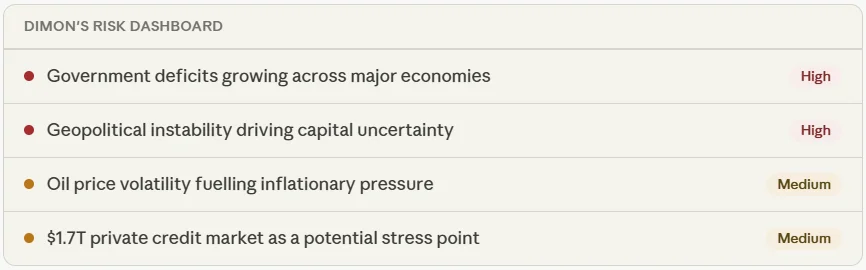
Dimon identified a cluster of risks that could converge and trigger the crisis. He specifically cited geopolitics, oil prices, and widening government deficits. Any single factor could serve as the spark. Together, they form a dangerous and volatile mix.
The Credit Recession Warning
Dimon did not stop at bonds. He raised a second equally stark warning. A credit recession has not occurred in a very long time. When it finally arrives, the damage could far exceed what most investors expect.
The private credit market has grown to $1.7 trillion. Dimon noted that it is not yet large enough to be a systemic risk on its own. But combined with a bond sell-off, the damage could multiply rapidly across markets.
Policymakers Must Act Before Markets Force Them
Dimon stopped short of predicting imminent collapse. He was clear, however, that waiting is reckless. He has told regulators directly, “A crisis will happen. And then the regulators will panic.” JPMorgan, he added, would be fine. The broader system is less certain.
His message to policymakers was pointed: address debt trajectories now. Do not let markets force the decision. The die, Dimon warned, may already have been cast. It just has not landed yet.
What This Means for Investors
For everyday investors, the implications are immediate and real. Rising yields hurt existing long-duration bond portfolios sharply. Shorter-duration bonds tend to resist sudden yield spikes better. Inflation-protected securities can also offer a meaningful buffer.
Overhauling an entire portfolio based on one warning is not advisable. The timing of any crisis remains deeply uncertain. But diversifying into shorter maturities is a prudent, low-cost hedge. Dimon’s track record makes this warning very difficult to ignore.