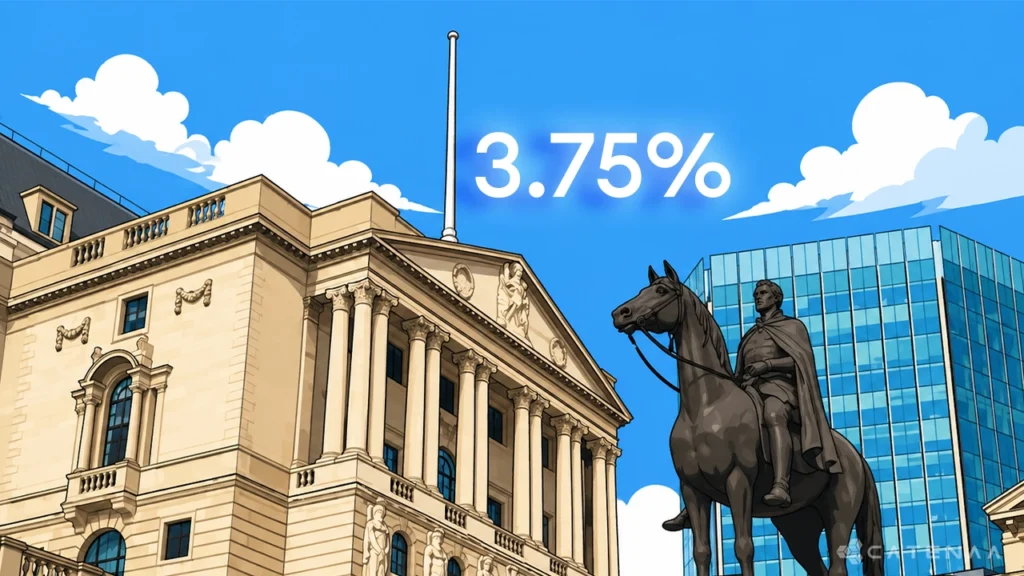


April 25, 2026 – Bank of America expects a 7-2 vote to hold amid an energy shock, surging inflation expectations, and cooling wages, but forecasts two hikes by July.
In Summary
BofA expects BoE to hold Bank Rate at 3.75% next week.
Forecast MPC vote: 7-2 to hold, with Pill and Greene dissenting.
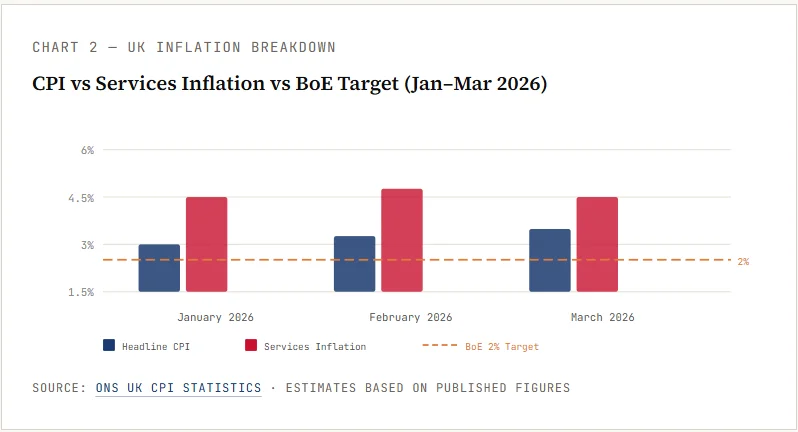
UK inflation rose to 3.3%; services inflation hit 4.5% in March.
Household inflation expectations jumped to 5.4%, highest since 2023.
Two rate hikes still forecast: June and July 2026.

The Hold Decision: Why April Is Too Soon
The Bank of England is widely expected to keep its Bank Rate at 3.75% at next week’s meeting. Bank of America analysts delivered this verdict on Thursday. They argue the BoE simply lacks enough data to justify action.
The key driver is the ongoing energy shock. Its full impact on growth and prices remains unclear. Governor Andrew Bailey has already signalled a cautious stance. He said publicly he sees no urgent case for an April hike.
BofA forecasts a 7-2 vote in favour of holding rates. Huw Pill and Megan Greene are expected to push for an immediate increase. An 8-1 split remains possible if one hawk softens their position.
“It is too soon for the BoE to have enough evidence to act in response to the energy shock.”
— Bank of America Research Note, 24 April 2026
Hawkish Data, But Not Enough to Force Action
Economic readings since March’s meeting lean hawkish. ONS data showed February GDP beat expectations. The labour market also tightened sharply.
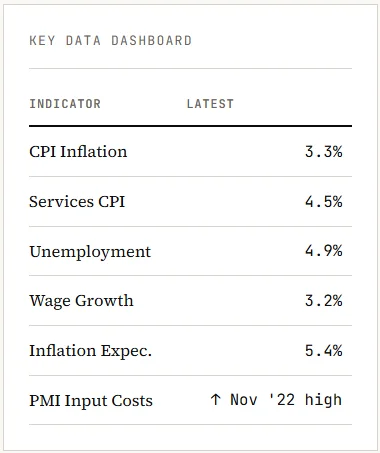
The unemployment rate fell to 4.9% in March. This is down from 5.2% in February. The BoE’s own forecast was 5.2%. The miss is significant.
CPI inflation climbed to 3.3% in March, well above the 2% target. Services inflation rose to 4.5%. That figure is particularly sticky and worrying for policymakers.
PMI Data Signals Cost Pressure Is Mounting
April’s UK PMI surveys showed renewed growth momentum. But input costs rose at the fastest pace since November 2022. Output price inflation hit its highest level since February 2023.
This tells a mixed story. Businesses are growing. But cost pressures are building sharply. If sustained, firms will push higher costs to consumers.
Perhaps the most alarming signal came from households. YouGov/Citi survey data showed short-term inflation expectations surged from 3.3% to 5.4% in March. This is the highest reading since 2023. Anchoring expectations is central to the BoE’s mandate.
One Bright Spot: Wages Are Cooling
Not every indicator is hawkish. Private sector wage growth softened to 3.2% in March. The BoE’s own forecast was 3.5%. This undershoot reduces pressure for a pre-emptive hike.
Gas prices have also retreated slightly from mid-March levels. Combined with a potential ceasefire in ongoing conflict, energy risks may be fading, at least at the margin.
BofA sees these factors as enough reason to wait. The bank expects the BoE to reiterate a readiness to act, but without committing to a specific path.
What Comes Next: June, July, Then Cuts
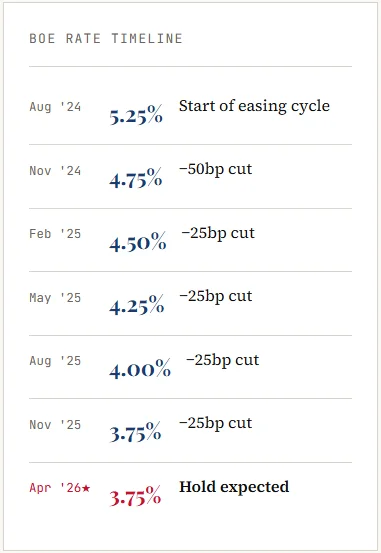
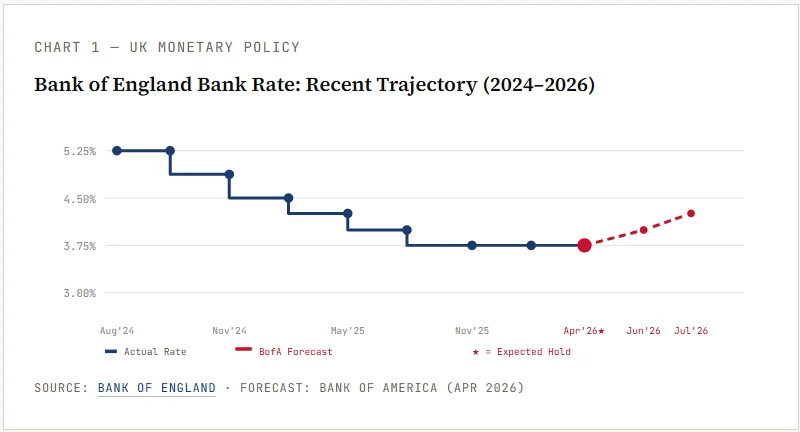
BofA’s rate path forecast is precise. It calls for two consecutive hikes, in June and July 2026. Both would add 25 basis points each. That would push the Bank Rate to 4.25%.
After that, BofA expects three quarterly cuts. These would begin in Q2 2027. The terminal rate would settle at 3.5%. This is a relatively shallow easing cycle.
A ceasefire in the current conflict could shift this outlook. It would raise the probability of only one hike. It also raises the chance of earlier cuts arriving in 2027.
The BoE is expected to keep the door open to modest hikes, but only if energy prices remain elevated.
— BofA Research Summary, April 2026
Market Implications
The hold decision is largely priced in. Sterling volatility around next week’s announcement should remain contained. Gilt yields may edge lower if the MPC sounds more cautious than expected.
Mortgage holders and businesses are caught in a difficult middle ground. Rates are not rising yet, but neither are they falling. The BoE is playing for time. Whether that patience pays off depends heavily on how the energy shock evolves.




