

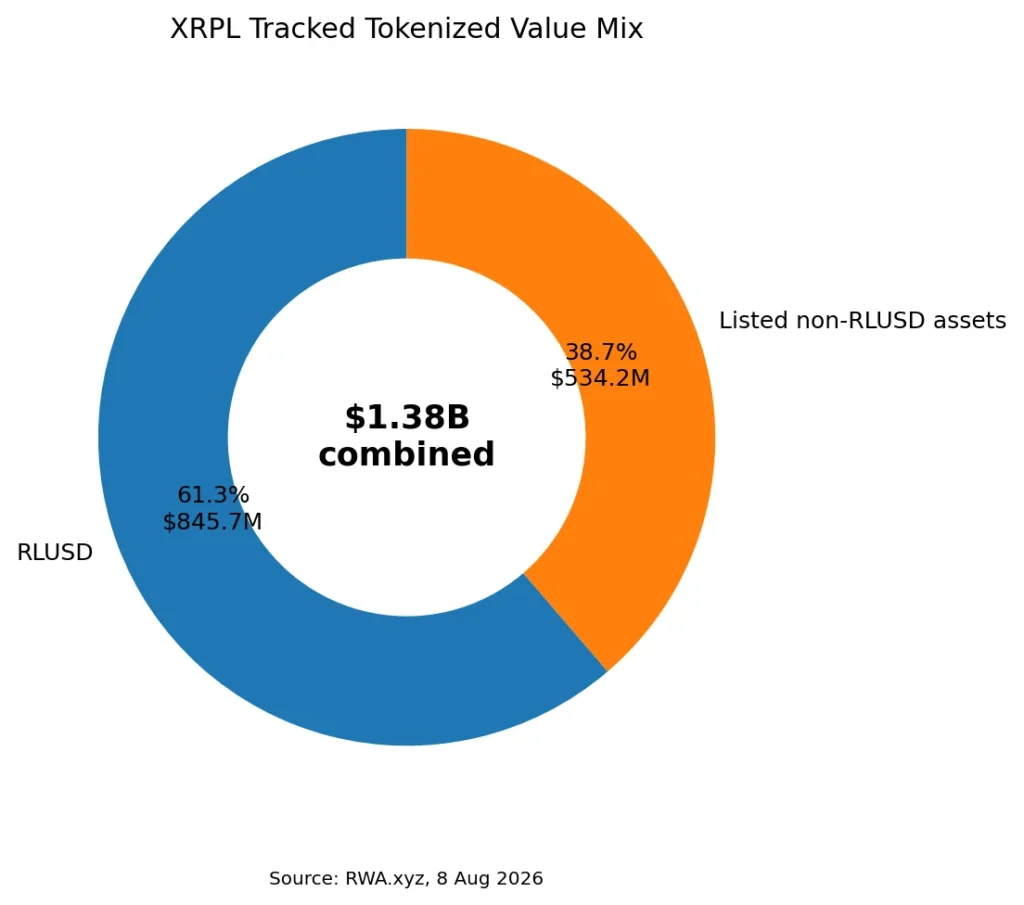
August 09, 06 – The XRP Ledger is moving closer to privacy features built for regulated finance. Version 3.3.0 adds proposed tools for confidential transfers, batching, sponsorship, and delegated permissions. The timing matters because tokenized assets on XRPL now sit above $1.3 billion when stablecoins are included. The upgrade could reduce several operational barriers that still keep institutions cautious.
In Summary
Confidential Transfers would hide token balances and payment amounts while preserving audit controls.
Tracked non-RLUSD tokenized assets on XRPL total about $534 million across the listed leading platforms.
The amendments still need sustained validator approval before they can activate on the main network.
Privacy becomes the institutional hook
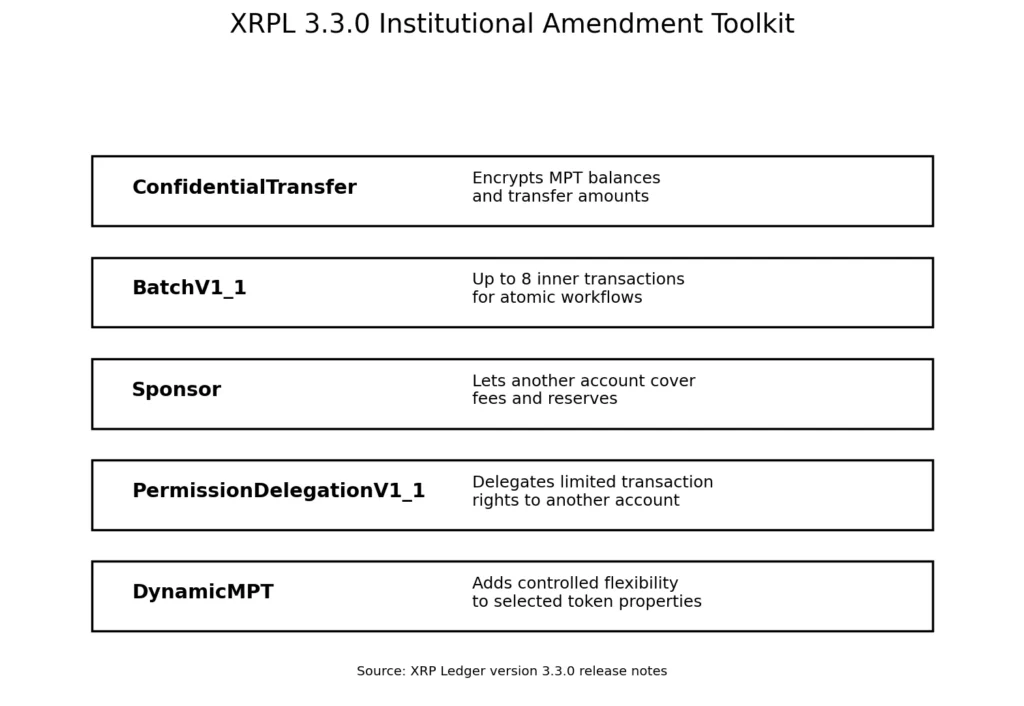
The XRP Ledger Foundation released xrpld version 3.3.0 on August 6. The release introduces six proposed amendments and several protocol fixes. Its most important institutional feature is ConfidentialTransfer for Multi-Purpose Tokens, or MPTs. The update uses encryption and zero-knowledge proofs to protect sensitive transaction values.
The design addresses a clear institutional concern. Public blockchains expose positions and transfer sizes by default. That transparency can reveal treasury movements, fund flows, and trading intent. Therefore, confidential settlement can make public infrastructure more practical for asset managers and financial institutions.
Why the $530 million figure matters
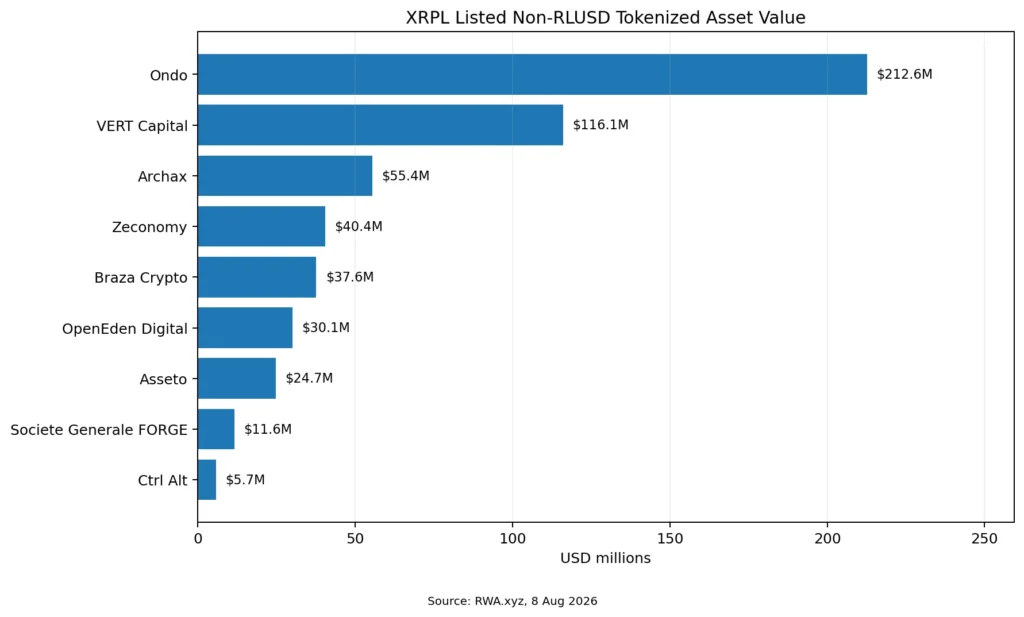
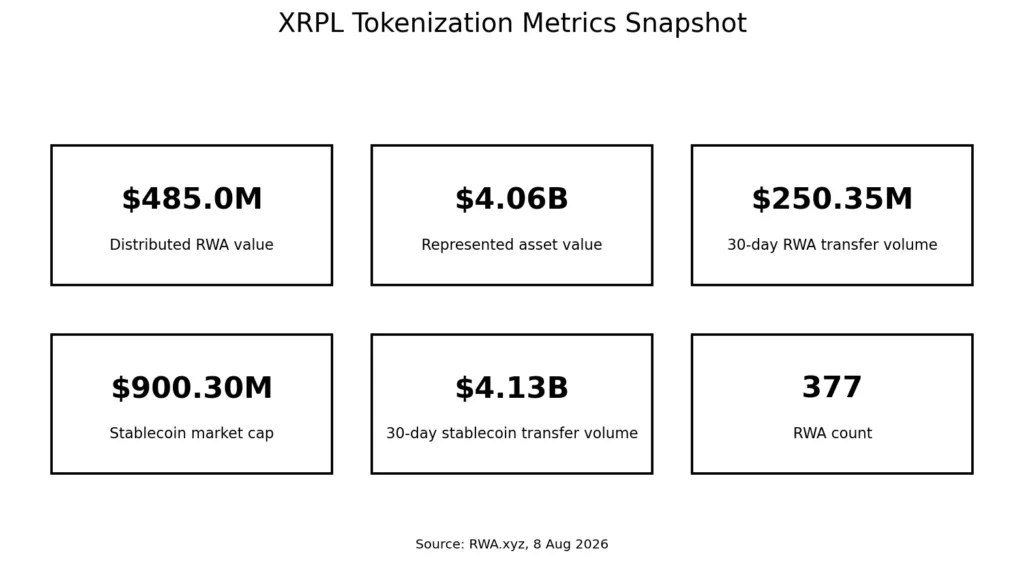
Current network data shows why the proposal is more than a technical experiment. RWA.xyz lists about $845.7 million of RLUSD on XRPL. It also lists roughly $534.2 million across leading non-RLUSD platforms. That second pool includes Ondo, VERT Capital, Archax, Zeconomy, OpenEden, and other issuers.
Ondo alone accounts for about $212.6 million. VERT Capital represents about $116.1 million, while Archax contributes about $55.4 million. This concentration means adoption by only a few issuers could quickly influence confidential transfer usage.
However, concentration also creates risk. A small number of issuers still dominate tokenized value on the network. XRPL therefore needs broader issuance, deeper secondary activity, and more institutional users to prove durable product-market fit.
Privacy is necessary, but not sufficient
The Confidential Transfers specification uses EC-ElGamal encryption and zero-knowledge proofs. Individual balances and transfer amounts can stay hidden from the public. At the same time, issuers can preserve supply controls and compliance functions.
The design also supports selective disclosure. Authorized auditors can receive encrypted balance views through dedicated keys. Issuers can also use view keys for targeted disclosure. This structure aims to balance confidentiality with regulated oversight.
Still, the first version has limits. Confidential transfers focus on direct MPT payments between accounts. They do not yet extend to the built-in exchange, escrow, or checks. That limits immediate use for trading and collateral workflows.
Five tools target institutional friction
Privacy is only one part of version 3.3.0. BatchV1_1 can package up to eight inner transactions. That feature can support atomic workflows where every step succeeds together.
Sponsor lets a company cover another account’s fees and reserve requirements. This removes the need for every new user to hold XRP before transacting. PermissionDelegationV1_1 also lets institutions assign limited transaction rights without surrendering full account control.
DynamicMPT gives issuers more flexibility over selected token properties. Together, these changes target onboarding, operations, permissions, and product administration. Those are practical issues that often matter more than raw blockchain speed.
Adoption now becomes the real test
Institutional activity on XRPL is already moving beyond pilots. Aviva Investors launched a tokenized share class of its US Dollar Liquidity Fund in July. The structure keeps the same investment objective, risk profile, and liquidity characteristics as the conventional fund.
The product also received Central Bank of Ireland approval. Bank of New York Mellon holds the underlying assets as custodian. That combination matters because it connects blockchain distribution with familiar regulated fund infrastructure.
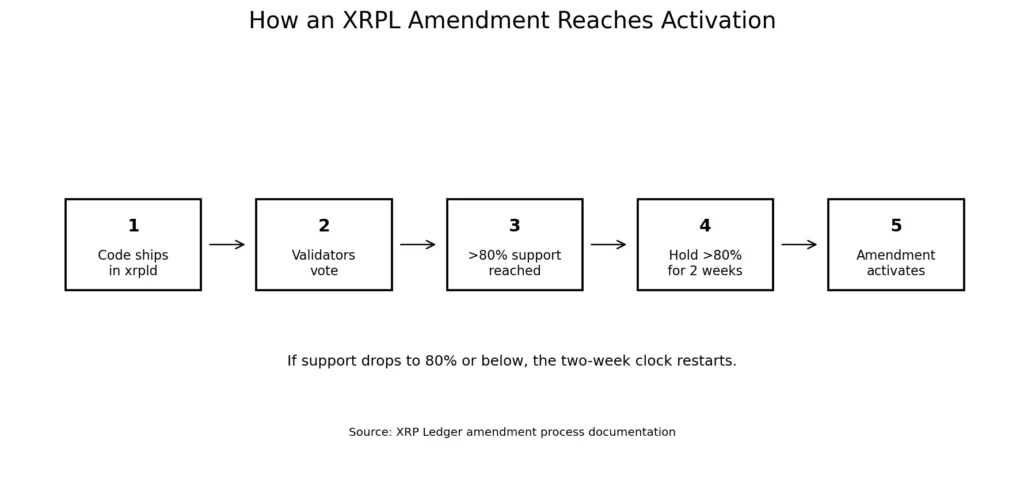
However, the new amendments are not automatically live. XRPL protocol changes require more than 80% validator support for two weeks. If support falls below the threshold, the approval clock resets.
What investors should watch next
The first milestone is validator support for ConfidentialTransfer and the other amendments. The second is whether existing issuers actually opt into confidential balances.
The third is secondary-market integration. Privacy will have greater value when it reaches trading, escrow, and collateral workflows. Finally, watch issuer concentration and transfer volumes. Growing asset value matters, but sustained usage will provide the stronger institutional signal.
The XRP Ledger privacy upgrade is therefore more than a privacy story. It is a test of whether public blockchains can support regulated finance without exposing every operational detail.