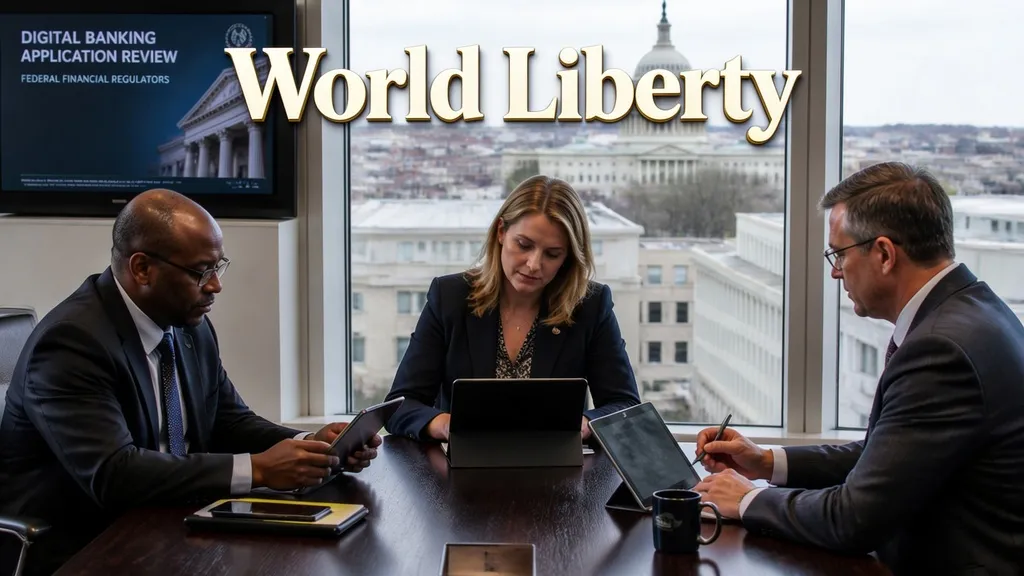


Catenaa, Monday, June 22, 2026- World Liberty Financial, the cryptocurrency venture backed by U.S. President Donald Trump and his family, is reportedly nearing approval for a federal trust bank charter from the Office of the Comptroller of the Currency, a development that could reshape the company’s position in the rapidly expanding stablecoin market.
According to reports citing former regulatory officials, approval of the application is expected in the coming weeks, potentially granting World Liberty authority to operate as a federally regulated trust institution under OCC supervision.
The approval would represent one of the most significant regulatory milestones achieved by a Trump-linked digital asset company since the administration returned to office.
If approved, the charter would allow World Liberty Financial to directly issue and redeem its USD1 stablecoin, manage reserve assets, provide digital asset custody services and facilitate settlement operations under a single federal regulatory framework.
The move would eliminate the need for certain third-party intermediaries currently involved in the stablecoin’s operations and could significantly streamline payments and treasury management activities.
Federal trust status would also provide greater credibility among institutional investors and financial institutions considering adoption of the company’s products.
National trust bank status offers several advantages for digital asset firms.
The charter enables companies to operate under federal oversight while preempting many state-level licensing requirements that often create regulatory complexity for crypto businesses.
Several major digital asset firms, including stablecoin issuers and custodians, have pursued similar regulatory pathways as the U.S. government moves toward a more structured digital asset framework.
For World Liberty, the approval could strengthen the competitive position of USD1 as stablecoin adoption accelerates globally.
The anticipated approval is already drawing criticism from political opponents and ethics advocates.
Questions center on President Trump’s connection to the company and whether regulatory decisions involving businesses linked to the president create potential conflicts of interest.
Public disclosures indicate that Trump family interests remain financially connected to World Liberty Financial through various ownership structures and revenue-sharing arrangements.
Democratic lawmakers have repeatedly raised concerns about the overlap between government policy and the president’s growing involvement in the digital asset sector.
The development comes as stablecoins increasingly emerge as one of the most important sectors within digital finance.
Recent regulatory progress through legislation such as the GENIUS Act has accelerated institutional adoption and encouraged more traditional financial players to enter the market.
Industry analysts expect stablecoin transaction volumes to continue expanding as businesses seek faster and more efficient cross-border settlement systems.
Federal approval would place World Liberty among a select group of crypto firms operating under direct national regulatory oversight.
The move could boost confidence in USD1 while strengthening the broader stablecoin ecosystem in the United States.
However, it is also likely to become a focal point in ongoing political debates surrounding cryptocurrency regulation, presidential ethics and the growing intersection between digital assets and government policy.
World Liberty Financial was launched shortly before the 2024 U.S. presidential election and has rapidly expanded its presence in decentralized finance and stablecoin markets. Its USD1 stablecoin has become a central component of the project’s strategy to build blockchain-based financial services. The OCC has increasingly become a key regulator for crypto firms seeking federal oversight, granting approvals to several digital asset companies as Washington develops a more comprehensive regulatory framework. The anticipated charter decision comes as Congress continues debating broader digital asset legislation, including the CLARITY Act, while stablecoins gain prominence as a bridge between traditional finance and blockchain networks.




