

August 15, 2026 – The World Liberty bank charter has cleared a major regulatory hurdle for its USD1 stablecoin business. The approval could tighten federal oversight while expanding institutional distribution.
In Summary
The OCC granted preliminary conditional approval for World Liberty Trust Company on August 14, 2026.
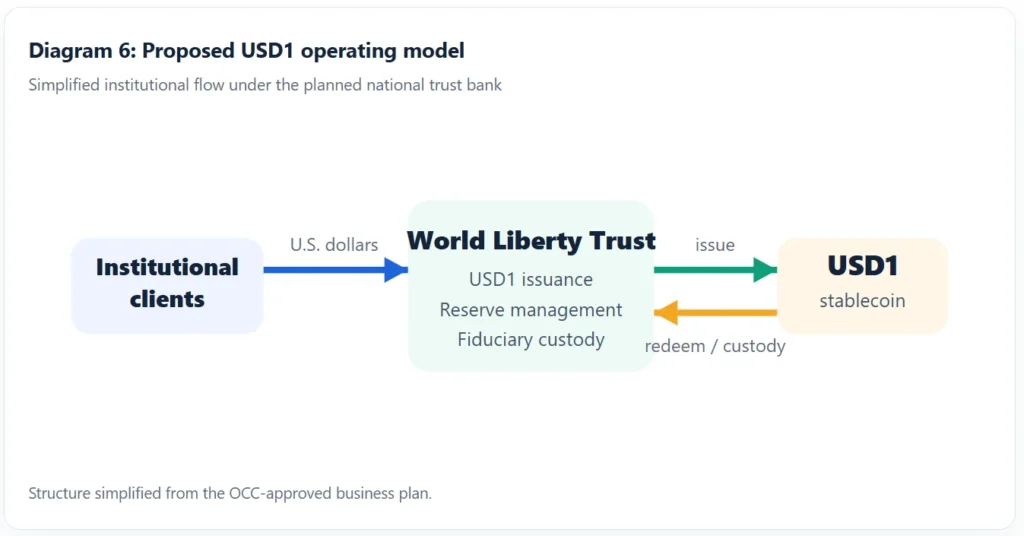
The proposed national trust bank would issue USD1, manage reserves, and provide institutional digital asset custody.
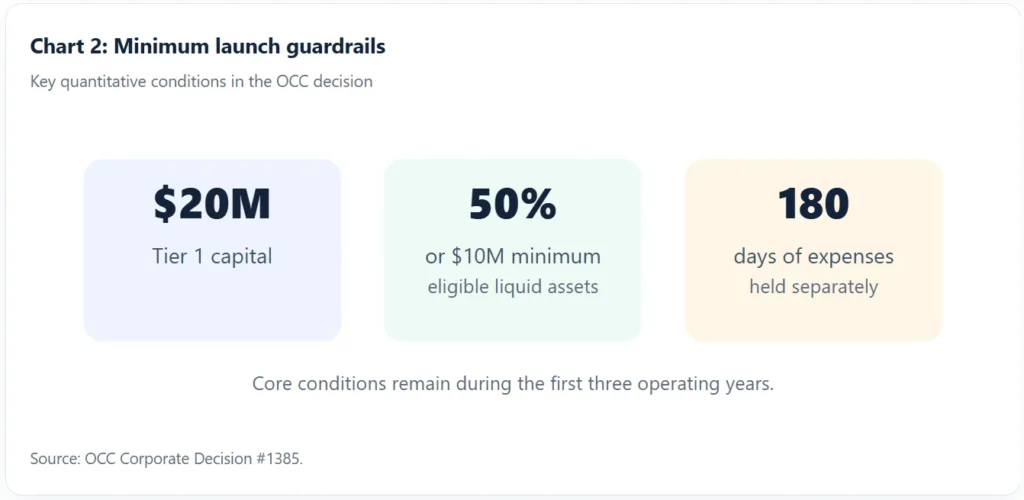
The bank must hold at least $20 million in tier 1 capital before operating.
Final approval still depends on a preopening examination and detailed compliance requirements.
Political scrutiny remains because lawmakers have raised conflict concerns involving President Trump and his family.
A federal charter moves USD1 closer to banking infrastructure
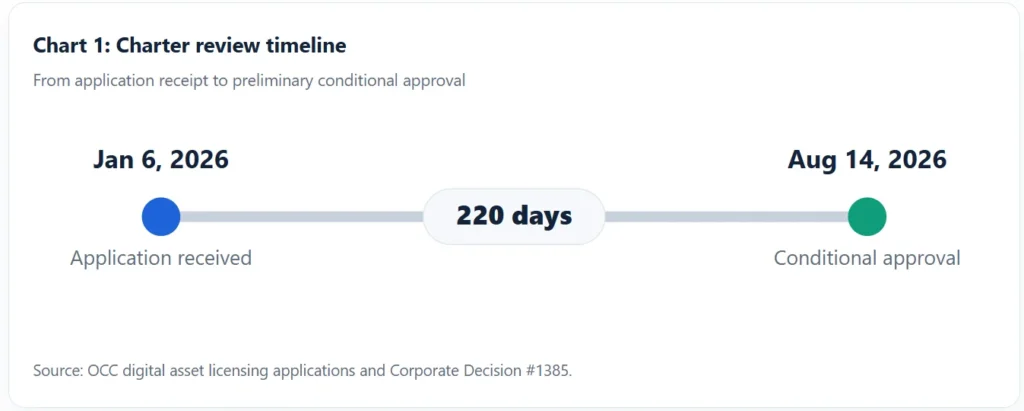
The Office of the Comptroller of the Currency granted preliminary conditional approval to World Liberty Trust Company. The decision advances a national trust bank focused on digital asset services. The application reached the OCC on January 6, 2026. Approval arrived 220 days later, on August 14.
The proposed bank would operate from Bay Harbor Islands, Florida. It would remain a wholly owned subsidiary of WLTC Holdings LLC. Its planned activities center on USD1. These include issuance, redemption, reserve management, custody, and limited conversion services. The bank plans nationwide USD1 issuance for institutional clients. It would assume that role from BitGo, the current exclusive issuer and custodian. However, the approval is not a license to begin business immediately. The OCC can still modify, suspend, or rescind approval.
Capital rules show regulators want a controlled launch
The OCC attached unusually clear operating guardrails to the proposed bank. Those conditions provide a useful measure of regulatory risk tolerance. World Liberty Trust must maintain at least $20 million in tier 1 capital. It must also hold substantial eligible liquid assets.
The liquidity floor equals the greater of 50% of tier 1 capital or $10 million. Those assets must remain unencumbered. The bank must separately hold 180 days of operating expenses in eligible liquid assets. It cannot double count those funds.
These requirements remain during the first three operating years. Material business changes also require at least 60 days’ notice.
The charter therefore offers regulatory access with tight supervisory controls. That structure could become a template for other digital asset trust banks.
USD1 would sit inside a larger trust banking system
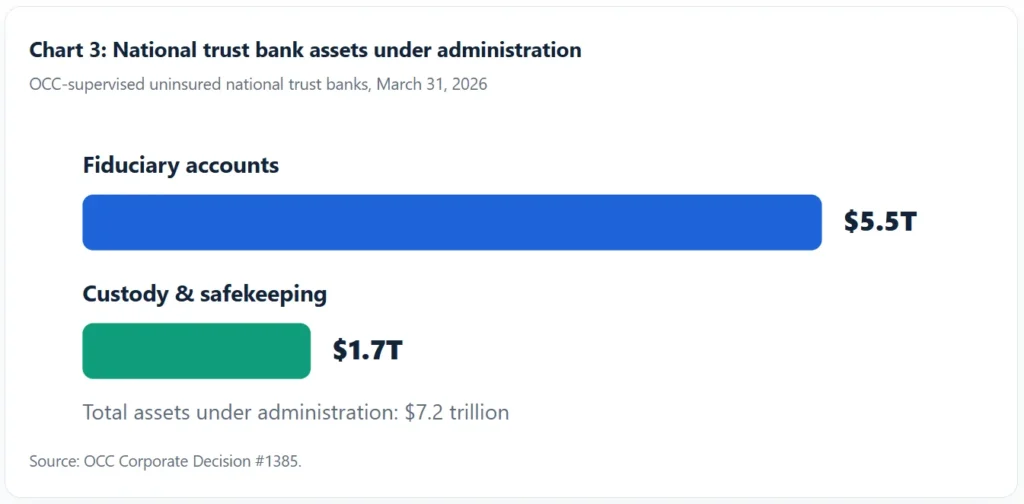
The wider trust banking market is already large. OCC-supervised uninsured national trust banks administered $7.2 trillion at March 31, 2026. Fiduciary accounts represented $5.5 trillion of that total. Custody and safekeeping accounts represented another $1.7 trillion.
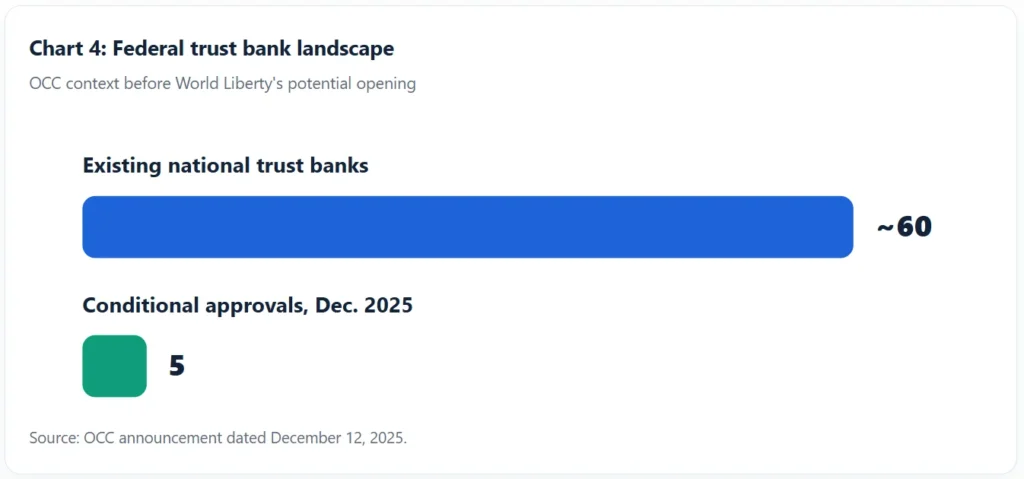
The OCC also conditionally approved five national trust bank applications in December 2025. Those approvals joined roughly 60 existing national trust banks. World Liberty therefore enters an established federal charter category. Yet its stablecoin focus makes the business model more closely watched.
The GENIUS Act strengthens the legal foundation for payment stablecoins. Treasury is now developing rules for compliance, sanctions, and anti-money laundering controls.
Importantly, payment stablecoins are not FDIC-insured deposits. World Liberty Trust also does not plan to seek a Federal Reserve master account.
Political scrutiny remains a material risk
The charter decision does not remove governance questions around World Liberty. Instead, it moves those questions into a supervised banking structure.
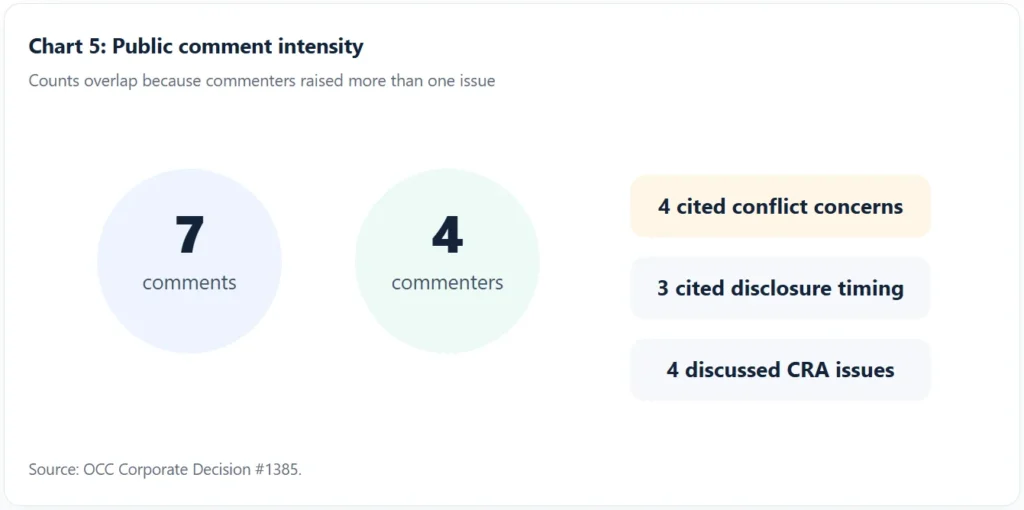
The OCC received seven comments from four commenters. Four commenters raised potential conflicts involving President Trump, his family, and related investors.
Senate Banking ranking member Elizabeth Warren previously urged the OCC to pause the application. She called for divestment before continued review.
The OCC rejected claims that the process received preferential treatment. It said career staff reviewed the application under delegated authority and standard procedures.
That disagreement will likely remain politically important. However, the immediate regulatory question now concerns execution against the charter conditions.
What comes next
World Liberty Trust still faces a preopening examination and multiple operational tests. It must complete governance, audit, cybersecurity, BSA, and OFAC requirements.
The organizers must raise required capital within 12 months. The bank must open within 18 months or the approval expires.
For USD1, the strategic benefit is significant. Issuance, custody, and reserve management could move into one federally supervised entity.
That could improve institutional confidence and reduce fragmented operational responsibilities. However, supervision will also expose the business to ongoing regulatory scrutiny.
The bigger signal extends beyond one stablecoin. Federal trust charters are becoming a key bridge between digital assets and regulated financial infrastructure.