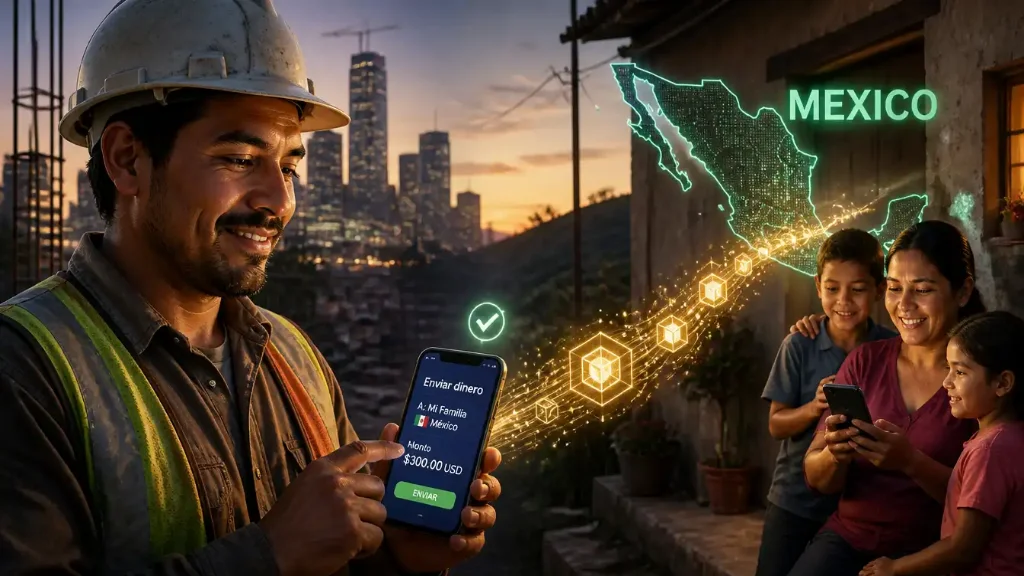


Catenaa, Saturday, August 15, 2026- Movement, El Vecino and RISE are launching a digital-dollar remittance service that lets users send money from the US to Mexico through WhatsApp, using stablecoins for behind-the-scenes settlement.
The model could offer a glimpse of how stablecoins reach mainstream users without requiring them to understand wallets, blockchains or crypto exchanges.
Customers initiate transfers through WhatsApp instead of downloading a separate application or opening a traditional bank account. Movement’s payment infrastructure handles blockchain-based settlement, while RISE supplies self-custody wallet technology.
Recipients in Mexico can collect money through OXXO and Circle K retail locations or receive it through Mexico’s SPEI electronic banking system.
The service will initially be tested among El Vecino’s roughly 20,000 customers. A second phase is expected to expand through RISE’s network to about 800,000 potential users, with Guatemala and El Salvador among possible future markets.
El Vecino, a New Jersey-based financial services business serving Mexican communities, processes about 25,000 transactions monthly across remittances, bill payments and other services. Its annual transaction value is approximately $70 million, with about 85% involving Mexico.
The companies are targeting one of the world’s biggest cross-border money flows. More than $62 billion moved through the US-Mexico remittance corridor in 2024, according to figures cited in the announcement.
The more important experiment, however, may be what customers do not see.
Stablecoins are being used as settlement infrastructure rather than marketed as an investment product. Users interact with WhatsApp and familiar cash-out services while blockchain rails move value underneath the transaction.
Movement said its infrastructure gives businesses access to regulated fiat entry and exit points across the US, Canada and Europe. The companies say blockchain settlement can reduce transfers that traditionally take days to seconds while reducing dependence on correspondent banking networks.
The approach reflects a broader shift in stablecoin adoption. Payment companies are increasingly positioning dollar-backed tokens as infrastructure for cross-border settlement rather than assets consumers must actively buy and manage.
If the model scales, WhatsApp and other familiar messaging platforms could become an important gateway to blockchain payments, particularly among communities underserved by conventional banking.
For stablecoins, that could mark an important transition: crypto adoption without requiring users to know they are using crypto.




