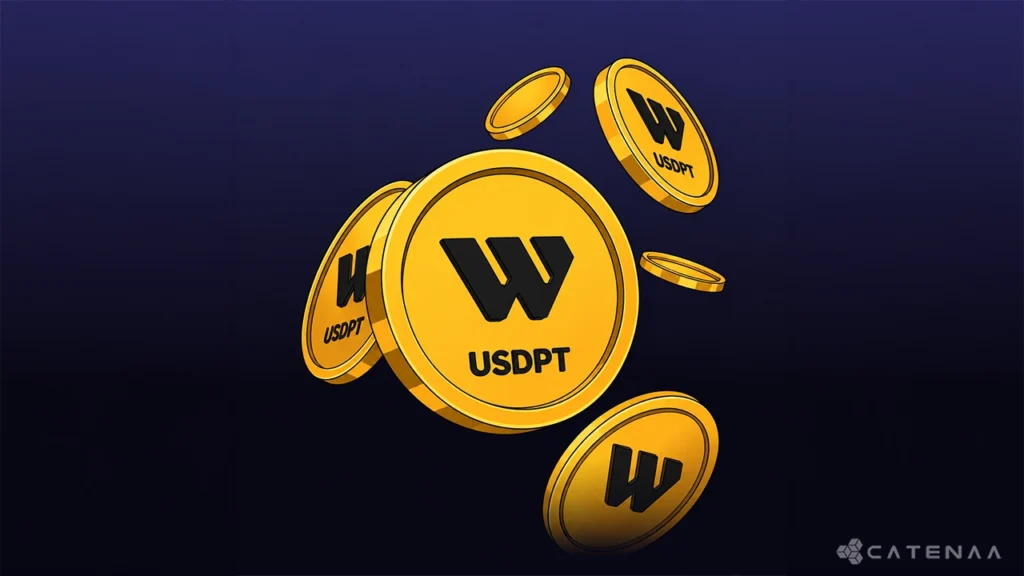


Catenaa, Friday, May 08, 2026- Western Union has launched a US dollar-backed stablecoin called USDPT on the Solana blockchain, targeting cross-border settlement across its global remittance network. The rollout begins in 2026 in selected markets, including the Philippines and Bolivia, where demand for faster international payments remains high. Anchorage Digital Bank issues the token under federal oversight, while Fireblocks supports custody and settlement infrastructure.
The company says USDPT is fully backed by US dollar reserves and designed for continuous settlement across more than 200 countries. The stablecoin will be used for internal treasury flows and agent-to-agent transfers, reducing reliance on traditional correspondent banking rails. Western Union also plans a consumer-facing service called Stable by Western Union across more than 40 countries starting in 2026.
Built on Solana, USDPT benefits from high-speed transaction processing and low fees, which the company expects to improve settlement efficiency. The move aligns Western Union with a growing group of financial firms adopting blockchain rails for payments infrastructure. The stablecoin market has already surpassed hundreds of billions in circulating value globally.
The launch comes during a rapid shift in global payments toward blockchain-based settlement systems. Stablecoins such as USDT and USDC have expanded their role in trading, remittances, and treasury operations over recent years. Large payment networks and banks have started testing tokenized settlement to reduce costs and settlement delays.
Western Union’s entry reflects a broader trend among legacy financial institutions exploring blockchain integration. Firms like Visa have already expanded stablecoin settlement pilots across multiple chains, while traditional banks and fintech companies continue experimenting with tokenized dollar products. These developments are driven by demand for faster cross-border transfers and improved liquidity management.
The choice of Solana highlights a preference for high-throughput networks capable of handling large transaction volumes at low cost. This positions USDPT as part of a competitive environment where blockchain infrastructure choices increasingly influence payment performance and scalability.
The introduction of USDPT could reshape parts of the global remittance market, where fees and settlement delays remain persistent challenges. If widely adopted within Western Union’s network, the stablecoin may reduce reliance on correspondent banking systems that often add cost and processing time.
The integration of blockchain settlement also increases competition among stablecoin issuers and payment processors. Established tokens such as USDT and USDC already dominate liquidity pools, but institutionally issued stablecoins backed by regulated banks may attract additional trust from corporate users and regulators.
Regulatory attention is expected to increase as more payment companies launch tokenized dollars. Authorities in several jurisdictions continue to classify stablecoins as regulated financial instruments, requiring full reserve backing and compliance with money transmission rules.
Experts view the development as part of a broader convergence between traditional finance and blockchain systems. The ability to move fiat-backed value instantly across borders may alter liquidity flows in emerging markets, where remittances form a large share of household income.
Industry analysts note that Western Union’s move signals growing institutional confidence in blockchain settlement layers. Payment firms are increasingly prioritizing systems that allow continuous operation outside traditional banking hours.
Market observers also point to the importance of regulatory clarity in shaping adoption. Fully backed stablecoins issued by regulated entities may reduce perceived risk compared to algorithmic or offshore alternatives. This distinction could influence institutional adoption rates over time.
Technology specialists highlight Solana’s throughput capabilities as a factor in the selection. High transaction capacity and low fees are seen as necessary for global-scale remittance operations that process millions of transfers daily.
Western Union’s USDPT launch marks a shift in how global remittance networks approach settlement infrastructure. The integration of blockchain-based dollar tokens into a long-established payment system signals a gradual restructuring of cross-border money movement.
If adoption expands across its agent network, USDPT could reduce settlement friction and operating costs while increasing speed for end users. The outcome will depend on regulatory alignment, user adoption, and integration with existing financial rails.
Stablecoins have grown from niche crypto instruments into widely used digital dollar equivalents across trading, payments, and savings applications. Their total market value has expanded rapidly in recent years, driven by demand for fast settlement and digital liquidity.
Early stablecoin use was concentrated in crypto trading, but adoption has expanded into remittances and institutional treasury operations. This shift has encouraged financial institutions to explore tokenized dollar systems that operate on public blockchains. At the same time, regulators have moved toward clearer frameworks requiring full reserve backing and oversight.
Payment networks and banks are now experimenting with blockchain rails to reduce settlement delays that often take several days in traditional systems. Countries with high remittance dependence are emerging as early testing grounds for these technologies. Western Union’s USDPT reflects this broader transition toward digital settlement infrastructure embedded within established financial networks.




