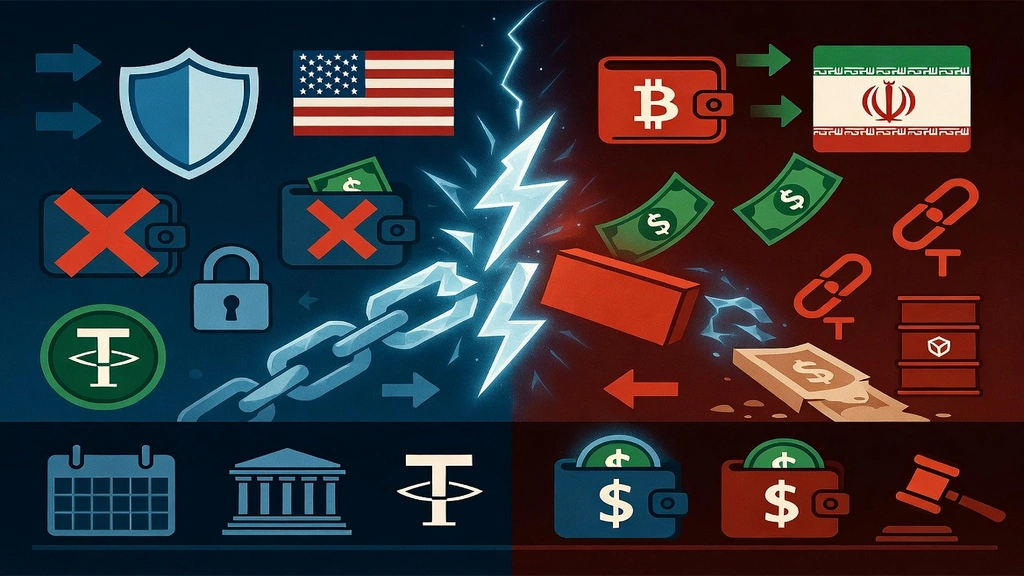


Catenaa, Sunday, April 26, 2025- The US Department of the Treasury sanctioned multiple cryptocurrency wallets linked to Iran on Friday as Donald Trump’s administration intensified economic pressure during a fragile ceasefire, following a move by Tether to freeze $344 million in digital assets tied to sanctioned entities.
The action reflects a growing focus on digital finance as a channel for sanctions evasion. Officials say the targeted wallets were part of efforts by Iranian actors to move funds outside the country amid tightening restrictions. The freeze was carried out in coordination with the Office of Foreign Assets Control and law enforcement agencies.
Authorities are tracking flows linked to Tehran’s financial networks. Blockchain analytics estimates suggest billions of dollars in crypto assets are held within Iran, with a large share tied to state-linked entities. Transfers between private wallets have often involved multi-million dollar movements, raising concern among regulators.
The two wallets frozen this week held more than $300 million in USDT on the Tron network. Both addresses were blacklisted at the smart contract level, preventing further transactions.
The move follows reports that Iran has accepted bitcoin for certain maritime payments linked to oil transit routes. That development has drawn renewed scrutiny from Western policymakers who see crypto as a parallel financial rail.
Sanctions enforcement is now extending deeper into digital infrastructure. Regulators are pairing traditional financial controls with blockchain tracking to disrupt cross-border flows.
The latest measures signal a shift toward targeting liquidity channels rather than just institutions, as authorities attempt to limit how sanctioned entities access global markets.
US sanctions on Iran-linked crypto wallets and a $344 million freeze mark a wider push to block digital channels used to bypass financial restrictions.




