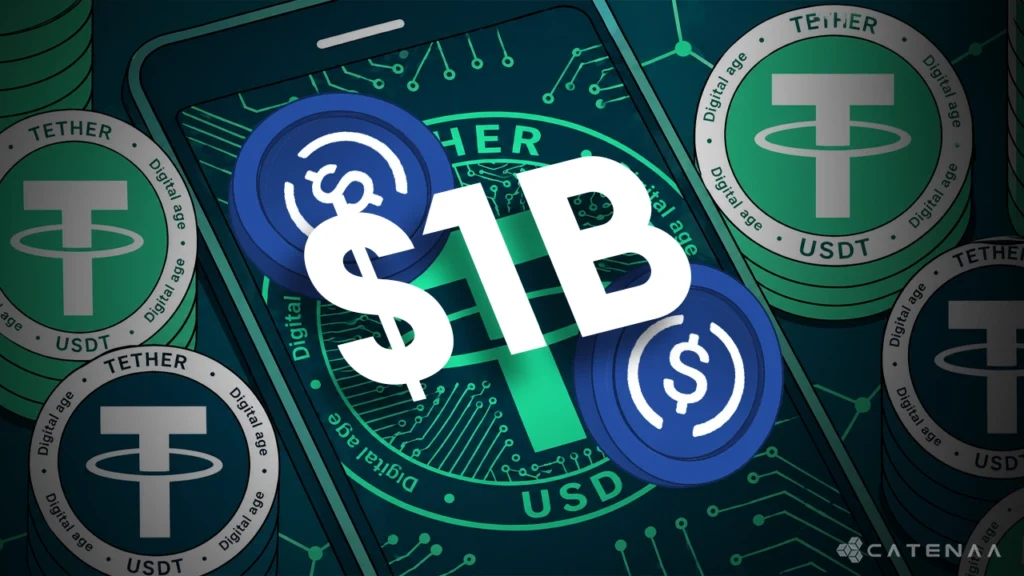


Catenaa, Monday, April 27, 2026- Tether minted another $1 billion worth of USDT on Ethereum, adding fresh liquidity to the crypto market as bitcoin climbed above $76,000 and on-chain trading activity showed signs of recovery.
Blockchain tracking platform Arkham Intelligence flagged the mint shortly after bitcoin moved higher. The issuance pushed total USDT supply to about $193 billion, keeping Tether firmly ahead of rivals in the stablecoin market.
USDT now represents about 58% of the total stablecoin market, which is valued at roughly $320 billion.
Large USDT mints are often closely watched because they can signal that new liquidity may soon enter exchanges, decentralized finance platforms, and trading markets.
Analysts say stablecoin issuance has historically increased before periods of stronger trading activity and rising asset prices.
The latest mint comes as crypto markets regain momentum after a slow period earlier this year.
Bitcoin recently climbed above $76,000, while Ethereum-based memecoins and decentralized trading activity have also started to rise.
Market observers are now watching where the newly minted USDT will be sent.
Fresh stablecoin supply can remain inactive for a period of time. However, once deployed, it often flows into exchanges, lending protocols, and high-risk trading positions.
Tether has not publicly stated how the new USDT will be used. The company often mints tokens in advance to prepare for future customer demand and exchange withdrawals.
Tether remains the largest stablecoin issuer in the crypto market. Its USDT token is widely used for trading, cross-border transfers, and decentralized finance activity. USDT trading volume has reached about $484 billion, far above USDC’s $319 billion.
That gap reflects Tether’s strong position across centralized exchanges and payment networks. Tron has become the dominant blockchain for USDT transfers because of its lower fees and faster transactions. More than half of all USDT activity now takes place on Tron rather than Ethereum.
Even so, Ethereum remains important for large institutional transfers, decentralized finance, and liquidity management.
The latest mint on Ethereum may indicate that larger investors or trading firms are preparing for new activity.
Market Impact
Analysts often see large Tether mints as a sign that market participants expect more trading volume.
On-chain data from Glassnode showed USDT holder accumulation above the 50% threshold, suggesting that stablecoin holders are building positions rather than reducing exposure.
That trend may point to growing confidence in the crypto market.
When stablecoin balances rise, traders often use that liquidity to buy bitcoin, ethereum, and smaller digital assets.
Memecoins can also benefit because they tend to attract speculative inflows during periods of stronger risk appetite.
Ethereum-based tokens have already shown renewed activity in recent weeks.
Some traders believe fresh USDT supply could fuel another round of buying across both large-cap cryptocurrencies and smaller speculative assets.
However, large stablecoin mints do not always lead directly to immediate market rallies.
Sometimes the tokens remain in treasury wallets for weeks before being distributed.
Stablecoin Competition
The stablecoin sector has become one of the most important parts of the crypto economy.
Stablecoins are used for trading, payments, remittances, and settlement across multiple blockchain networks.
Tether continues to dominate the market, but rivals such as USDC, RLUSD, and other regulated tokens are trying to gain market share.
Regulators in the US, Europe, and Asia are also moving toward tighter stablecoin rules.
That could increase pressure on issuers to improve transparency, reserve disclosures, and compliance standards.
Despite those challenges, demand for stablecoins remains strong because they offer fast settlement and easy access to digital markets.
Outlook
The latest $1 billion USDT mint highlights how closely traders watch stablecoin flows for signs of future market direction.
If the new liquidity enters exchanges quickly, it could support another wave of crypto buying. If it remains inactive, the market may have to wait longer for stronger momentum to develop.