

July 15, 2026 – Tether’s bullion pile now rivals a mid-sized nation’s reserves. A new lending tie-up will test whether tokenized gold can work as real loan collateral.

In Summary
Tether now holds roughly 154 metric tons of gold, worth close to $20 billion.
A lending platform will accept its tokenized gold, XAUT, as loan collateral.
Borrowers can draw stablecoins against gold while keeping price exposure.
Custody, redemption, liquidation, and issuer concentration remain open risks.
The Tether gold reserve now approaches $20 billion, and the firm wants that metal to earn its keep. Tether holds roughly 154 metric tons of physical gold. Consequently, its bullion pile rivals the reserves of a mid-sized nation. Now, a fresh lending deal could turn this hoard into active credit.
A stablecoin giant stacks bullion
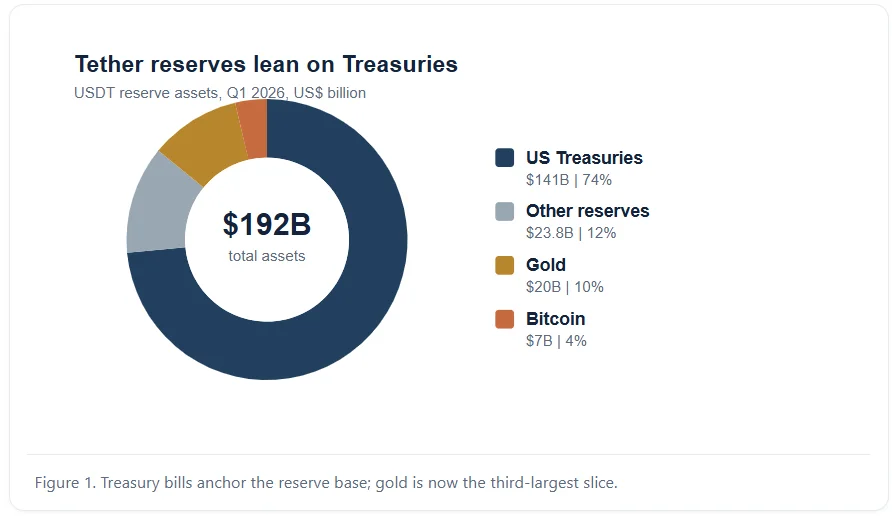
Tether already dominates the stablecoin market by a wide margin. Moreover, it booked about $1.04 billion in net profit during the first quarter of 2026. The company earns most of that money from safe, short-dated bonds. Its reserves lean heavily on US Treasuries, worth roughly $141 billion. However, the issuer has quietly built a second identity around hard assets. Gold now sits at about $20 billion on its books, while Bitcoin adds about $7 billion. Therefore, gold makes up close to one-tenth of the reserve base. Excess reserves also hit a record $8.23 billion during the quarter. Circulating USDT held broadly steady near $183 billion across the same span. Thus, this yield engine now funds a bold push into hard assets.
Bullion that rivals central banks
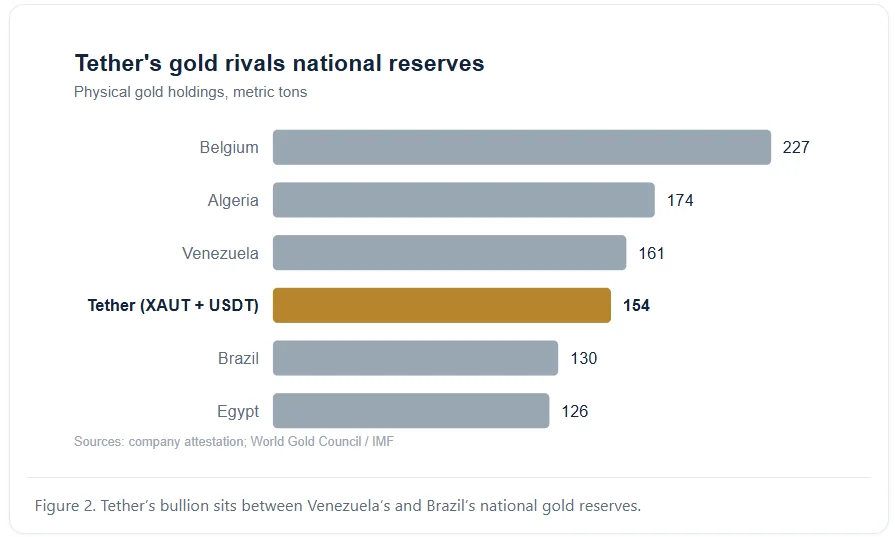
That 154 ton position pushes Tether near sovereign territory. For context, it approaches the roughly 161 tons that Venezuela holds. Few private owners outside big funds and bullion banks carry more. Meanwhile, central banks keep buying the metal at a rapid pace. They added a net 244 tons in early 2026 alone. Prices have since cooled from a record January peak above $5,000. Even so, the metal still trades near $4,000 an ounce. Tether frames its own buying as a hedge against frozen or sanctioned dollars.
From reserve to lending rail
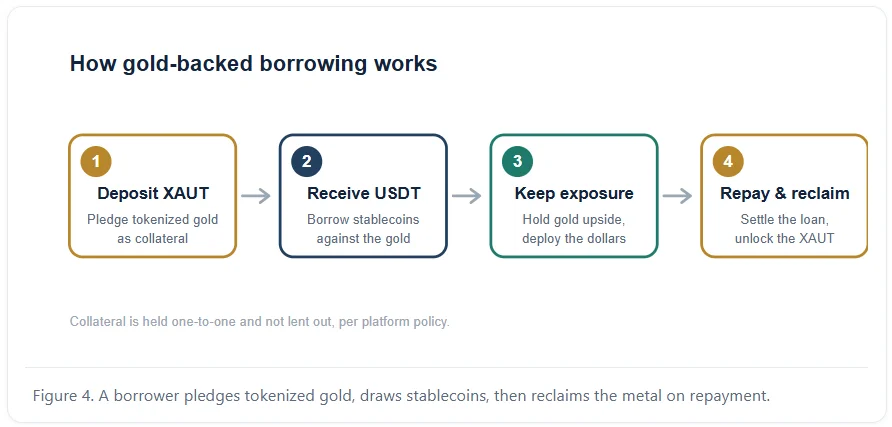
For years, Tether simply stacked gold as a defensive bet. Then a lending platform agreed to accept its tokenized gold as collateral. That wider partnership went live on June 18, 2026. Each token, called XAUT, represents one troy ounce of Swiss vaulted gold. Under the deal, holders can borrow stablecoins against their gold. Furthermore, they keep price exposure and reclaim the metal after repayment. The platform says it never lends out or reuses client collateral. It also earned a BBB minus investment grade rating from a major agency. Notably, gold loans remain off-limits to users in Canada and the European Union.
What tokenized gold unlocks
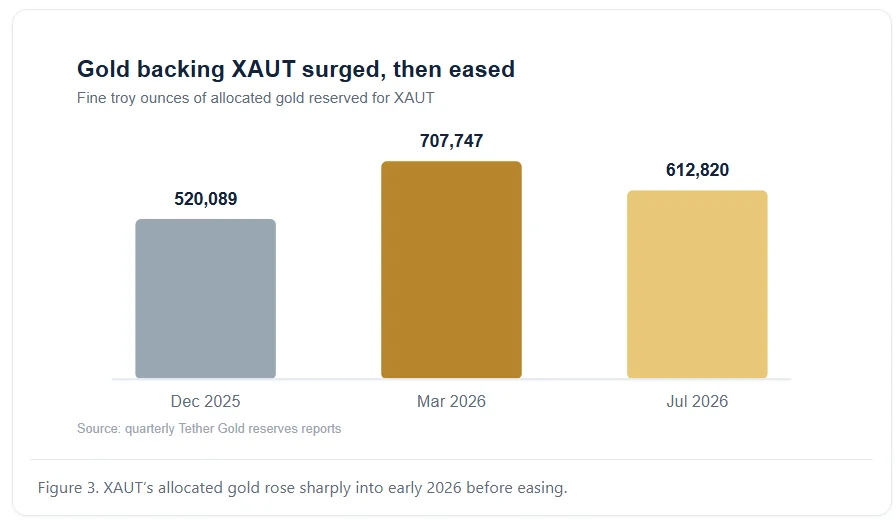
Gold funds remain larger, more liquid, and tightly regulated. One flagship gold ETF alone holds well over $100 billion in assets. Still, an ETF share moves through brokers, clearing houses, and banking hours. XAUT instead settles on a blockchain around the clock. As a result, a holder can pledge gold and receive digital dollars in one step. XAUT already leads the tokenized gold market with more than half its value. Its total size sits near $2.5 billion today.
The risks behind the shine
This borrowing chain still carries real hazards, though. Custody sits at the base, since a Tether affiliate stores the gold in Switzerland. Quarterly attestations confirm the balance, yet they fall short of a full audit. Tether began a Big Four audit in 2026, with results due by 2027. Redemption into physical bars stays limited and slow for most holders. Liquidation risk also looms if gold prices fall sharply. Gold moves less violently than Bitcoin, which steadies collateral buffers. Nevertheless, steep declines could still trigger margin calls and forced sales. Concentration raises an additional concern because one firm controls both tokens. As a result, any stumble at Tether would hit both legs at once.
The gold sits stacked, and the rails stand ready. Soon the market will show which kind of holder appears.
A bet across three markets
Tether now straddles stablecoins, physical gold, and collateralized credit. No single traditional institution spans all three at scale. Bullion banks lend against gold, yet they issue no digital dollar. Likewise, most stablecoin issuers hold Treasuries rather than physical metal. If gold-backed loans draw real demand, the strategy could pay off well. Yet many holders may simply want gold exposure, not debt. For now, regulators have not settled how such loans should work. The gold sits stacked, and the rails stand ready. Soon, the market will show which kind of holder appears.