


June 19, 2026 – Everyday savers chased double-digit yields. Now Strategy’s flagship preferred stock is testing their patience.
In Summary
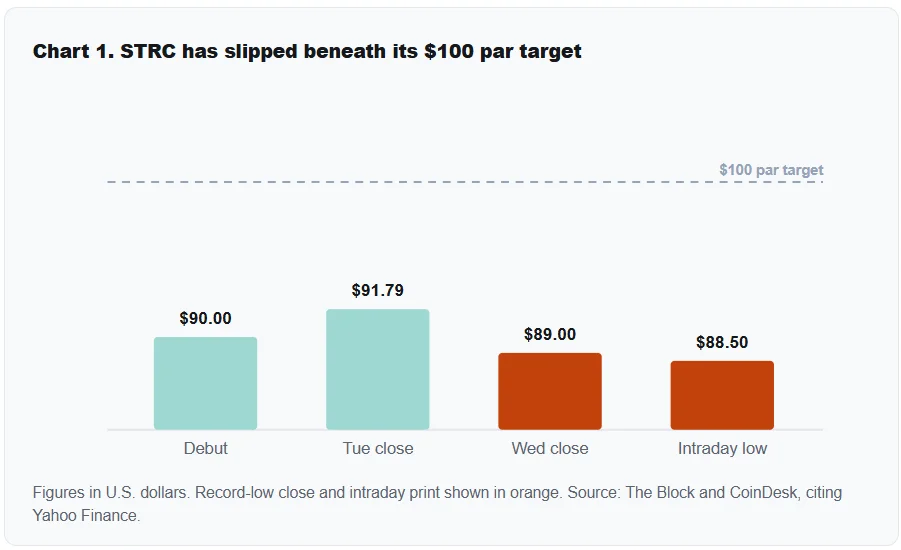
STRC closed at a record low near $89, roughly 11% under its $100 par value.
Strategy paused new STRC share sales, narrowing a key Bitcoin funding channel.
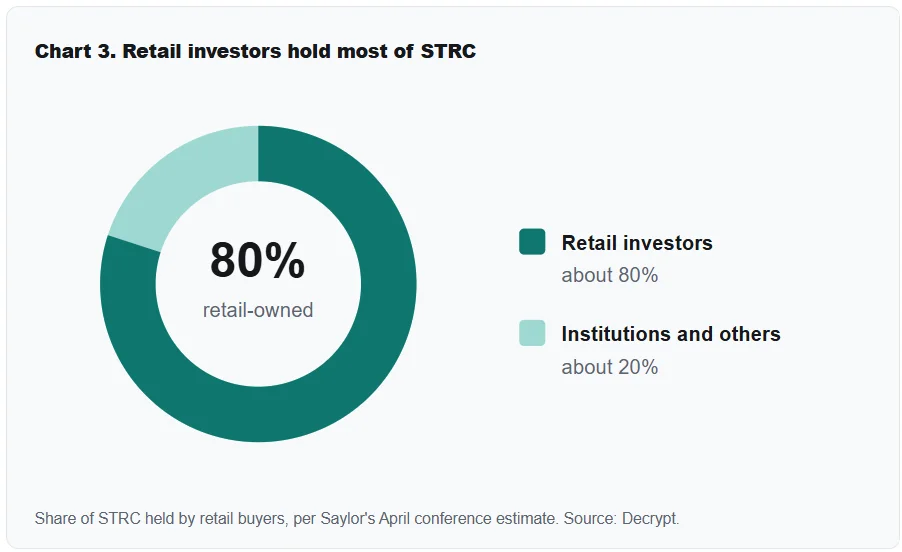
Retail investors own about 80% of STRC, so ordinary savers carry the risk.
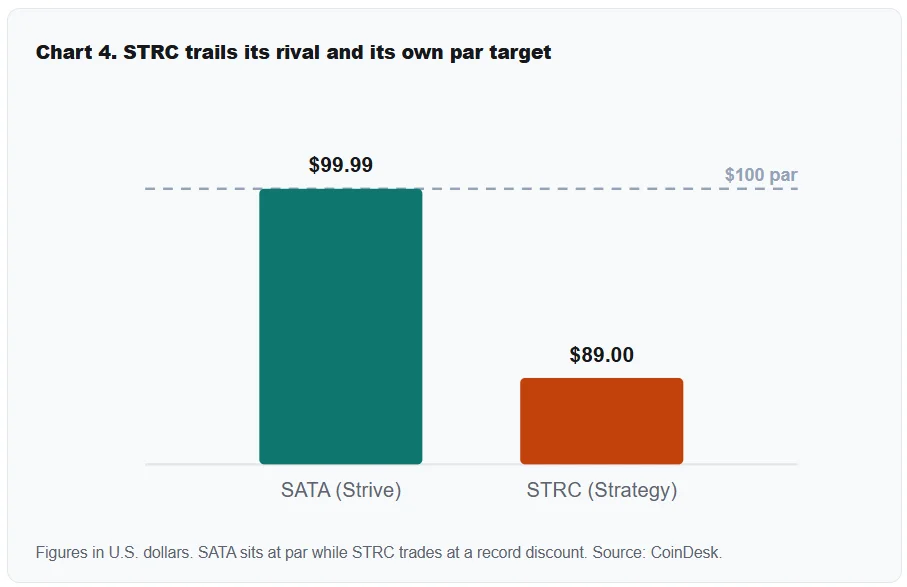
A rival product from Strive now trades near par, pulling capital away.
Strategy’s Yield Star Slips
Strategy’s biggest dividend product is wobbling. STRC, its flagship preferred stock, just hit a record low. The slide has unsettled everyday savers who chased its double-digit yield.
The stock closed at $89 on Wednesday. That marks its lowest level since the July 2025 debut. It also touched an intraday low of $88.50. Therefore, it now trades about 11% below its $100 par value.
What STRC Actually Is
STRC stands for Variable Rate Series A Perpetual Stretch Preferred Stock. Strategy engineered it to hover near $100. Each month, the firm tweaks the dividend to steer the price. As a result, a stable price keeps the whole system working.
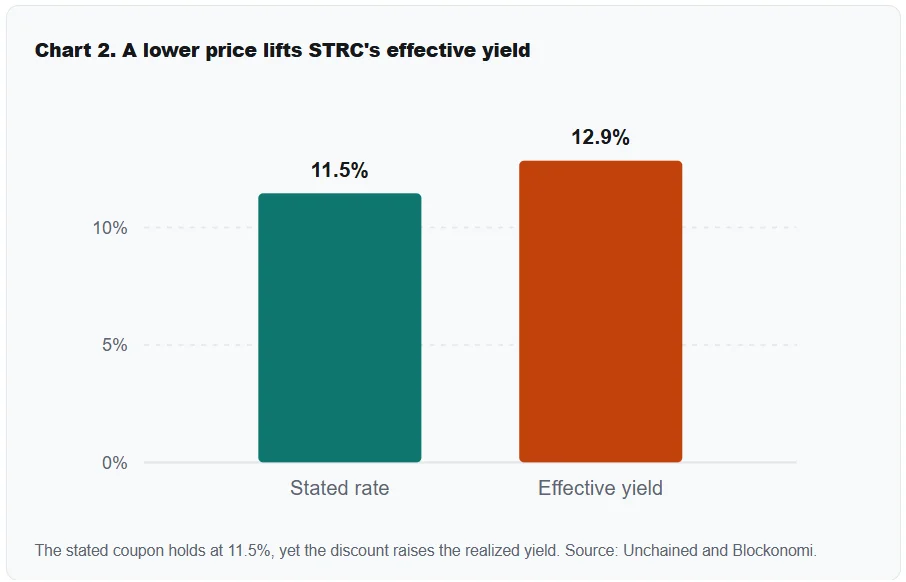
The product carries a stated rate of 11.5%. However, at today’s lower price, the effective yield climbs toward 12.9%. Michael Saylor, Strategy’s chairman, has compared STRC to money market funds. He even likened its launch to Apple’s “iPhone moment.”
A Funding Engine Stalls
The discount does more than spook holders. It also freezes Strategy’s main cash pump. When STRC trades above par, the company sells fresh shares through an at-the-market program. Then it buys Bitcoin with the proceeds.
Now that STRC sits under par, Strategy has paused those sales. Consequently, one core funding channel has narrowed sharply. The firm still holds about 846,842 Bitcoin. That hoard equals roughly 4% of all coins that will ever exist.
The Sale That Rattled Believers
In late May, Strategy sold 32 Bitcoin for about $2.5 million. The cash covered STRC dividend payments. Furthermore, it marked the firm’s first Bitcoin sale since 2022. For a company built on “never sell” pledges, the move carried weight.
To steady nerves, Strategy built a dedicated cash reserve. That buffer recently grew to $1.1 billion. The firm says the reserve covers preferred dividends and debt. Meanwhile, it still bought 1,587 Bitcoin through common stock sales.
“We have 32 years of dividend coverage through our BTC Reserve.”
-Strategy, posting on X, June 17, 2026
Experts Sound A Warning
Some analysts question how well buyers grasp the risk. Glenn Cameron of Onramp Bitcoin called STRC highly fragile. He warned that it depends heavily on Bitcoin’s price. A sharp drawdown could leave holders with losses and no income.
Cameron also drew a stark contrast with bank accounts. STRC carries no insurance, unlike protected deposits. It also ties to a firm that generates little cash. Moreover, its dividends can be suspended indefinitely.
Retail Savers Feel The Squeeze
Ordinary investors carry most of the risk here. Retail buyers own roughly 80% of STRC. At an April conference, Saylor estimated three million households hold it. His stated goal stretches to tens of millions more.
Some of those savers now feel exposed. One California IT worker told Decrypt he feels misled. He gathered about $425,000 of STRC from May. Yet his position sits roughly $42,000 underwater.
Others stay calm. Emery Redenius, a Las Vegas retiree, owns more than $400,000 across STRC and a rival. He treats each dip as a buying chance. “You bought it at perfection,” he said of par buyers.
A Rival Pulls Capital Away
Competition has sharpened the pain. Strive’s SATA offers a higher yield and daily dividends. It also carries a debt-free structure. As a result, some investors have rotated toward it.
SATA recently traded near $99.99, close to par. STRC, by contrast, lagged well behind. The gap between the two reached its widest level on record.
Why The Discount Matters
The whole model leans on one simple idea. STRC must stay near $100 to function. A price near par lets Strategy sell shares cheaply. Those sales then fund fresh Bitcoin purchases. Therefore, a deep discount breaks the loop.
A persistent gap also raises the firm’s cost of capital. It signals fading appetite for Bitcoin-linked yield products. The pressure builds while Bitcoin trades between roughly $62,000 and $65,000. Strategy’s common stock, MSTR, has slid too. The shares fell about 5% on Wednesday to $116.52.
What Happens Next
The next test arrives on June 30. That date brings the first record under a new semi-monthly schedule. Investors will watch the monthly dividend reset closely. A higher rate could pull STRC back toward par. However, it would also raise Strategy’s future funding costs.
Risks also sit in plain sight. Strategy’s prospectus warns of sharp volatility and thin liquidity. It also flags STRC’s junior standing relative to the Company’s debt. Unlike bank deposits, STRC carries no insurance.
Still, not everyone predicts disaster. Analysts at Benchmark and TD Cowen have pushed back on “death spiral” fears. For now, the discount stands as a clear warning light. Its next move will shape Strategy’s Bitcoin ambitions.




