


July 26, 2026 – Throughput is climbing far faster than float. Therefore, analysts now track how hard each digital dollar works.

In Summary
Stablecoin supply has roughly doubled since January 2024, but entity-adjusted transaction volume has grown four to five times.
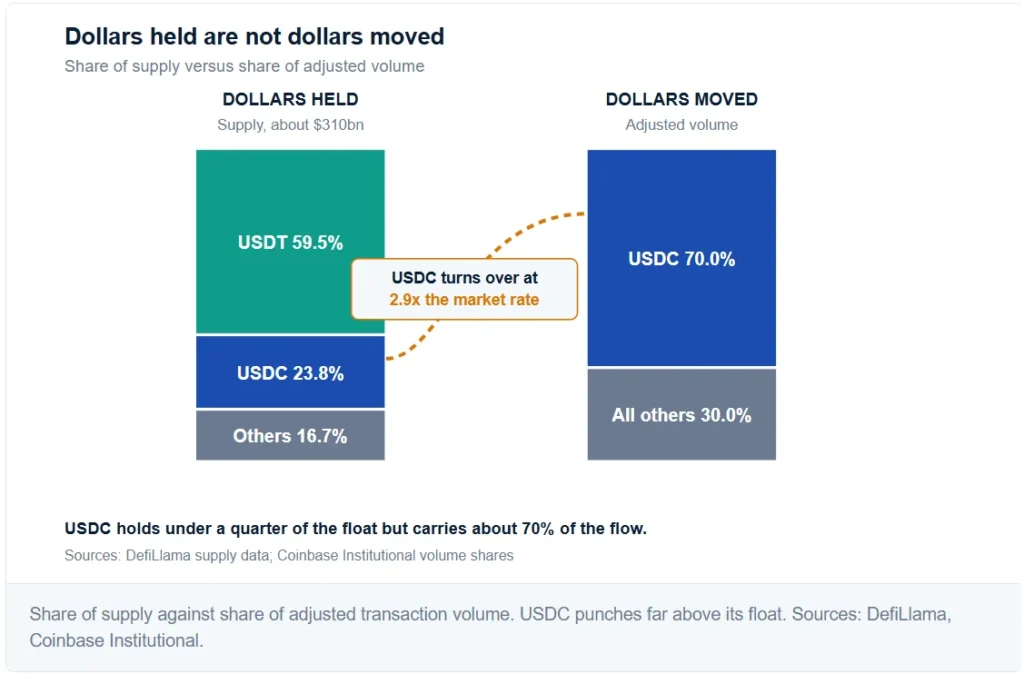
USDC carries about 70% of adjusted volume while holding under a quarter of supply, so it turns its float at nearly three times the market rate.
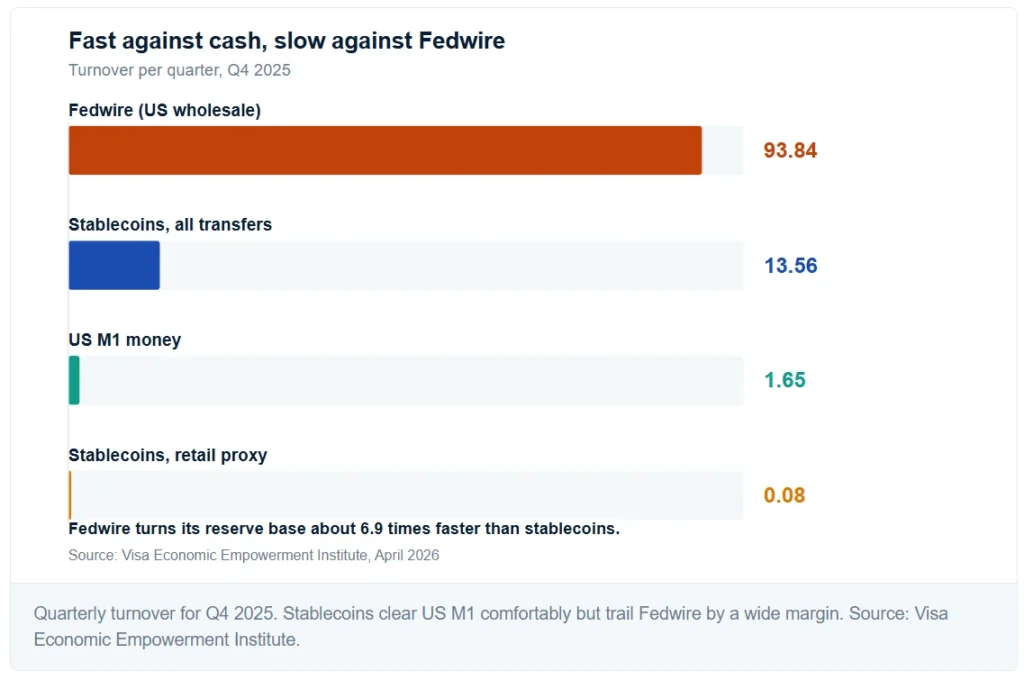
Stablecoin velocity of 13.56 beats US M1 at 1.65, yet Fedwire still runs at 93.84, about 6.9 times faster.
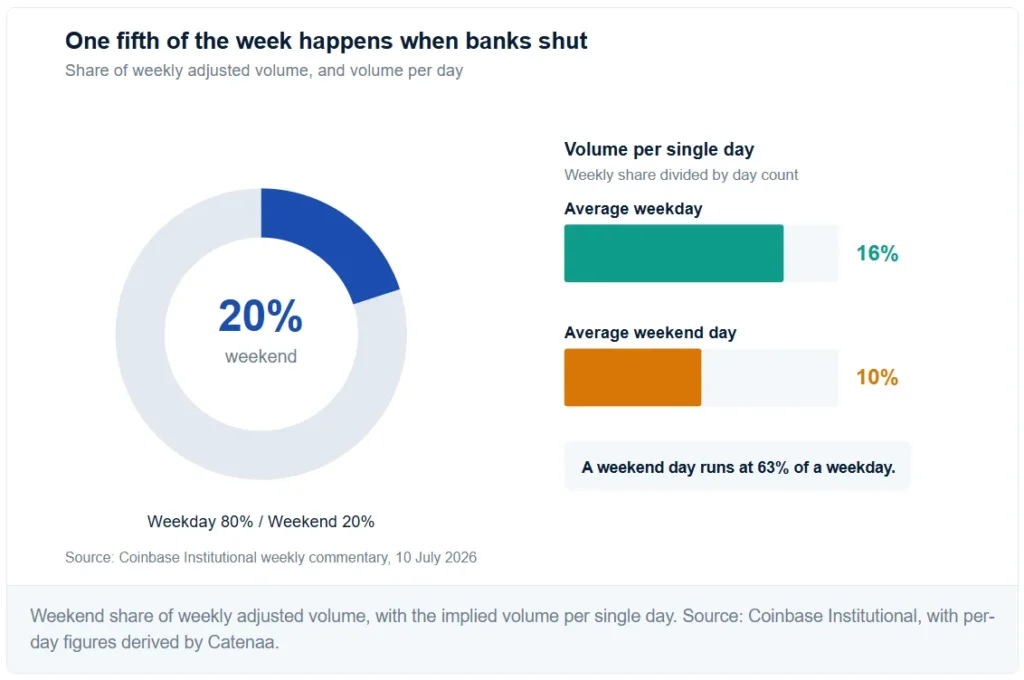
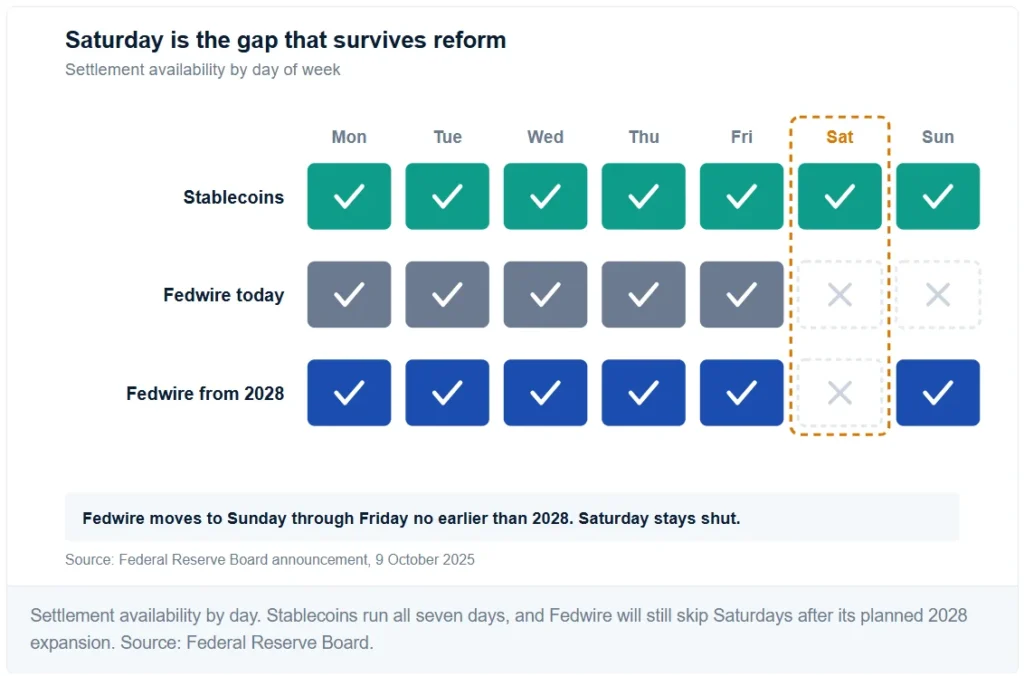
Weekends hold a steady fifth of weekly volume, and Fedwire will still skip Saturdays even after its 2028 expansion.
Stablecoin velocity has become the sharpest read on digital dollar adoption. Market value still counts the float. However, it says nothing about how often that float moves.
Coinbase Institutional put hard numbers on the split. Since January 2024, stablecoin supply has roughly doubled. Meanwhile, entity-adjusted transaction volume has climbed four to five times. Monthly adjusted volume now clears $1 trillion.
That gap changes the whole scoreboard. Analysts once ranked issuers by size alone. Today they must also ask a second question. How often does each token actually change hands?
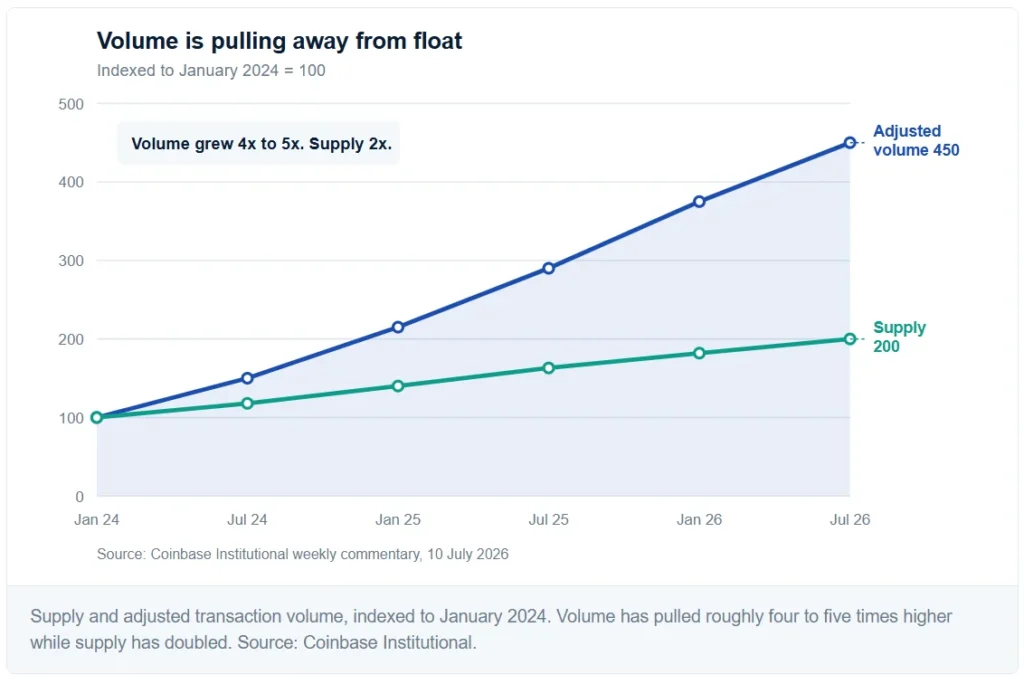
Supply became capacity, not demand
Traders once parked dollars on exchanges. Under that model, fresh supply meant fresh demand. Redemptions meant the reverse. Today, though, one token settles several payments before anyone redeems it.
So supply now works like installed capacity. Throughput shows the actual use. A bigger float deepens liquidity and widens reserve income. Faster turnover, by contrast, lets the same float carry more work.
DefiLlama data puts total supply near $310 billion. Tether holds about $184 billion of that. Circle’s USDC holds roughly $74 billion. No other token clears $7 billion.
The velocity gap cuts both ways
Visa’s Economic Empowerment Institute has measured the effect. Total stablecoin velocity hit 13.56 in the fourth quarter of 2025. US M1 velocity sat at 1.65. Each token therefore turned over about eight times faster than cash.
Yet that gap flatters stablecoins badly. M1 tracks what homes spend on goods. Stablecoin volume mostly tracks trading, funding and settlement.
Visa also tested a retail proxy using transfers of $250 or less. That measure produced velocity of just 0.08. Retail-sized transfers stayed below 1% of all activity. Everyday shopping therefore remains a rounding error.
A wholesale yardstick lands much closer. Visa put Fedwire velocity at 93.84 for the same quarter. Fedwire still turns its reserve base almost seven times faster.
History adds useful context here. Stablecoin velocity reached roughly 17 in late 2019. It then sank to about 6 by early 2022. The current rebound therefore recovers old ground rather than breaking new records.
USDC moves the money while USDT holds it
Throughput now splits the leaderboard neatly. USDC now carries roughly 70% of adjusted volume, up from the mid-20s in 2024. However, it holds under a quarter of supply.
Run those two shares together. USDC turns its float at nearly three times the market-wide rate. Tether keeps the far larger balance sheet. Consequently, the biggest stack and the busiest rail are no longer the same asset.
Coinbase links that shift to regulated flows. Payments, settlement and treasury work favour the token banks can trace. Trading churn still lifts the totals, so caution applies.
The ratio itself carries a warning. A token can lead on volume yet lag on reserves. Investors chasing issuer profit should therefore track float. Those chasing network reach should track flow instead.
The biggest stack and the busiest rail are no longer the same asset.
Saturday is the real moat
Coinbase found that weekends carry about a fifth of weekly adjusted volume. That share has held steady for years. Divide it across two days. Each weekend day then runs near 63% of a weekday.
Banks cannot match that yet. Fedwire currently runs Monday to Friday, excluding holidays. The Federal Reserve has approved an expansion to Sunday through Friday. However, that change arrives no earlier than 2028.
Read the new schedule closely. Even after the upgrade, Saturday stays dark. Roughly half the weekend gap therefore survives the reform. That single day now looks like the firmest edge in the market.
Infrastructure players are moving in
Visa launched its Stablecoin Platform on 16 July. The beta gives banks and fintechs wallets, minting links and audit logs. It starts with a token called Open USD.
That pitch targets throughput, not float. Issuers earn on reserves. Processors, custodians and chains earn every time tokens move. Both revenue models can grow at once.
Competition is widening fast as a result. Custody, rule checks and treasury controls now matter as much as minting.
What the number still hides
One caveat deserves real weight. Velocity cannot reveal the purpose behind any transfer. Arbitrage loops and treasury sweeps sit beside real merchant payments.
Coinbase flags the same limit. Sharp monthly spikes often reflect market churn, not trade. Readers should watch the trend, not any single print.
Even so, the direction looks clear. Supply shows how much the system can hold. Velocity shows how much work it actually does.




