

July 13, 2026 – The broker built its Layer 2 for tokenized stocks. Traders showed up for cat memes instead.

In Summary
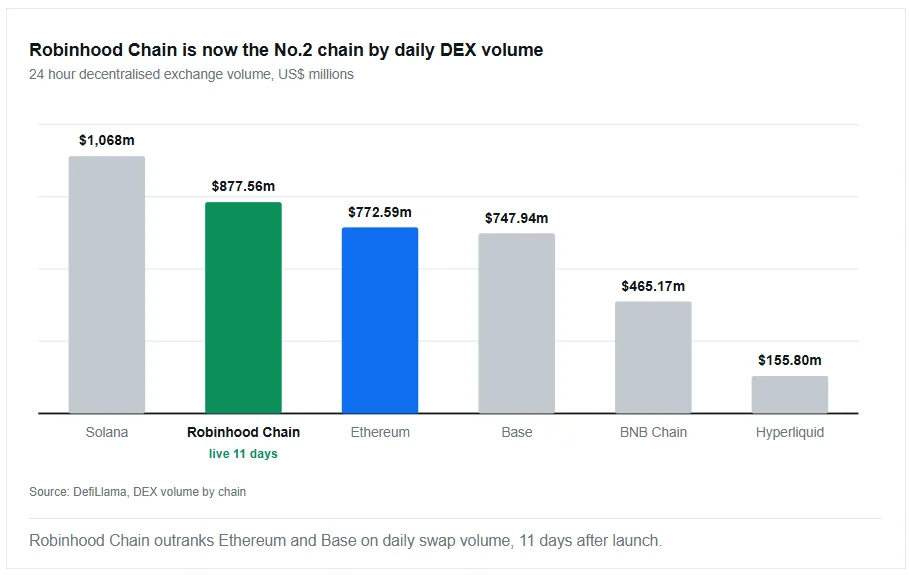
Robinhood Chain cleared $877.56m in 24-hour DEX volume, ranking second of all chains and beating Ethereum ($772.59m) and Base ($747.94m).
The network holds only $115.52m in total value locked, so it churns 7.6x its capital daily. Ethereum turns over 0.02x.
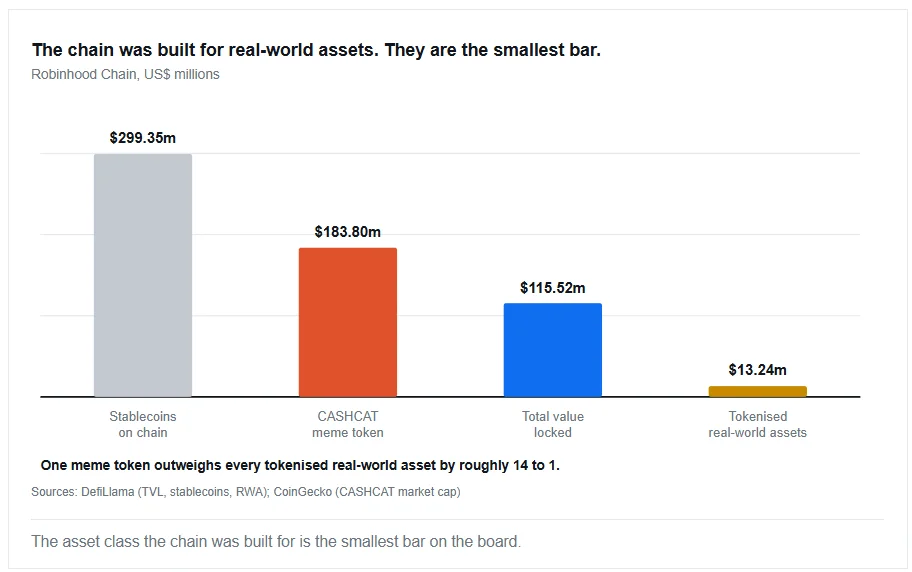
CASHCAT, a meme token, carries a $183.8m market cap. That is roughly 14x the total value of all tokenised real-world assets on the chain ($13.24m).
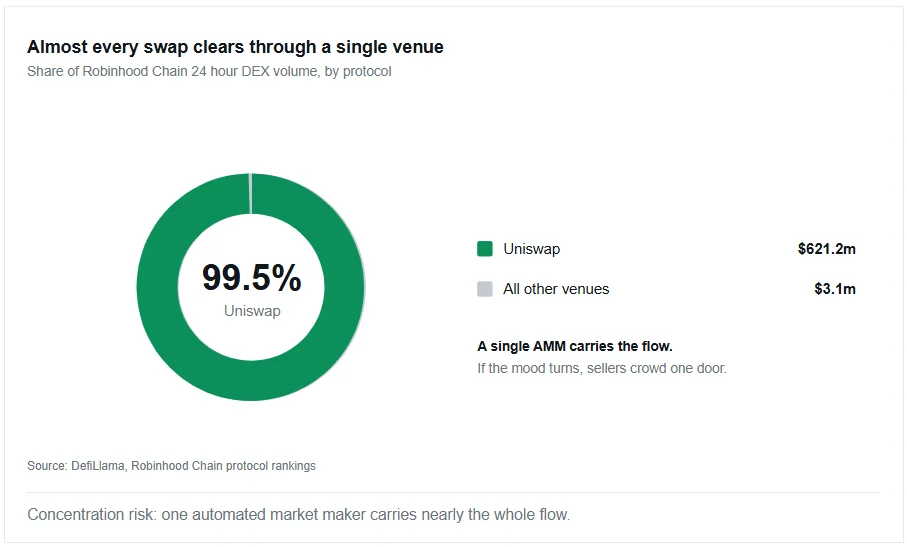
Uniswap handles about 99.5% of daily DEX volume, so exit liquidity sits behind a single door.
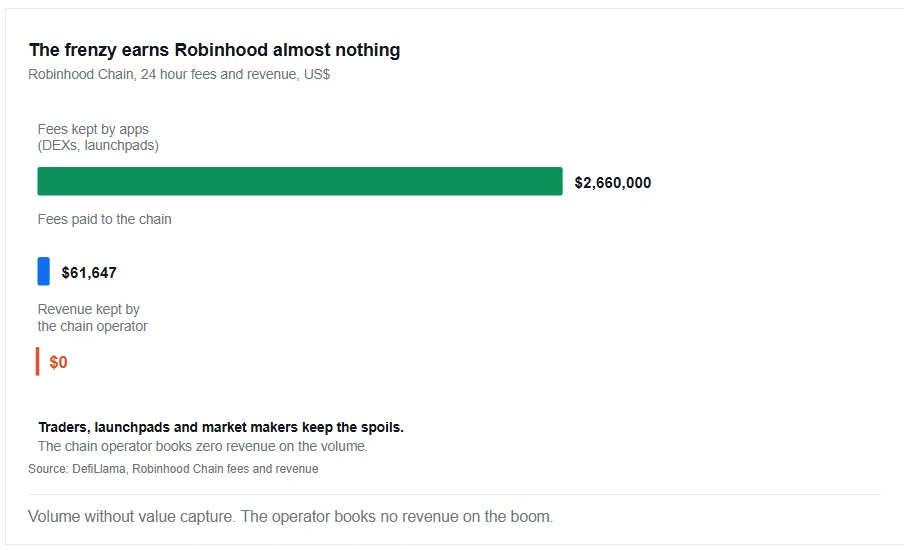
Chain revenue stands at $0 while apps captured roughly $2.66m in fees over the same 24 hours.
Robinhood Chain has jumped to second place among all chains by daily DEX volume. The network cleared $877.56 million in swaps over 24 hours. That total beat Ethereum, which handled $772.59 million. It also beat Base, which managed $747.94 million. Only Solana traded more, at $1.068 billion.
For a chain that went live on July 1, the climb looks striking. However, the makeup of that volume tells a far less flattering story.
What Robinhood Chain was built to do
Robinhood launched the network at a London keynote and made the goal plain. The firm called it “AI-native and purpose-built for real-world assets.” Day one partners included Uniswap, Chainlink and BitGo. Stock Tokens, the flagship product, went live in more than 120 countries.
So the pitch was clear. Robinhood wanted stock tokens, lending and plumbing fit for banks. Retail traders, meanwhile, had other plans.
Stablecoins do show some traction. The chain now holds $299.35 million of them, with USDG accounting for about 70%. Notably, that stablecoin float alone dwarfs every tokenised stock on the network.
The turnover ratio shows the gap
Total value locked on the chain sits near $115.52 million. Now compare that with the $877.56 million moving through its venues each day. The chain therefore churns roughly 7.6 times its whole locked base every 24 hours.
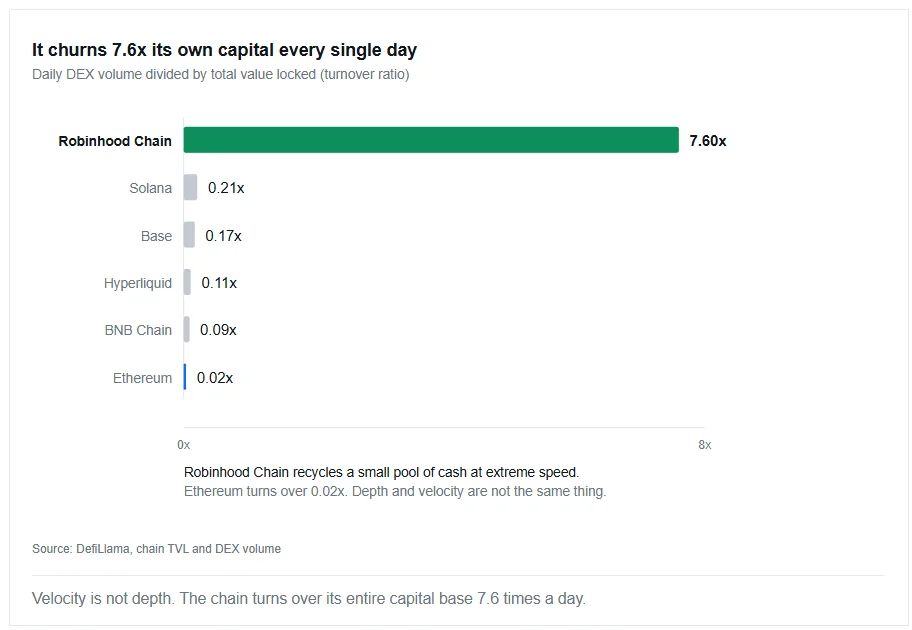
Ethereum, by contrast, turns over just 0.02 times its $39.99 billion base. Solana runs at about 0.21 times. Put simply, Robinhood Chain spins money at a pace that no mature market can sustain.
High turnover rarely means depth. Rather, it means a small pool of cash moving very fast.
A cat meme now dwarfs the whole thesis
CASHCAT plays on the name Robin Hood, which was nearly used at birth. The token now holds a market cap near $183.8 million. Real-world assets on the same chain total just $13.24 million.
Read that gap again. One joke coin is worth about 14 times the combined value of all real-world assets on the chain. Moreover, CASHCAT alone accounts for the entire locked value of the network.
Chief executive Vlad Tenev fed the frenzy on July 8. He wrote that his team built the chain for real-world assets, yet it “works great for memes too.” CASHCAT then leapt roughly 1,700% in a day.
Robinhood has not backed or issued the token. Still, the post landed like a green light. Copycat coins on other chains quickly followed.
The wider meme cohort tells the same tale. Tokens of this type on the chain collectively have a market cap of roughly $231 million. CASHCAT alone accounts for about three-quarters of that pile.
Nearly all the flow runs through one door
Thin plumbing raises the stakes here. Uniswap handles around $621 million of the chain’s recent daily DEX volume. Almost every swap, therefore, clears through a single venue.
Liquidity that is too narrow creates real exit risk. If the mood turns, sellers will crowd one door at a time. Slippage would then punish anyone who left late.
Timing sharpens the point. The chain shows about $2.33 billion in 30-day volume. Yet roughly $2.31 billion of that arrived in the past week alone. Nearly all of this trade is days old.
The frenzy earns Robinhood almost nothing
Here lies the awkward part for shareholders. Robinhood Chain took in $61,647 in chain fees over 24 hours. Chain revenue, meanwhile, came in at zero.
Apps on the network collected roughly $2.66 million in fees across the same window. Traders, launchpads and market makers therefore kept the spoils. The chain operator kept very little.
One memecoin launchpad, NOXA Fun, pulled in about $1.76 million of app fees in a day. That single figure sums up the ecosystem better than any roadmap.
Robinhood shares still rose on the news of the launch. Yet the chain itself, so far, is a cost centre with a crowd.
Ethereum wins the traffic but not the fees
There is a wider lesson buried in these numbers. Robinhood Chain runs on Arbitrum tech and settles on Ethereum. Its swaps, therefore, count as Layer 2 activity, not Ethereum base-layer activity.
So Ethereum lends its security and gets very low fees in return. The chain paid out just tens of thousands of dollars in fees per day. Meanwhile, the top apps banked millions.
This split has haunted the rollup model for years. Robinhood Chain simply makes the maths vivid.
What to watch next
Two tests matter now. First, can volume outlive the meme cycle? Second, will Stock Tokens pull in real money?
Robinhood holds real cards here. The firm serves nearly 28 million clients and owns a huge sales funnel. Furthermore, a Morpho-powered lending pool already anchors the biggest slice of locked value, at about $74.79 million. That product looks like a grown-up business.
Even so, cold starts built on hype often end cold. Base and Solana both rode meme waves and kept building. Plenty of rival chains simply emptied out.
Watch the launchpad fees for the first crack. When new token minting dries up, swap volume usually falls with it. Watch the Stock Token float too, because that is the number Robinhood actually promised.
For now, treat the number two ranking as a marketing win, not an adoption signal. Volume is loud. Depth is quiet. Only one of the two has turned up.




