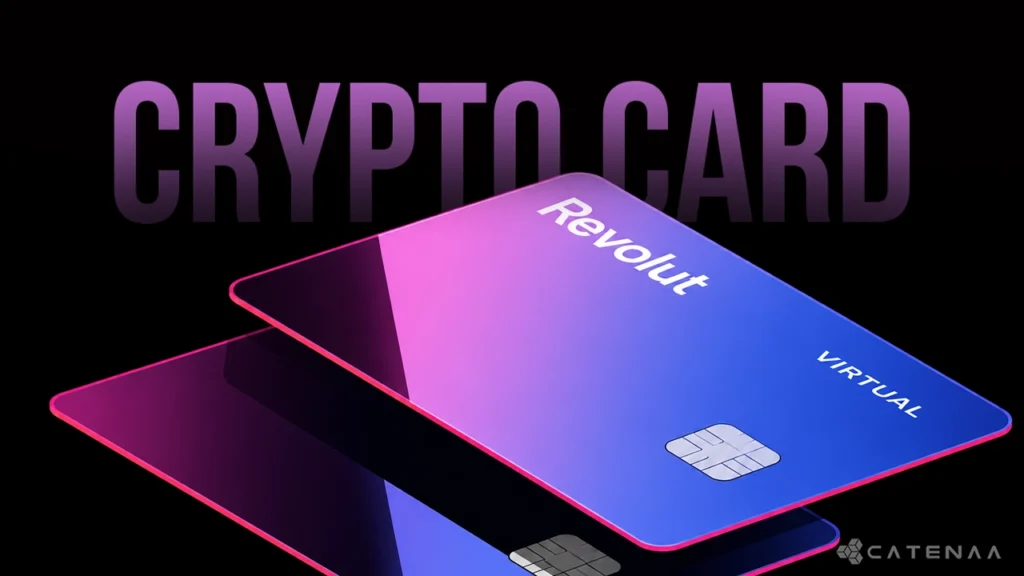


Catenaa, Tuesday, May 26, 2026- Financial technology firm Revolut unveiled its first physical cryptocurrency debit card on Monday, joining a fast-growing push by crypto platforms to turn digital assets into everyday payment tools across Europe and the UK.
The new Dogecoin-themed card includes an LED display that lights up during tap-to-pay transactions and will operate anywhere Visa and Mastercard payments are accepted.
Revolut said the card will initially launch across the UK and European Economic Area, excluding Switzerland, Hungary and Portugal.
The rollout comes as crypto-linked card usage climbs sharply worldwide. Data tracked by The Block showed daily crypto card transactions crossed 100,000 several times during recent weeks.
Crypto companies have increasingly shifted attention toward payment services as competition intensifies across digital asset markets.
Major exchanges including Coinbase, Binance and Crypto.com have expanded crypto card programs during the past year.
Gemini has also identified card operations as an increasingly important source of revenue growth as trading activity becomes more volatile.
The industry’s broader goal centers on turning cryptocurrencies into spendable assets rather than purely speculative investments.
Under the Revolut model, digital assets convert into fiat currency at the point of purchase, allowing consumers to spend crypto without manually exchanging funds beforehand.
The company said users would not face extra exchange fees, though transactions remain subject to market pricing during payment execution and local tax rules.
The card launch also reflects Revolut’s wider expansion across digital banking and blockchain services.
Earlier this year, the company secured regulatory approval to launch a fully licensed bank in the UK while also seeking a banking license in the United States.
Industry analysts believe a US banking charter could eventually position Revolut to issue a stablecoin compliant with future American digital asset legislation.
Last year, Revolut integrated Polygon blockchain services into its application, adding crypto remittances, staking services and digital payment functions.
The company has steadily expanded its crypto offerings while attempting to balance stricter financial regulation with growing consumer demand for digital asset services.
Crypto payment cards have emerged as one of the sector’s fastest-growing consumer products as firms compete for mainstream adoption.
Payment providers increasingly market crypto cards as direct alternatives to traditional debit and credit products.
Stablecoin firms and crypto wallets have also started positioning payment cards as extensions of broader financial ecosystems built around blockchain technology.
The rise in card usage comes as regulators across Europe and the United States continue developing rules governing crypto payments, stablecoins and digital banking services.
Market analysts said payment infrastructure could become one of the largest long-term growth areas for the crypto sector if consumers increasingly use digital assets for everyday purchases rather than trading alone.




