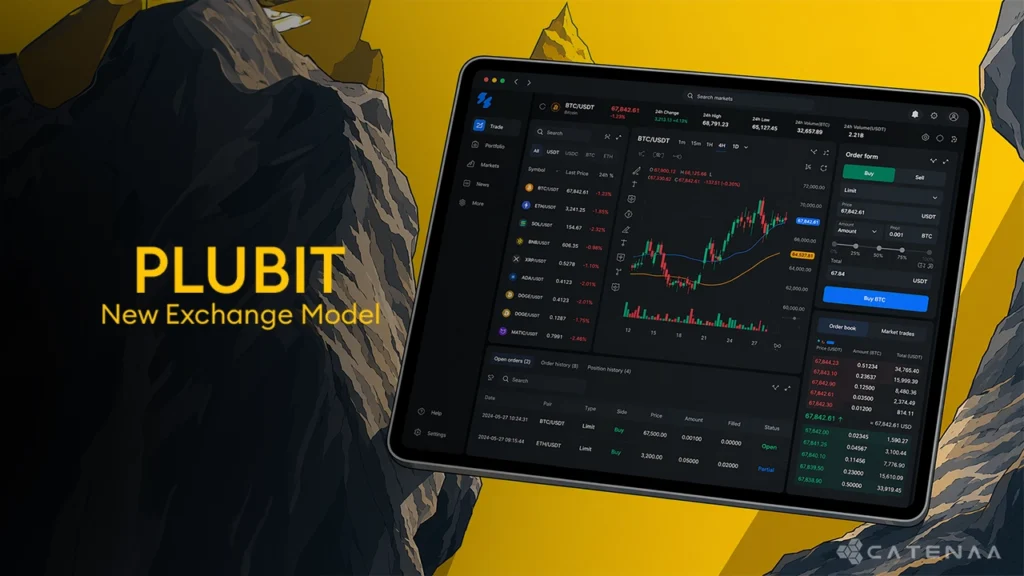


Catenaa, Thursday, April 16, 2026-Crypto exchange PLUBIT is preparing for its April global launch with a trading model that prioritizes user retention over liquidation-driven volume, marking a shift in how exchanges design incentives in a maturing digital asset market.
PLUBIT’s approach centers on extending trader participation rather than maximizing short-term transaction activity. The platform introduces a structure that seeks to reduce the frequency and impact of liquidations, a core feature of derivatives trading that has historically driven exchange revenue.
At the center of this model is the Revival Safe Coupon system, which offers partial recovery of losses following liquidation events through non-cash trading credits. These coupons are designed to encourage users to re-enter the market while limiting direct financial exposure for the platform.
The model reflects a broader shift away from aggressive leverage incentives that dominate the sector. Instead of rewarding high-risk behavior, PLUBIT aims to sustain trading activity by keeping users active over longer periods.
The exchange’s structure highlights an emerging trend in crypto markets where platforms are increasingly shaped by behavioral economics. Rather than competing solely on liquidity depth or promotional campaigns, exchanges are experimenting with mechanisms that influence how users trade, recover from losses, and remain engaged.
PLUBIT’s design assumes that reducing user churn can generate more consistent trading activity over time. Analysts note that this approach contrasts with traditional models that depend on rapid turnover and liquidation cycles, which can produce spikes in volume but also contribute to user attrition.
By reframing liquidation from a terminal event into a recoverable setback, the platform attempts to reshape trading psychology. This could appeal to retail participants who often exit the market after significant losses.
Alongside its retention model, PLUBIT emphasizes execution quality as a core feature. The exchange integrates external liquidity providers and operates a low-latency matching engine aimed at minimizing slippage during trades.
These features are designed to attract both retail users and professional traders, particularly those engaged in derivatives or high-frequency strategies. Execution reliability remains a critical factor in exchange selection, especially as competition intensifies among global platforms.
PLUBIT is also pursuing a distributed licensing approach to support international operations, with Money Services Business registration underway to meet anti-money laundering requirements in key jurisdictions.
The platform’s native token, PLB, plays a central role in aligning user incentives with exchange growth. Unlike traditional exchange tokens that primarily offer fee discounts, PLB is embedded across multiple functions within the platform.
Users can access benefits such as partial liquidation coverage, tiered account privileges, and participation in token launch events. The exchange also plans to implement revenue-driven buyback and burn mechanisms tied to platform performance.
A notable feature is PLUBIT’s listing model, which requires projects to hold and maintain PLB rather than pay upfront listing fees. This structure aims to reduce immediate sell pressure from newly listed assets and align project interests with the exchange’s long-term ecosystem.
PLUBIT enters a crowded exchange market where differentiation has become increasingly difficult. Established platforms compete on liquidity, product offerings, and global reach, while newer entrants often rely on aggressive incentives to attract users.
Rising customer acquisition costs and more cautious trading behavior are prompting platforms to rethink these strategies. Industry observers say retention-focused models may gain traction as exchanges seek more stable revenue streams and longer user lifecycles.
The emphasis on sustainability also reflects broader changes in the crypto sector. As markets mature, users are placing greater importance on risk management, platform reliability, and transparency. Exchanges that adapt to these priorities may be better positioned to retain users over time.
PLUBIT has outlined a phased rollout, beginning with a pre-launch stage in March 2026 and a full global launch in April. The company plans to expand token utility and ecosystem features throughout the first half of the year.
The platform’s long-term success will depend on whether its retention-focused model can translate into sustained trading activity without sacrificing liquidity or profitability. Analysts say the concept represents a test case for how exchanges can evolve beyond volume-driven competition.
Crypto exchanges have traditionally relied on leverage and liquidation mechanisms to generate trading volume and revenue. While effective in driving activity, this model has also contributed to high user turnover, particularly among retail traders exposed to volatile markets.
In recent years, the industry has begun exploring alternative approaches that prioritize user experience and long-term engagement. These include improved risk management tools, educational resources, and incentive systems designed to reduce losses.
PLUBIT’s model builds on these trends by integrating behavioral design directly into its trading infrastructure. As competition intensifies and the market matures, such approaches may shape the next phase of exchange development, shifting the focus from rapid growth to sustainable participation.




