


July 31, 2026 – Open USD is preparing to launch on Ethereum with support from more than 140 global companies. Its shared economics could reshape stablecoin distribution. However, reserve details and governance execution will determine whether corporate backing becomes real adoption.
In Summary
Open USD will launch on Ethereum from day one.
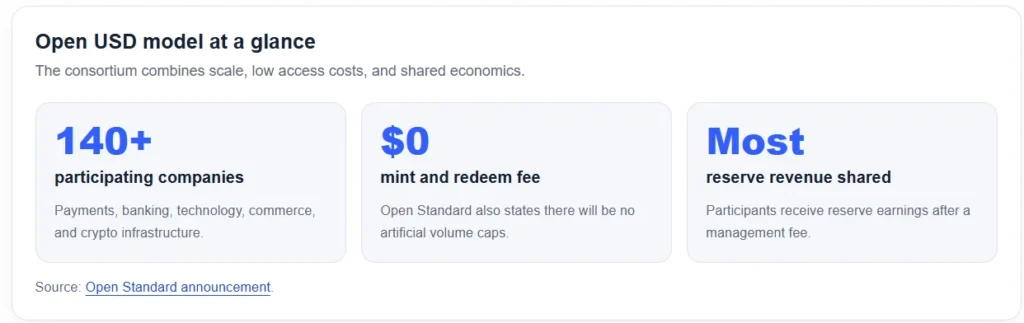
More than 140 companies support the Open Standard consortium.
Partners can mint and redeem without fees or volume caps.
Most reserve revenue will flow to participating distributors.
Reserve composition, custody, and attestations still need clarity.
Open USD stablecoin changes the incentive model
The Open USD stablecoin is not simply another digital dollar. It proposes a different commercial structure for global payments.
Open Standard says participating businesses can mint and redeem OUSD without fees. The system will also avoid artificial volume limits.
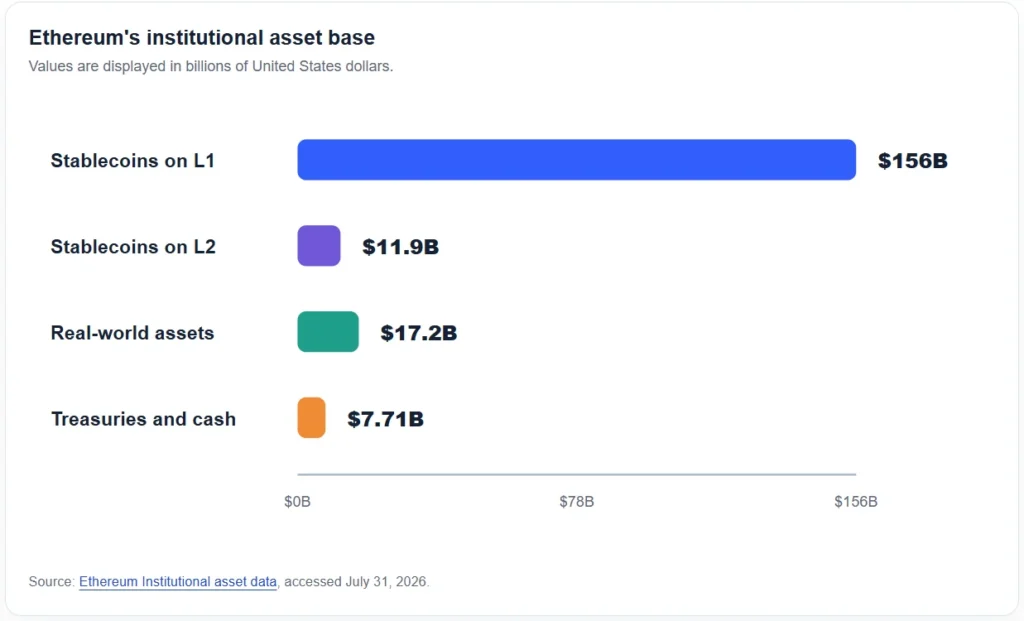
Most revenue from reserve assets will return to companies that adopt and distribute OUSD. Open Standard will retain a management fee.
That structure could turn payment firms, banks, exchanges, and merchants into active distribution partners. Each participant gains a direct economic reason to promote usage.
Traditional stablecoin issuers usually retain most reserve income. Therefore, OUSD could shift competition from token features toward distribution economics.
The consortium includes BlackRock, Visa, Mastercard, Stripe, BNY, Coinbase, Google, and several major banks. However, these names represent participation, not guaranteed adoption.
Ethereum gains another institutional payments asset
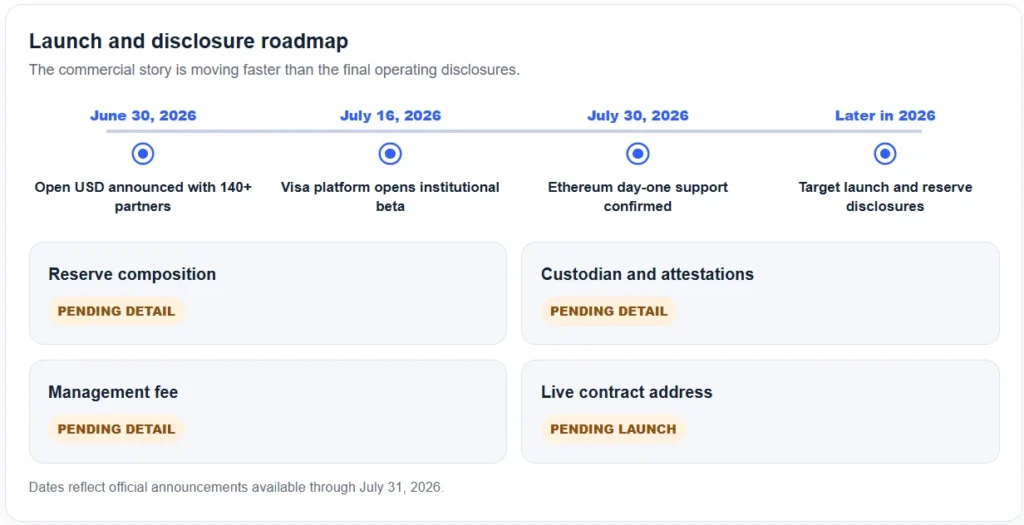
Ethereum Institutional confirmed that Open USD will launch on Ethereum from day one. This choice gives OUSD access to deep liquidity and established wallet infrastructure.
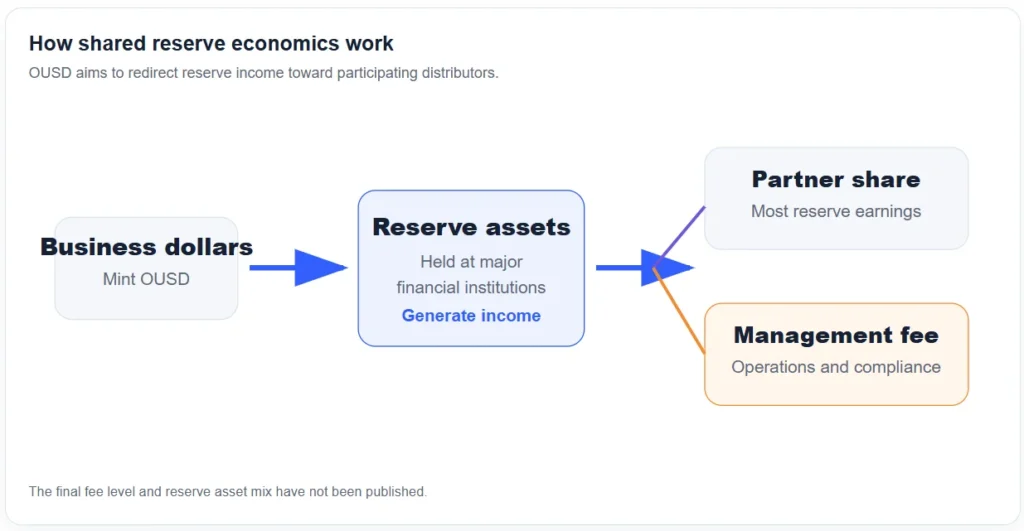
Ethereum currently holds about $156 billion in stablecoins on its main network. Its Layer 2 networks hold another $11.9 billion.
The network also hosts about $17.2 billion in real-world assets. Tokenized Treasuries and cash equivalents account for roughly $7.71 billion.
These figures matter because stablecoins depend on liquidity, integrations, and reliable settlement. Ethereum already offers each element at meaningful scale.
However, mainnet transaction costs can rise during congestion. OUSD will likely need Layer 2 connectivity for frequent payments and smaller transfers.
Visa lowers the integration barrier
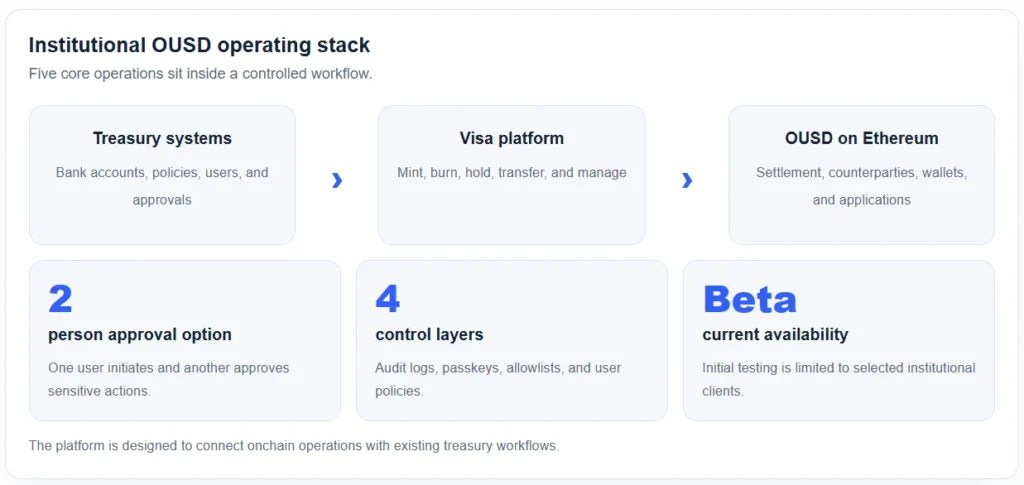
Visa is building direct OUSD access into its Stablecoin Platform. Eligible institutions can mint, burn, manage, and transfer the token.
The platform also includes wallet infrastructure, approval controls, audit logs, passkeys, and transfer allowlists. These features target treasury and compliance teams.
This operating layer could prove more important than consumer branding. Institutions often struggle with wallets, controls, and reconciliation rather than blockchain concepts.
Visa has opened the platform for beta testing with selected clients. Broader adoption will depend on pricing, jurisdictional access, and integration speed.
BlackRock’s role requires careful interpretation
BlackRock appears on the official partner list. Yet available materials do not say BlackRock guarantees OUSD or manages every reserve asset.
Open Standard says reserves will sit with major financial institutions under United States regulatory requirements. It has not published the final asset mix.
The project also has not disclosed its management fee, custodian structure, audit schedule, or live contract address.
Therefore, investors should not confuse a strong consortium list with completed reserve infrastructure. Those disclosures will shape trust after launch.
The commercial opportunity is large
OUSD targets payments, trading, treasury management, marketplaces, and automated commerce. Its shared economics could accelerate integration across many platforms.
A distributor could earn reserve-linked revenue while offering faster settlement. Meanwhile, users could gain broader access and lower conversion friction.
The model may also pressure existing issuers to improve partner economics. Large distributors will have more negotiating power when several tokens compete.
Still, liquidity creates a powerful moat. Businesses need reliable redemption, deep exchange markets, and consistent pricing across regions.
Regulation adds another test. United States rules now require payment stablecoin issuers to meet anti-money laundering and sanctions obligations.
Open Standard must translate collaborative governance into clear accountability. A broad consortium can improve neutrality, but it can also slow decisions.
What happens next
The launch will matter less than the first six months of activity. Supply growth, transaction volume, redemptions, and partner integrations will reveal demand.
OUSD could become a major institutional settlement asset if partners actively distribute it. Otherwise, the project may remain a well-supported experiment.
The central innovation is economic alignment. Open USD gives distributors a larger share of the value created by reserve assets.
That idea could influence the entire stablecoin market, even before OUSD reaches significant circulation.