


July 20, 2026 – A new trust bank could bring crypto custody, staking, and lending support closer to Morgan Stanley’s wealth platform.
In Summary
The trust bank can support custody, execution, fiduciary staking, and collateral administration.
The approval remains preliminary, while the final launch depends on pre-opening requirements.
A $50 million capital floor adds discipline to the three-year startup period.
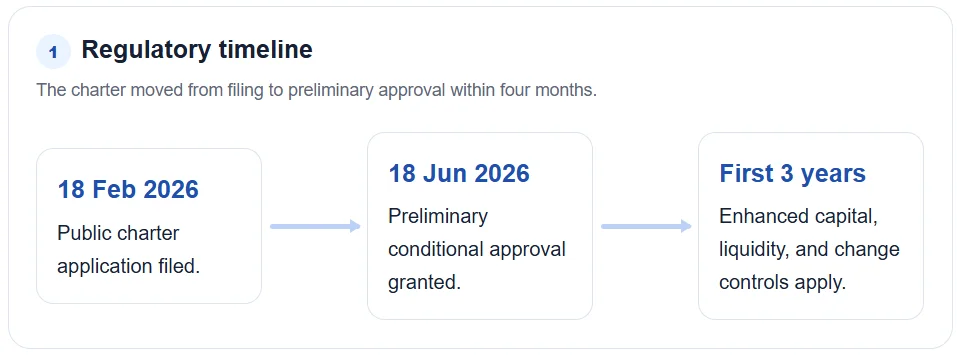
The Morgan Stanley crypto trust bank has received preliminary conditional approval from the U.S. banking regulator. The move could reshape how the firm delivers digital assets to wealth clients. It creates a regulated path for custody, trading support, staking, and lending administration within the group.
The decision matters because crypto access is moving beyond brokerage wrappers. Large wealth platforms now need secure settlement, asset servicing, and collateral controls. Morgan Stanley can connect those functions more tightly with advice, trading, and portfolio reporting.
What the approval covers
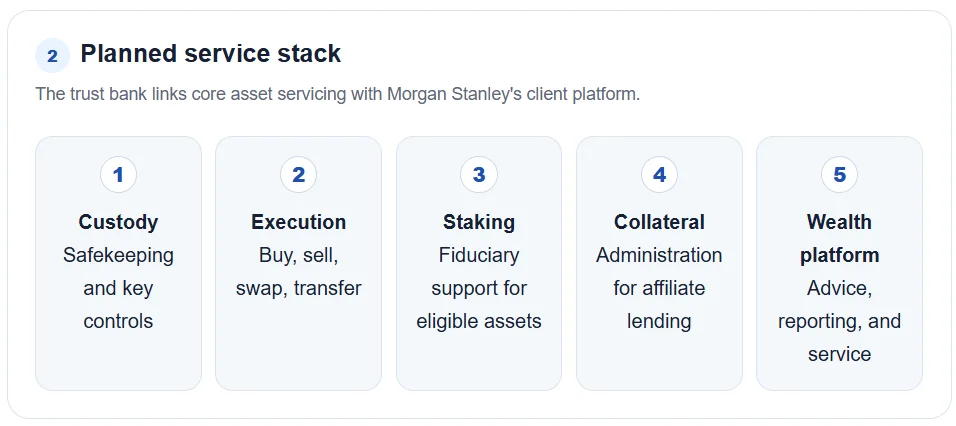
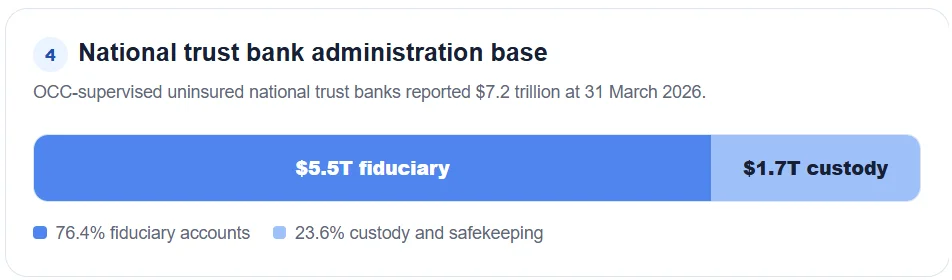
The proposed institution, Morgan Stanley Digital Trust, will operate as a national trust bank. It will not accept insured retail deposits. Its main role will be to safeguard selected digital assets for clients.
The approved plan also covers purchases, sales, swaps, and transfers. These functions will support investment activity across the wealth platform. The trust bank can also facilitate fiduciary staking for eligible assets.
However, the lending language requires careful interpretation. The Trust Bank will act as collateral administrator for an affiliate’s lending product. Therefore, the trust bank itself is not presented as the direct lender.
That distinction reduces balance-sheet ambiguity. It also separates custody controls from credit underwriting and loan economics. Such separation can help supervisors assess operational and counterparty risks.
Why bringing custody closer matters
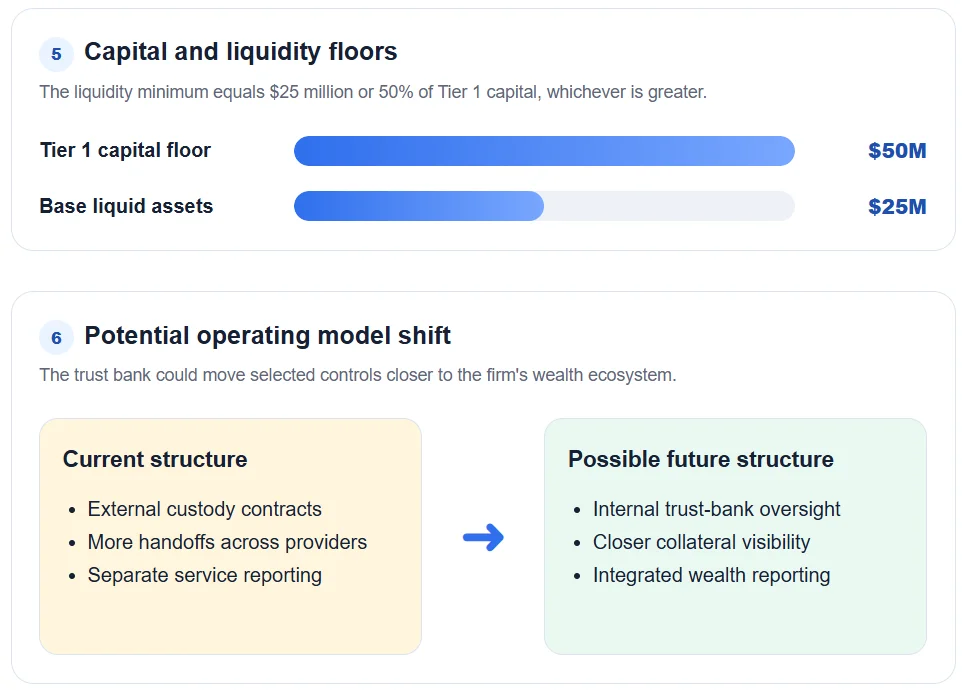
Morgan Stanley already offers crypto exposure through investment products. Those products currently rely on external custodians for private-key protection and asset transfers. An internal trust bank could reduce fragmentation across the service chain.
The potential gains extend beyond lower vendor dependence. Internal custody can improve transaction timing, collateral visibility, and client reporting. It may also simplify incident management when markets become stressed.
Integration may also improve product economics across the client lifecycle. The firm could retain custody fees that currently leave the group. Better data can support suitability checks and more accurate portfolio risk measures.
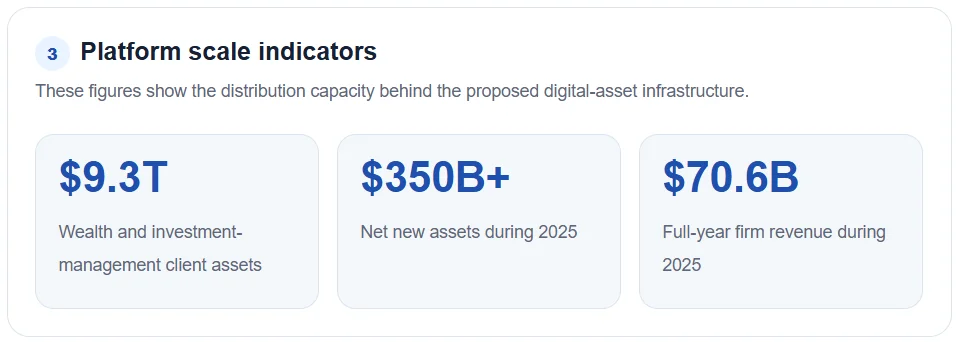
Furthermore, the firm ended 2025 with $9.3 trillion in wealth and investment-management client assets. It also attracted more than $350 billion in net new assets. Even limited crypto adoption could create meaningful servicing volumes.
Still, internal control does not remove external technology exposure. Blockchain networks, validators, liquidity venues, and software providers remain essential. Morgan Stanley must manage those dependencies through strong vendor and cyber controls.
Staking expands the revenue stack
Staking allows eligible token holders to support blockchain validation and receive protocol rewards. For a wealth manager, this adds yield-like income to custody. It also creates new operational duties.
The trust bank must handle validator selection, reward allocation, slashing risks, and tax records. Clients will also need clear disclosures about lockups and liquidity. Therefore, staking is more complex than ordinary securities custody.
The commercial opportunity could be attractive. Custody generates recurring fees, while staking may add revenue-sharing income. Lending support can create another fee stream through collateral administration.
However, these revenues carry distinct risks. Staking can expose clients to protocol penalties. Lending can create liquidation pressure during sharp price declines. Poor segregation could also create legal disputes over asset ownership.
Capital rules create a firm floor
The regulator requires at least $50 million in Tier 1 capital during the first three years. The trust must also hold eligible liquid assets. That amount must equal at least $25 million or 50% of capital.
These conditions are important because the bank will remain uninsured. The regulator can also demand additional capital or liquidity. Moreover, material business changes require prior notice and supervisory clearance.
Federal banking agencies also stress governance, key management, legal certainty, and cyber resilience for crypto safekeeping. Those expectations will shape Morgan Stanley’s buildout. Strong controls may matter more than rapid product expansion.
What investors should watch
The approval remains preliminary, not final. Morgan Stanley must complete pre-opening requirements before starting operations. Therefore, launch timing and supported assets remain uncertain.
Investors should watch three areas. First, the firm must disclose which tokens qualify for custody and staking. Second, it must explain pricing and service eligibility. Third, it must define how affiliates handle lending risk.
The wider signal is clear. Crypto infrastructure is moving deeper into regulated financial groups. Morgan Stanley is positioning for that shift without turning the trust bank into a deposit-taking institution.
That structure may offer a pragmatic middle path. It combines institutional controls with digital-asset functionality. Yet execution quality will determine whether the model delivers scale, trust, and durable returns.




