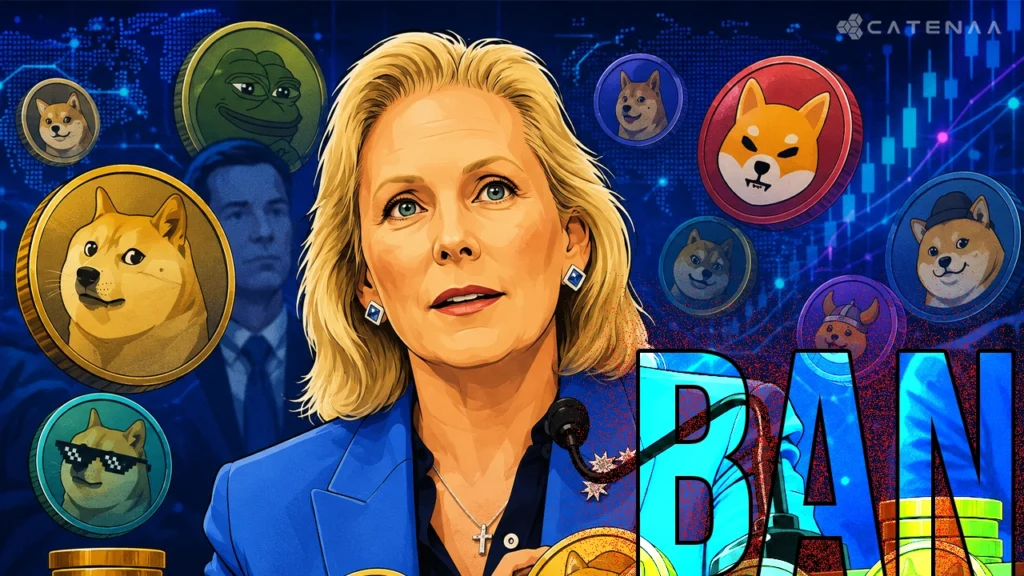


July 07, 2026 – A New York senator renews her push for a memecoin ban after President Donald Trump’s filing revealed a $636 million token windfall.

In Summary
Gillibrand wants to bar the president, Congress, and their spouses from issuing tokens.
Trump’s 2025 filing showed $636 million from one memecoin, his single biggest income line.
The plan would fold ethics limits into the pending CLARITY Act market bill.
Congress has not passed the ban, so the final outcome remains open.
Senator Kirsten Gillibrand wants a new memecoin ban for top elected leaders. Her fresh push came after a filing on President Donald Trump’s crypto cash. Moreover, that filing named $636 million from one memecoin as his top 2025 income. So the fight over crypto profits has flared up yet again.
The New York Democrat wants a rule to stop leaders and spouses from making tokens. She calls the idea a simple guardrail, not a partisan swipe. Indeed, she backs crypto growth while also calling for firm ethical limits. In fact, Gillibrand ranks among the more pro-crypto voices in her party. Even so, she draws a hard line on money made from public office.
Why the $636 million filing reignited the fight
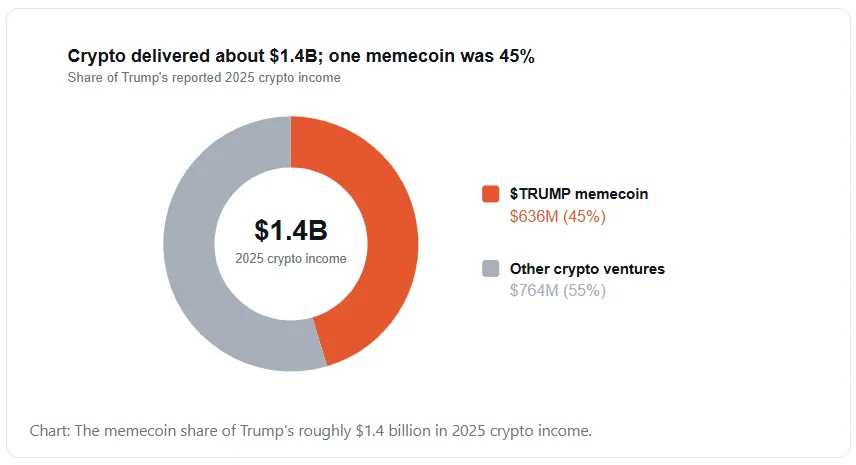
Trump’s certified 2025 filing runs to 927 pages. The federal ethics office put it out in late June. According to that filing, crypto brought Trump about $1.4 billion in 2025. Notably, the $636 million payout ran through CIC Digital, a Trump firm. The money came as license fees, not from trading the coin. Meanwhile, the filing also showed large gains from World Liberty Financial, a Trump family venture. Melania Trump made about $6 million from art tokens on the side. Together, these deals made crypto his single biggest earner for the year.
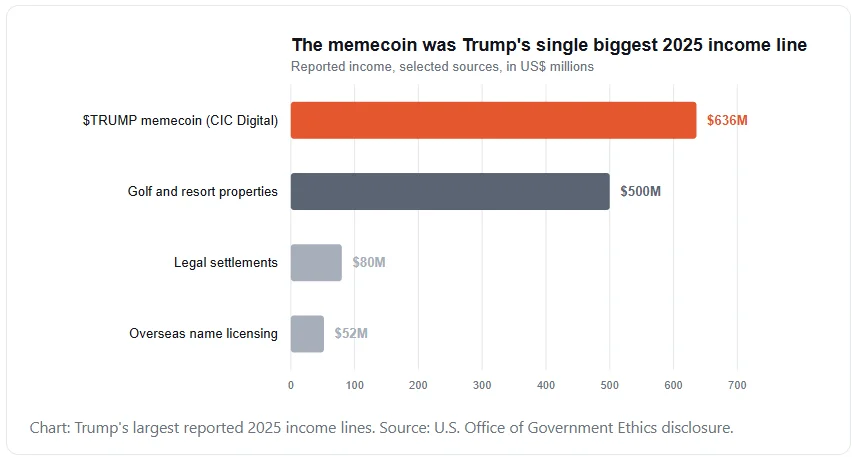
These figures gave Gillibrand a sharp new talking point. Therefore, she says ethics limits must accompany any broad crypto law. Trump defends the cash and tells reporters that people profit when markets rise.
How the proposed memecoin ban would work
The plan aims at a small but telling group of insiders. First, it would cover the president, members of Congress, and their spouses. As a result, Trump could no longer make or back a token while in office. Yet the rule would not touch private firms or everyday traders. Rather, it targets only leaders who write and shape the law. Supporters view that tight focus as its main strength.
However, the plan leaves out the vice president and other kin. Critics say that gap keeps some clear conflicts in place. Still, backers argue that a tight rule can pass more easily. Gillibrand says the fix should draw votes from both sides.
Below sits her core claim, put in plain terms.
“This is a commonsense requirement that should get broad bipartisan support.”
-Senator Kirsten Gillibrand
Public leaders should not launch coins that they can also oversee. Because insiders hold real sway over markets, the risk of self-dealing looks large. Plus, weak rules could let leaders cash in on their public roles.
A fight that predates the disclosure
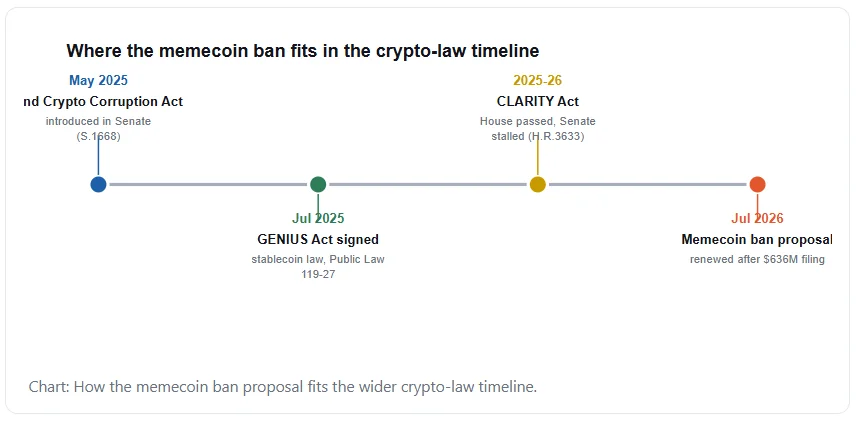
This clash did not begin with the latest filing. In May 2025, Gillibrand co-sponsored the End Crypto Corruption Act. That bill would block leaders and families from making or backing tokens. Its lead author was Senator Jeff Merkley, and many Democrats signed on. Outside watchdog groups backed that bill from the start.
Then the focus shifted to the stablecoin law known as the GENIUS Act. During the debate, Gillibrand tried to keep clauses aimed at Trump’s ventures. Yet lawmakers cut those clauses, saying the bill grew too long. The GENIUS Act still cleared the Senate on a wide 68-to-30 vote. Afterward, Trump signed it into law in July 2025.
The market bill now at the center
Now the fight has moved to a market bill called the CLARITY Act. Lawmakers gave it the formal name Digital Asset Market Clarity Act. The House passed that bill, though the Senate has stalled over the ethics text. Furthermore, Gillibrand says no senator should back it without clear guardrails. So the coin question now sits at the heart of a larger deal.
Why the stakes feel real for buyers
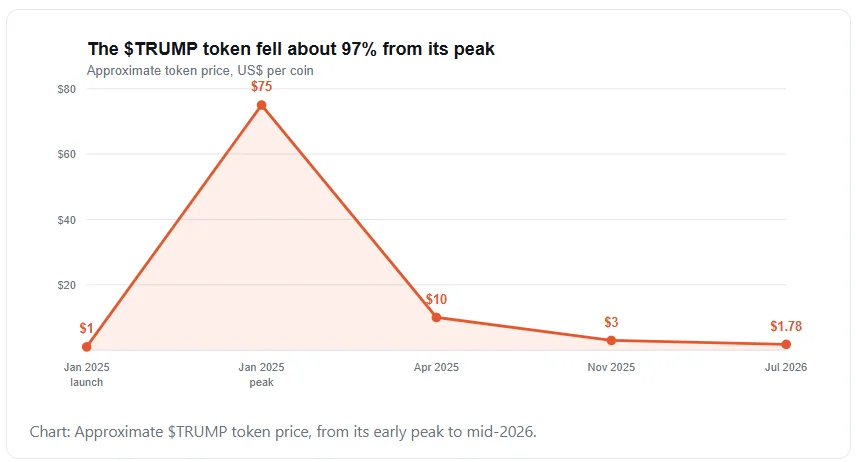
The $TRUMP token also shows why the stakes feel real. It launched days before Trump took office in January 2025. Back then, he billed himself as the crypto president to hype the coin. In May 2025, he hosted the top token holders at a private dinner. About 220 big buyers won seats near the sitting president that night. At its peak, the token traded near $75 apiece. Since then, the price has slid to under $2, down about 97%. As a result, many late buyers now hold steep paper losses.
What Congress decides next
Congress has not passed any of these ethics limits yet. Because Republicans run both chambers, a lone ban faces long odds. Instead, the real battle is folding ethics text into the CLARITY Act. Gillibrand has also fought to curb stock trades and bets by members. For years, she has argued that ethics and crypto growth can coexist.
She wants lawmakers to act fast once they return to work. Backers of tougher rules warn that conflicts chip away at public trust. Opponents reply that current filing rules already provide sufficient transparency.
For now, the outcome stays truly open. In the end, Congress will decide if leaders can profit from coins they promote. Until then, the debate over Trump, memecoins, and ethics will only grow louder.




