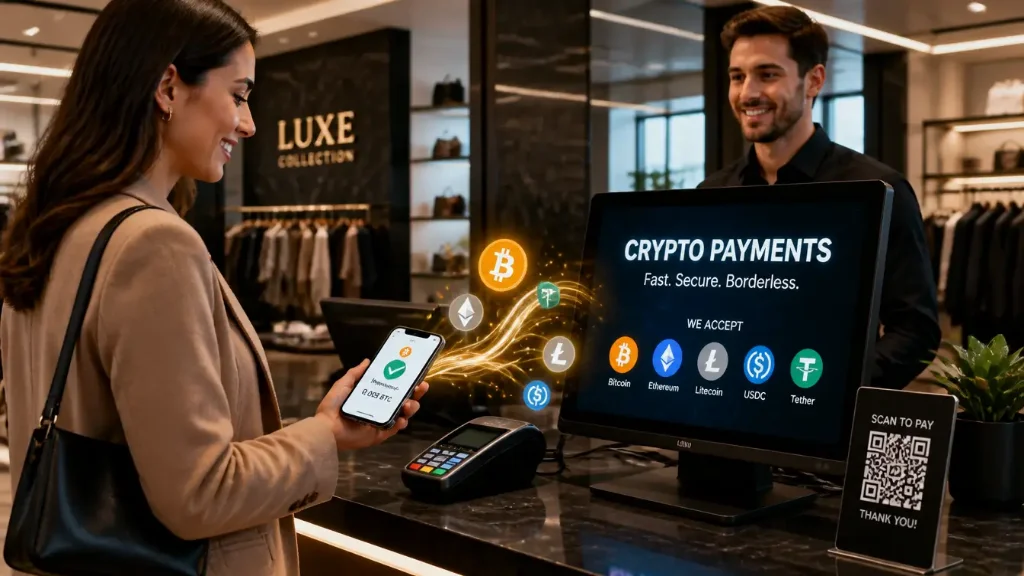


Catenaa, Friday, August 14, 2026- Consumer interest in paying with cryptocurrency is moving closer to everyday commerce, with a Mastercard survey finding four in 10 respondents expected to use digital currencies for payments within the following year.
The finding came from Mastercard’s New Payments Index, based on an online survey of 15,569 consumers across 18 markets. It found growing interest not only in cryptocurrency but also contactless payments, QR codes and biometric authentication.
However, the data carries an important qualification for today’s crypto market: Mastercard published the survey in May 2021. The results therefore measure consumer intentions during an earlier phase of digital payment adoption rather than current 2026 behavior.
That distinction makes the survey more useful as a benchmark than as evidence that 40% of consumers are preparing to spend crypto today.
At the time, 93% of respondents said they would consider using at least one emerging payment method during the following year. About 71% expected to use cash less frequently.
Younger consumers showed particularly strong interest in cryptocurrency. Mastercard found 67% of millennials surveyed were more open to using crypto than a year earlier, while 75% said they would use it if they understood digital assets better.
Five years later, the more important question is how much of that early enthusiasm has translated into actual payment behavior.
The crypto payments market has changed considerably since the survey. Stablecoins have emerged as a more practical settlement instrument, while payment companies, exchanges and fintech firms have developed products that increasingly hide blockchain complexity from consumers.
That could prove more important for mass adoption than convincing shoppers to spend volatile assets such as Bitcoin directly.
For merchants, the eventual contest may therefore be less about “crypto payments” as a separate checkout category and more about whether blockchain-based money can operate invisibly behind familiar payment experiences.
Mastercard itself has continued developing digital asset infrastructure while maintaining its traditional card network, reflecting how established payment companies increasingly view blockchain as another potential settlement rail rather than simply a competitor.
The 2021 survey captured consumer curiosity at an early stage of that transition.
The test in 2026 is different: whether crypto can move from something consumers say they are willing to use into payment infrastructure they use without necessarily realizing blockchain is involved.




