

Catenaa, Sunday, August 09, 2026– Mastercard has completed its acquisition of stablecoin infrastructure company BVNK, expanding its ability to connect blockchain-based digital assets with conventional payment systems as global financial institutions accelerate adoption of regulated stablecoins.
Financial terms of the completed transaction were not disclosed, although Mastercard previously announced the deal could be worth up to $1.8 billion.
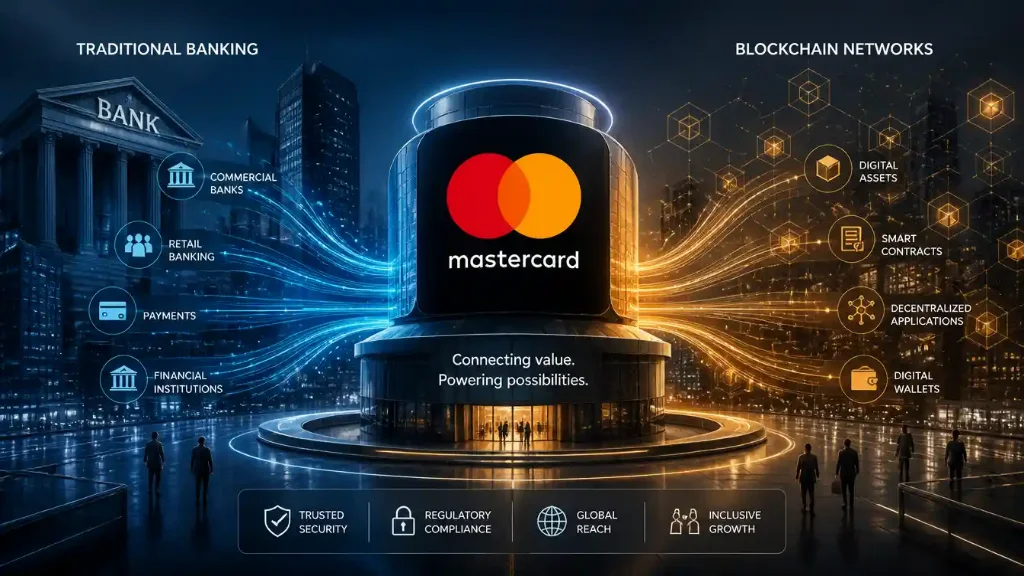
The acquisition strengthens Mastercard’s growing stablecoin strategy by adding enterprise infrastructure that enables businesses, banks and financial institutions to send and receive payments across multiple blockchain networks.
Mastercard said BVNK’s technology will support a broad range of institutional use cases, including business-to-business payments, treasury management, cross-border settlements and corporate payouts.
The deal marks another step in Mastercard’s evolution from a traditional card payments company into a broader digital payments infrastructure provider capable of moving multiple forms of value, including fiat currencies, stablecoins and tokenized assets.
“In a multi-money world where fiat, stablecoins and tokenized deposits coexist, the next payments paradigm will be defined by how effectively each rail, network or form of money connects and works together,” Mastercard Chief Product Officer Jorn Lambert said in a statement.
Founded in 2021, BVNK develops infrastructure that enables enterprises to process blockchain payments while abstracting much of the technical complexity associated with digital assets.
The company said its existing products and customer relationships will continue without disruption following the acquisition.
The acquisition reflects a broader shift within the payments industry, where stablecoins are increasingly being viewed as complementary payment rails rather than competitors to established financial networks.
Instead of replacing traditional payment systems, regulated stablecoins are becoming integrated into existing financial infrastructure to improve settlement efficiency, reduce cross-border payment costs and support programmable financial services.
Mastercard has steadily expanded its presence in the sector over the past year.
In June, the company broadened its settlement capabilities to include regulated stablecoins such as USDC, PayPal USD (PYUSD) and Ripple USD (RLUSD) across parts of its global payments network.
Earlier this year, Mastercard also launched a crypto partner programme involving more than 85 blockchain companies focused on enterprise applications, including remittances, settlements and digital payouts.
The acquisition comes as major financial institutions increasingly compete to build the infrastructure supporting tokenized money.
Banks, payment processors and fintech companies are investing heavily in systems capable of handling both conventional currencies and blockchain-based assets within a single payments framework.
Industry observers increasingly view stablecoins as one of the fastest-growing applications of blockchain technology because they offer near-instant settlement while maintaining price stability by being pegged to traditional currencies.
Rather than requiring businesses to choose between conventional banking and blockchain payments, infrastructure providers are increasingly enabling both systems to operate together.
The integration of BVNK’s technology into Mastercard’s global network is expected to strengthen that capability, positioning the company to support growing institutional demand for digital payment infrastructure.
Mastercard is one of the world’s largest payment technology companies, processing transactions across more than 200 countries and territories. In recent years, the company has expanded beyond traditional card payments into digital assets, tokenization and blockchain-based settlement services. BVNK, founded in 2021, develops enterprise infrastructure that enables businesses to send, receive and manage payments using stablecoins across multiple blockchain networks. The acquisition reflects a wider financial industry trend toward integrating regulated digital assets into mainstream payment systems rather than treating them as separate financial ecosystems.




