

July 27, 2026 – A reported strategic review tests whether LMAX’s fast growth and institutional crypto expansion can support a fivefold valuation jump.
In Summary
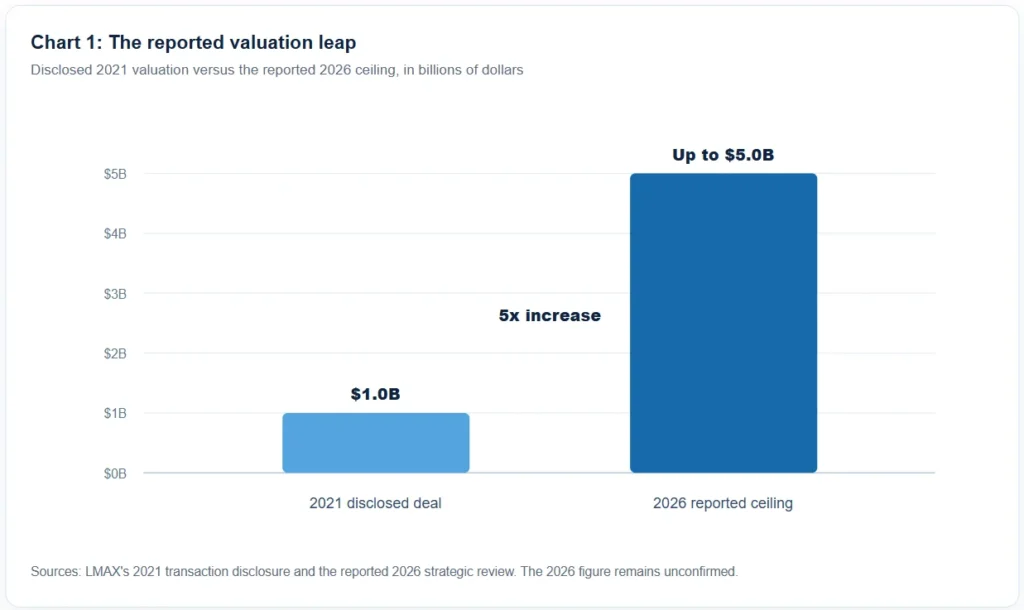
The reported valuation would be five times LMAX’s disclosed $1 billion valuation from 2021.
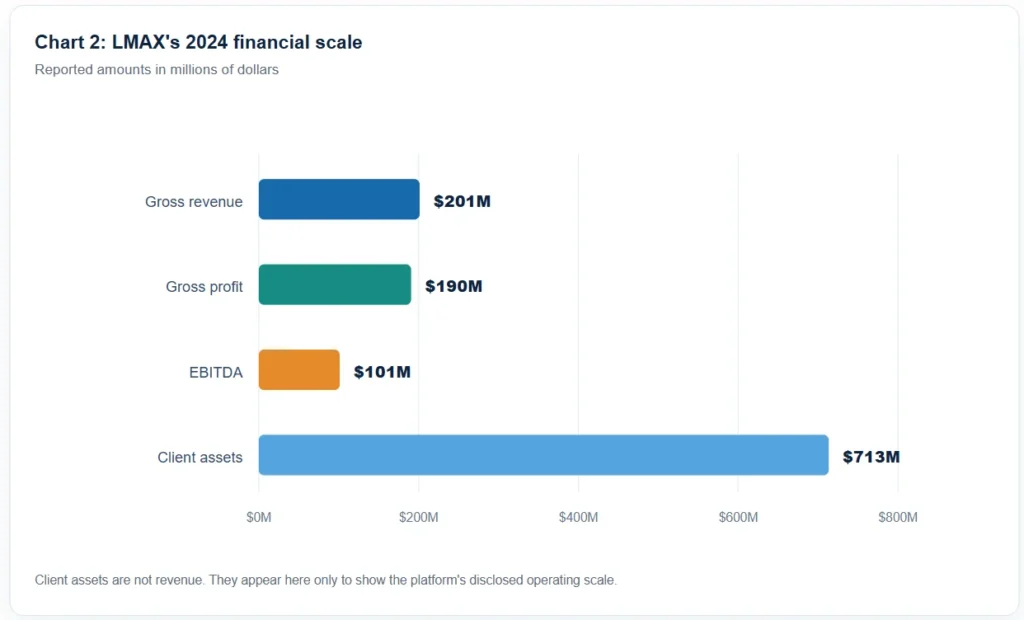
LMAX generated $201 million of revenue and $101 million of EBITDA during 2024.
A Nasdaq listing could fund expansion, but the implied valuation demands substantial future growth.
A strategic review, not a deal
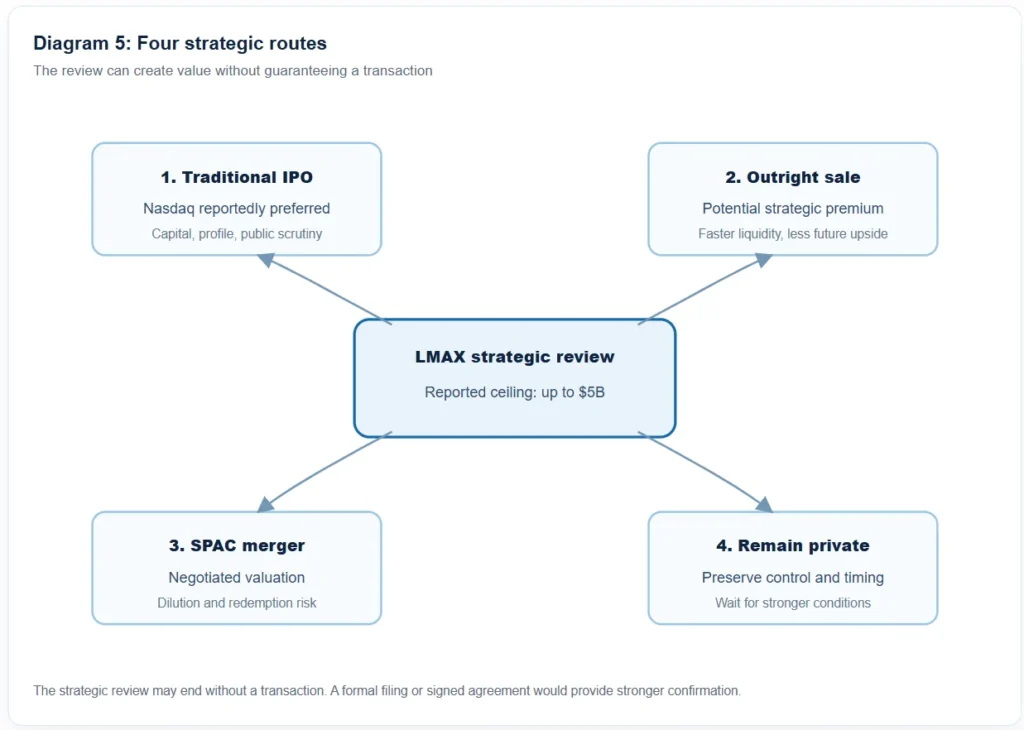
The reported LMAX Nasdaq IPO could value the trading group at up to $5 billion. The company is reviewing several strategic paths with investment banking advisers. These routes reportedly include a sale, a SPAC merger, and listings in America or Europe.
Nasdaq currently appears to be the preferred venue. However, LMAX has not launched a formal offering or accepted a transaction. Management has also declined to confirm the valuation. Therefore, investors should treat the $5 billion figure as an upper-range scenario.
That distinction matters. Strategic reviews often test buyer demand, pricing, and market timing without producing a completed deal. LMAX can also remain private if bids or listing terms disappoint shareholders.
Growth explains the interest
LMAX operates institutional venues across foreign exchange and digital assets. Its clients include banks, brokers, asset managers, funds, and other professional market participants.
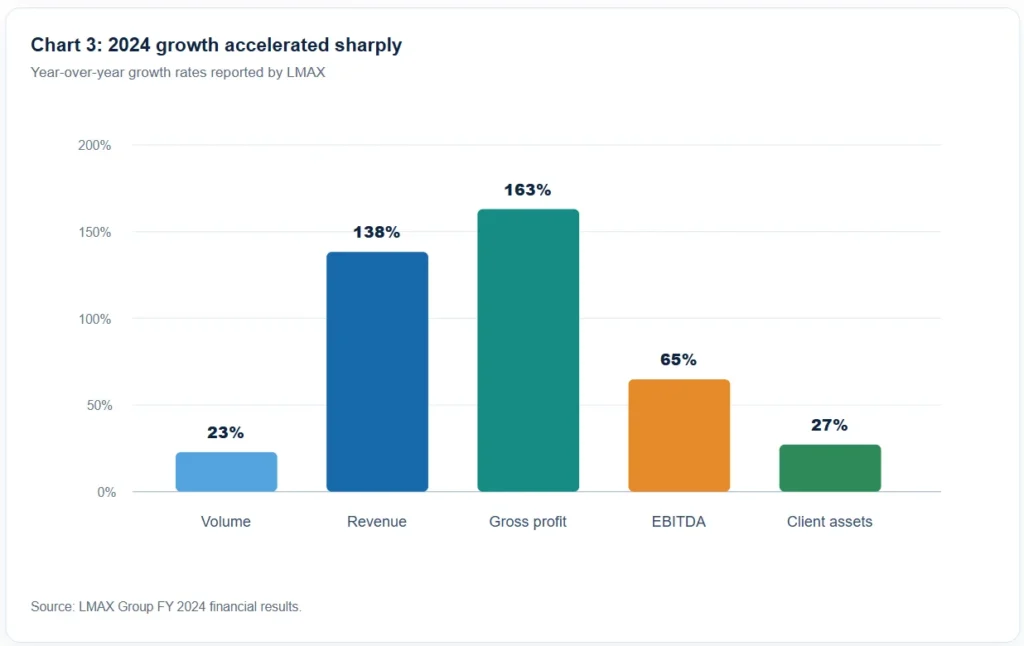
The Company’s 2024 results provide the strongest case for a premium valuation. Trading volume reached $6.5 trillion, rising 23% from 2023. Gross revenue increased 138% to $201 million. Meanwhile, gross profit climbed 163% to $190 million.
EBITDA reached $101 million, up 65%. That produced an EBITDA margin near 50% against gross revenue. Client assets also rose 27% to $713 million.
These figures show strong operating leverage. Revenue grew much faster than trading volume, while EBITDA remained highly profitable. However, the figures cover 2024. Any transaction in 2026 would require fresher audited results and clearer forward guidance.
The valuation hurdle
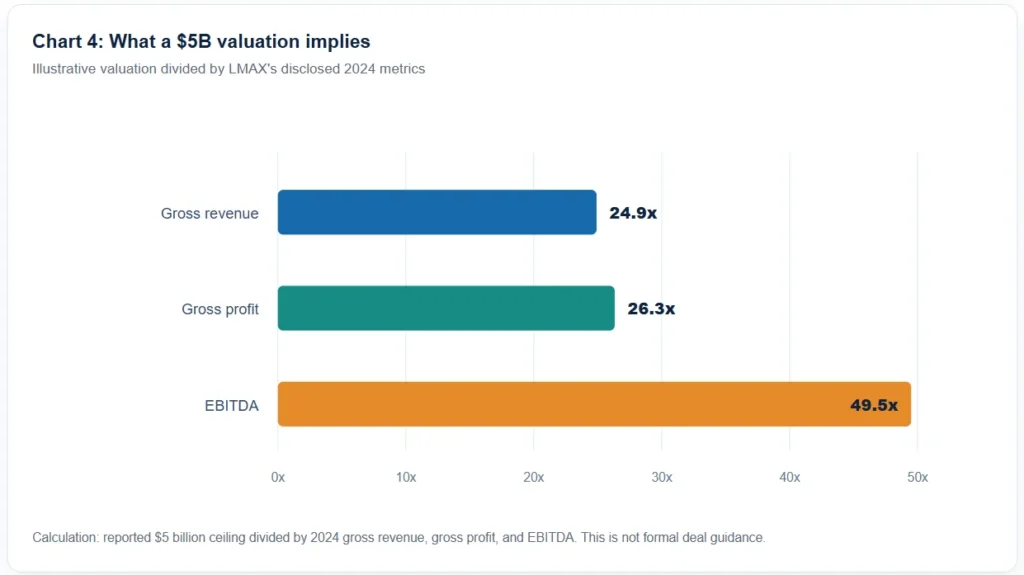
A $5 billion price would equal almost 25 times 2024 gross revenue. It would also represent roughly 50 times 2024 EBITDA. Those ratios look demanding for a trading infrastructure business.
The proposed value is also five times the $1 billion valuation established in 2021. That earlier transaction involved a $300 million purchase for a 30% stake. A fivefold rise over five years implies annualized valuation growth near 38%.
A successful LMAX Nasdaq IPO would require more than a cyclical trading rebound. Public investors would need confidence in durable volume growth, pricing power, and global client retention. They would also expect digital assets to expand without weakening regulatory standards.
Why the hybrid model matters
LMAX differs from many crypto listing candidates because foreign exchange provides an established institutional foundation. That diversification may reduce dependence on digital asset prices and retail speculation.
The model also gives LMAX a credible bridge between traditional markets and tokenized settlement. A January partnership brought $150 million of financing to support cross-asset expansion. The funding equals about 75% of LMAX’s 2024 gross revenue.
Furthermore, LMAX completed live digital asset prime brokerage trades with Standard Chartered in July. The pilot covered Bitcoin and Ether, using T+1 settlement and established credit controls. That development strengthens the institutional infrastructure narrative behind a possible LMAX Nasdaq IPO.
Sale, SPAC, or public listing
An outright sale could deliver faster liquidity and a strategic premium. A buyer might also add distribution, capital, and regulatory reach. However, existing shareholders could surrender future upside.
A traditional IPO offers permanent capital and public shares for acquisitions. It also brings quarterly scrutiny, disclosure costs, and greater earnings volatility.
A SPAC could negotiate valuation before closing. Yet dilution, redemption risk, and weaker investor confidence can reduce its appeal. Remaining private would preserve control while management waits for stronger markets.
What investors should watch
The next signal should be a formal filing, adviser mandate, or confirmed sale process. Updated financial statements will matter even more. Investors should examine 2025 revenue quality, EBITDA conversion, client concentration, and digital asset volumes.
They should also test whether the reported valuation includes debt, new capital, or secondary share sales. Each structure changes the economics for existing owners.
The LMAX Nasdaq IPO story has credible strategic logic. Still, the $5 billion target prices in considerable execution. Strong 2024 growth supports interest, but public markets will demand evidence that momentum continued.




