

June 01, 2026 – Nomura’s digital asset arm becomes the first Japanese bank subsidiary to secure a conditional US national trust bank charter, joining a fast-growing wave of crypto firms entering federal banking.

In Summary
The OCC granted Laser Digital conditional approval for a US national trust bank charter on May 29, 2026.
The firm will custody tokenized, digital, and traditional assets under direct federal oversight.
Laser Digital will not accept deposits or issue loans to any customers.
At least 15 digital asset firms have filed OCC charter applications since January 2025.
This is the first OCC trust bank approval for any Japanese financial institution’s US subsidiary.
Laser Digital, Nomura’s digital asset arm, has won conditional approval for a US banking license. The OCC issued this ruling on May 29, 2026. Consequently, Laser Digital becomes the first subsidiary of a Japanese bank to reach this milestone.
The firm filed its OCC charter application in January 2026. Furthermore, conditional approval arrived in just five months. This reflects the OCC’s accelerated review pace under Comptroller Jonathan Gould.
What the Charter Allows
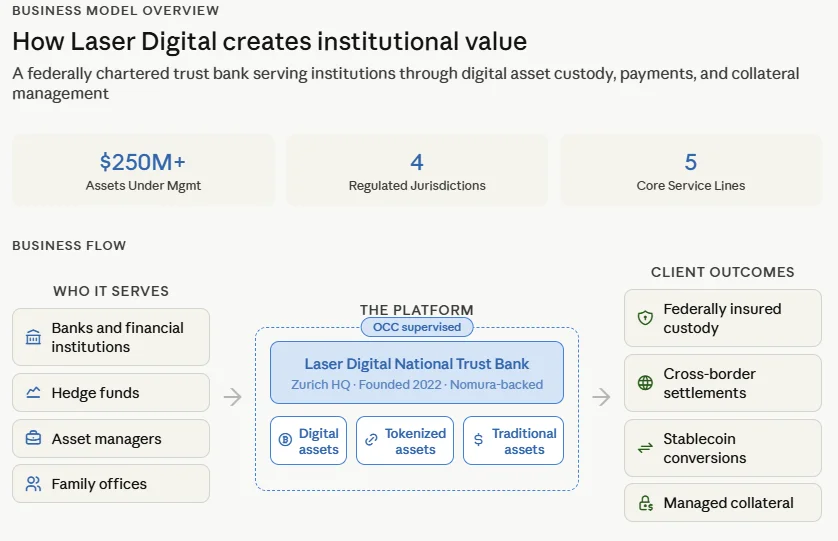
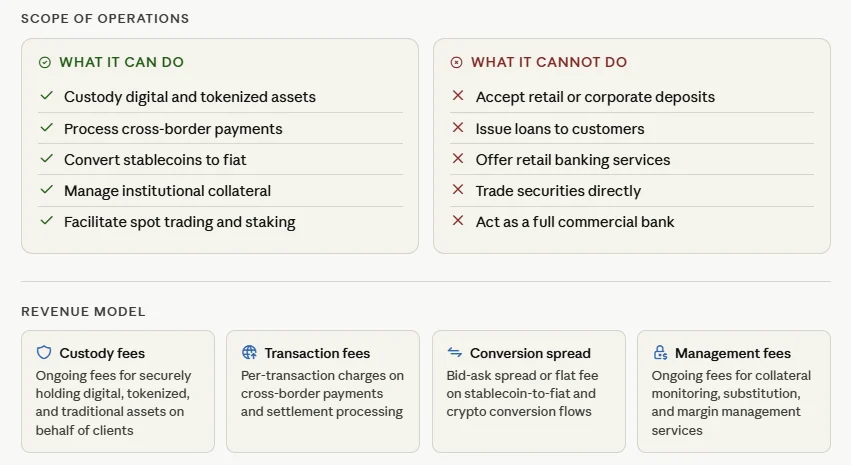
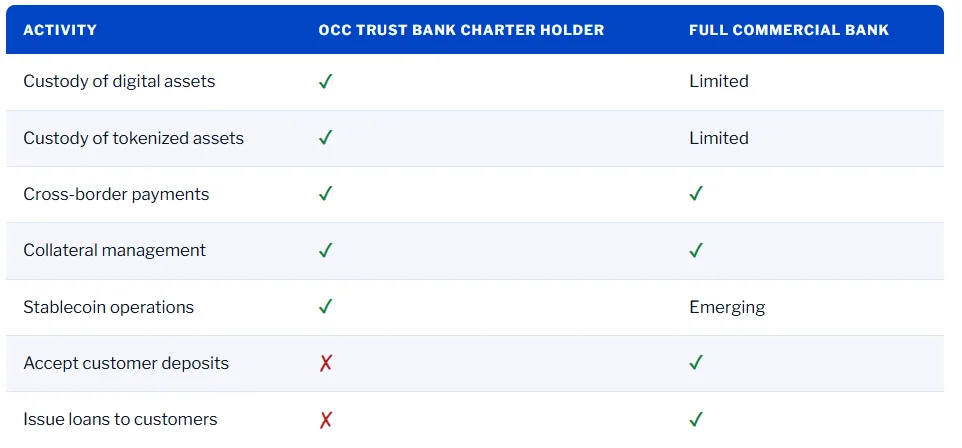
The National Trust Bank charter lets Laser Digital hold and manage three asset classes. These are tokenized, digital, and conventional financial assets. All US operations fall under direct federal supervision. However, the firm will not accept customer deposits. Additionally, it will not offer any lending services.
A newly formed entity, Laser Digital National Trust Bank, will run all US operations. Its services will include cross-border payments, stablecoin-to-fiat conversions, and collateral management. Thus, it specifically targets institutional clients rather than retail consumers.
Laser Digital will hold custody of tokenized, digital, and traditional assets under US federal oversight, a landmark first for any Japanese bank’s US subsidiary.
-Editorial summary. Based on Laser Digital’s statement to Reuters and OCC confirmation, May 29, 2026.
Conditions Still Apply
Conditional approval is not a final regulatory sign-off. Laser Digital must still satisfy minimum capital requirements before proceeding. Only after meeting these conditions will the OCC grant full approval. The timeline for completing this process currently remains unconfirmed.
A Growing Global Regulatory Footprint
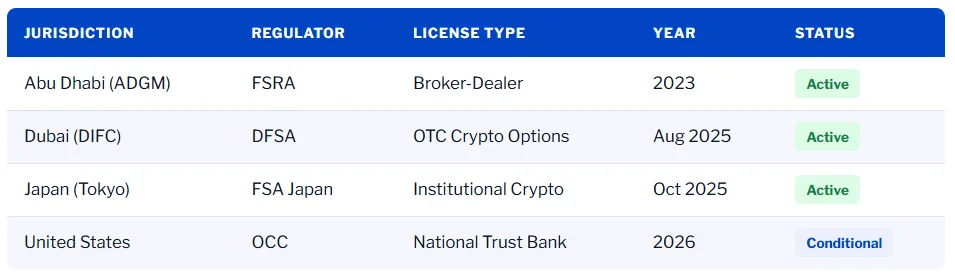
Nomura spun Laser Digital off in 2022. Headquartered in Zurich, the firm manages more than $250 million in assets. It primarily serves institutional investors through crypto trading and digital asset exposure. Since its founding, it has secured regulatory approvals across multiple regions.
Specifically, it received Abu Dhabi’s ADGM broker-dealer approval in 2023. Moreover, it became the first firm in Dubai to be licensed for OTC crypto options in August 2025. It also opened a Tokyo office in October 2025, targeting Japan’s institutional crypto market. The US charter now adds federal credibility to this global presence.
A Flood of OCC Charter Applications
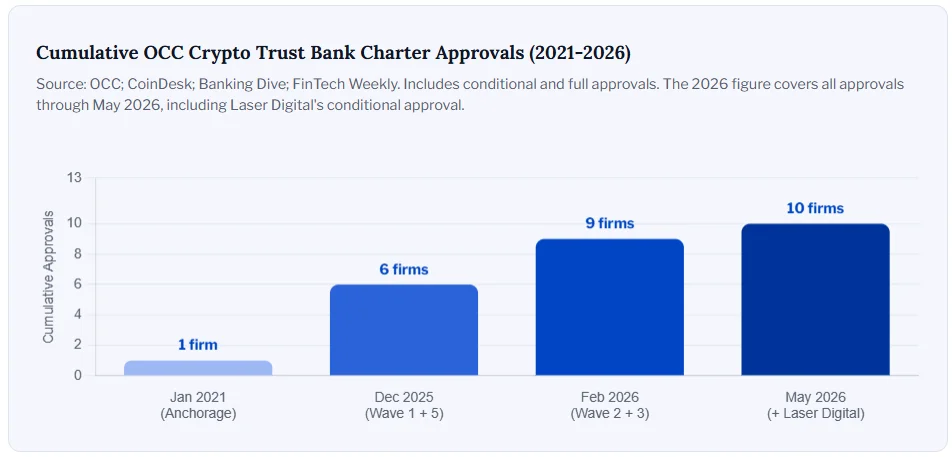
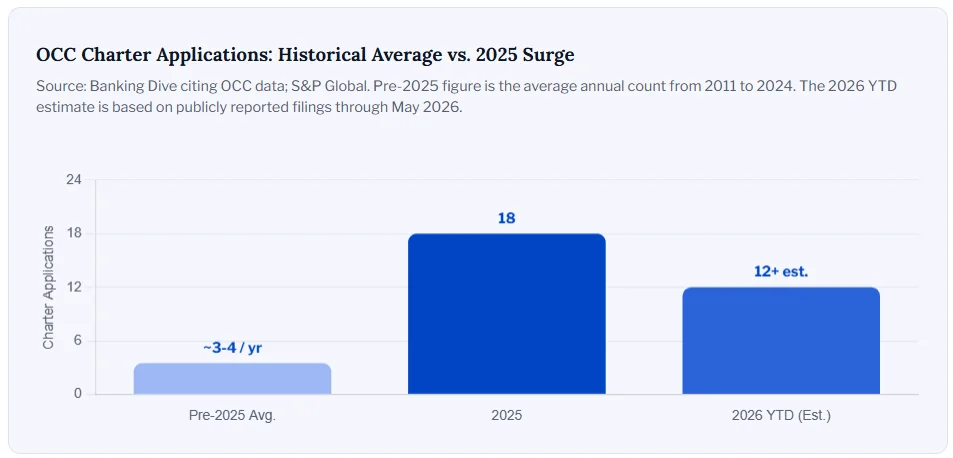
Laser Digital is not alone in seeking federal oversight. According to S&P Global data, at least 15 digital asset firms have applied for OCC charters since January 2025. Before 2025, the OCC received fewer than four applications per year on average.
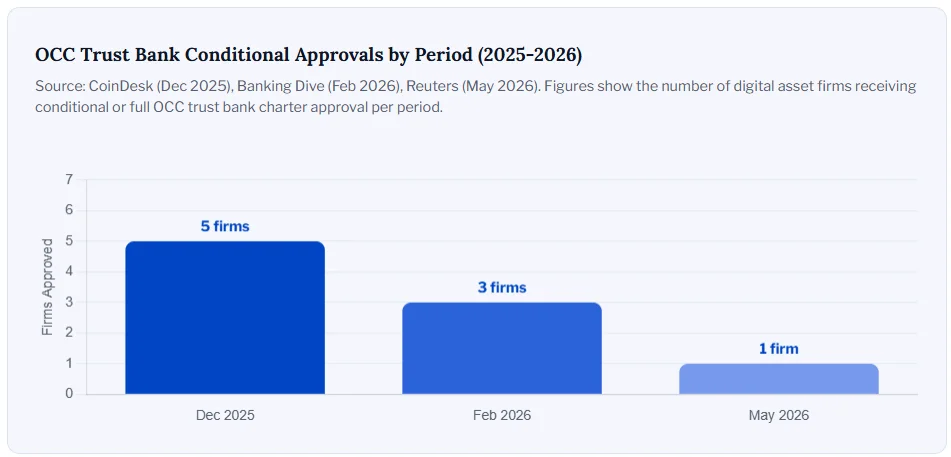
Five firms received conditional approval in December 2025. These were Circle, Ripple, BitGo, Paxos, and Fidelity Digital Assets. Three more followed in February 2026: Bridge, Protego, and Crypto.com. Laser Digital now joins this expanding cohort.
Competing in a Crowded Market
By securing this charter, Laser Digital can now compete directly with established US digital asset custodians. Circle, Ripple, and Paxos already plan to operate as federally chartered trust banks. Therefore, the institutional digital asset custody market is growing increasingly competitive.
A federal charter removes a critical operational hurdle for new entrants. Without it, a firm must obtain a separate custody license in each US state. This state-by-state process is both expensive and time-consuming. As a result, one OCC charter significantly cuts Laser Digital’s nationwide compliance burden.
Industry Pushback
Not everyone welcomes this regulatory shift. The Bank Policy Institute (BPI) has publicly criticized the OCC’s approach. It accused digital asset firms of not planning to operate genuine trust companies. Furthermore, it warned that the OCC was blurring the traditional definition of a bank.
Traditional banks fear losing deposits to higher-yield digital alternatives. However, firms like Laser Digital explicitly do not accept deposits. Therefore, this concern applies less directly to pure trust-only charters. Nevertheless, the broader debate over crypto’s role in regulated banking continues.
What Happens Next
Laser Digital must now clear its remaining capital thresholds. Full OCC approval would establish it as a fully regulated US financial institution. The OCC’s track record shows conditional approvals typically advance to full charter status.
Meanwhile, traditional institutions are also entering the race. Morgan Stanley filed for an OCC national trust charter in February 2026. World Liberty Financial has also submitted an application. Thus, the boundary between conventional banking and digital assets continues to narrow rapidly.
Laser Digital’s current scale still lags far behind established peers. Circle alone manages $78 billion in USDC stablecoin reserves. By comparison, Laser Digital’s $250 million AUM represents a small fraction of that figure. Nevertheless, its backing by Nomura and its multi-jurisdictional presence give it distinct institutional credibility.