

April 23, 2026 – The CFTC-regulated prediction market giant is reportedly preparing to bring crypto perpetual futures onshore. The move could redefine the $100B+ daily derivatives landscape for U.S. retail and institutional traders.
In Summary
Kalshi is reportedly preparing to launch CFTC-regulated crypto perpetual futures for U.S. traders.
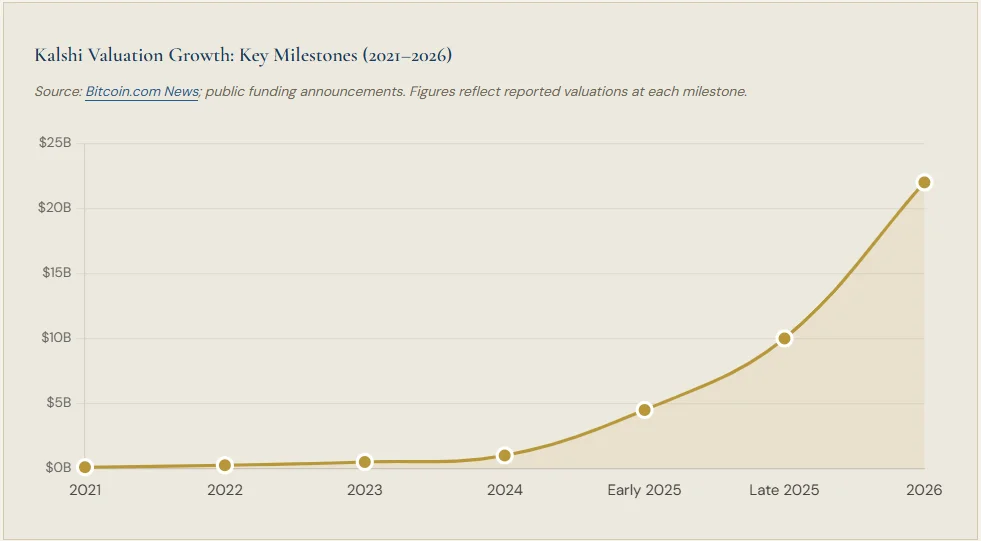
The exchange’s valuation reached $22 billion after a Coatue Management-led funding round.
CFTC Chairman Michael Selig signalled support for “true perpetual futures” in March 2026.
A product reveal called “Timeless” is teased for April 27, 2026, in New York.
Global crypto perpetual futures volume exceeds $100 billion per day, with offshore venues dominating.

What Is Kalshi Planning?
Kalshi, the New York-based prediction market exchange, is making a bold strategic pivot. According to a report by The Information, the firm intends to launch crypto perpetual futures for U.S. traders. The report cites sources directly familiar with the matter.
Perpetual futures, commonly called “perps”, have no expiration date. Traders hold positions indefinitely. A funding rate mechanism keeps contract prices anchored to spot markets.
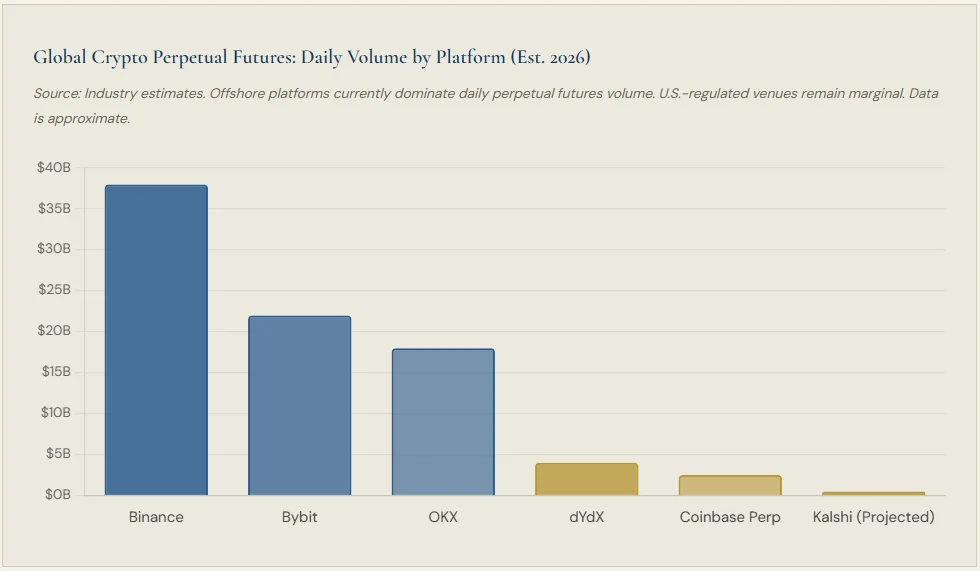
This distinguishes perps from traditional futures, which expire on a fixed date. The perpetual structure has proven wildly popular offshore. Platforms like Binance and Bybit process tens of billions in daily perp volume.
Why the Timing Matters
The timing of this move is anything but coincidental. In March 2026, CFTC Chairman Michael Selig made a pivotal public statement. He indicated the regulator intends to permit “true perpetual futures” for digital assets in the United States.
That regulatory green light matters enormously. Until now, perpetual crypto futures had no legal onshore home for U.S. retail traders. The offshore market flourished precisely because of this gap.
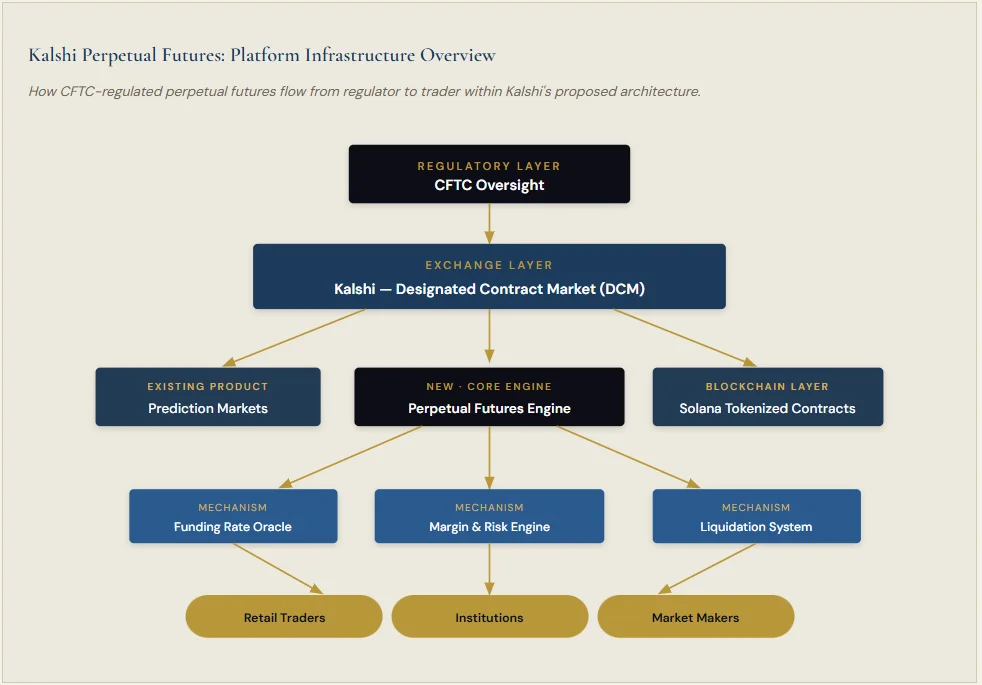
“Kalshi already holds designated contract market status, a regulatory foundation that few crypto-native competitors can match in the United States.”
Kalshi holds a Designated Contract Market (DCM) license from the CFTC. That status gives it a significant head start. Regulated infrastructure is already in place. The exchange does not need to be built from scratch.
The Scale of the Prize
The global crypto perpetual futures market is staggering in size. Daily trading volume across all platforms routinely exceeds $100 billion. The vast majority of this flows through offshore, non-U.S. regulated venues.
Kalshi’s entry would give U.S. traders a compliant, onshore alternative. Institutional players, in particular, often cannot access unregulated offshore platforms. A CFTC-regulated perp product directly fills that gap.
The exchange already competes with Coinbase and other U.S.-licensed platforms in the prediction market space. Crypto perps would represent a considerably larger addressable market.
From Prediction Markets to Full Derivatives
Kalshi built its name on binary event contracts. Users wager on real-world outcomes: election results, economic data, and weather events. The model is simple and legally distinct from traditional financial derivatives.
Perpetual futures are a different animal entirely. They require deeper market infrastructure, liquidity management, and risk controls. The leap is significant, but Kalshi has been scaling rapidly.
The exchange’s valuation hit $22 billion in 2026, following a funding round led by Coatue Management. Growth has been turbocharged by legal election markets in 2024. The firm also recently integrated tokenised event contracts on the Solana blockchain.
On April 27, Kalshi is set to reveal a product it has teased as “Timeless” in New York. Industry analysts widely believe this is linked to perpetual-style contracts, though official confirmation remains absent.
What It Means for the U.S. Derivatives Market
If Kalshi launches regulated crypto perps, the competitive dynamics shift immediately. Offshore platforms have benefited from the absence of a U.S. alternative. A CFTC-regulated venue changes the calculus for risk-conscious institutions.
The CFTC has already signalled its intent to closely monitor prediction markets and crypto products. Selig’s agency is using AI tools for market surveillance. Regulatory engagement is clearly deepening, not retreating.
The broader implication is structural: the U.S. is actively trying to repatriate crypto derivatives volume. An exchange like Kalshi, already regulated and already scaled, is the logical vehicle for that shift.
The lines between prediction markets, crypto exchanges, and traditional financial derivatives are blurring fast. Kalshi’s next move will test how far those boundaries can stretch and who benefits when they do.




