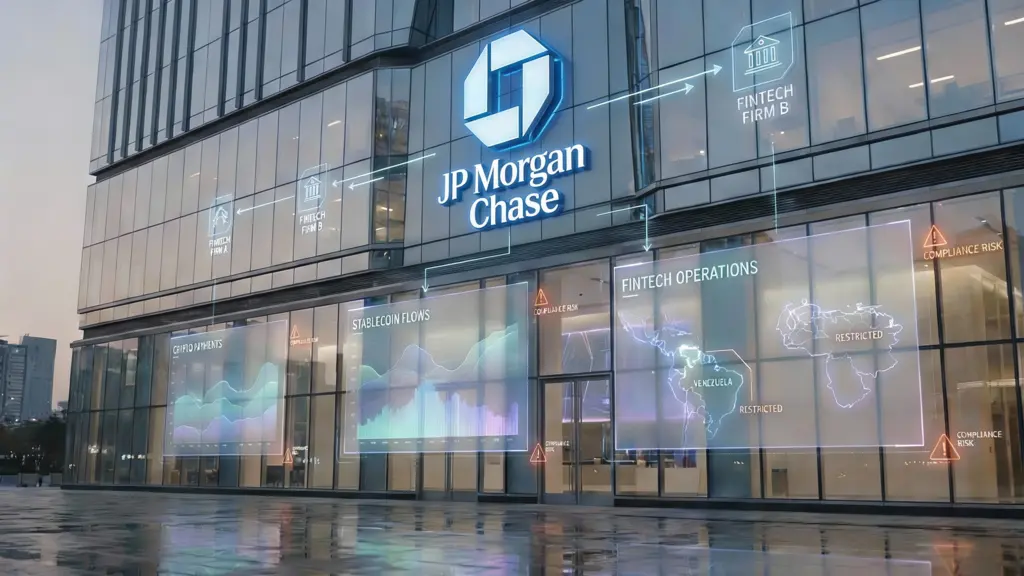


Catenaa, Thursday, January 22, 2026- Sources said that JPMorgan Chase is winding down its partnership with a fintech intermediary amid concerns over clients engaged in high‑risk activities.
This includes crypto‑linked payments and operations in sanctioned jurisdictions, according to people familiar with the matter.
The move underscores traditional banks’ heightened scrutiny of crypto‑related business amid stringent anti‑money‑laundering and sanctions compliance pressures.
Recently, the bank informed Checkbook, a digital payments firm that had served as a conduit for fintech clients to access JPMorgan’s banking services, that it would terminate the relationship rather than face regulatory risks tied to some of the fintech’s customers.
Those clients reportedly included stablecoin startups operating in regions such as Venezuela and other areas subject to legal restrictions.
JPMorgan has in recent months also frozen accounts linked to at least two stablecoin companies after internal reviews flagged exposures to high‑risk markets and operational risks such as elevated chargebacks, according to prior reporting.
Strike CEO Jack Mallers earlier said in a Yahoo Finance report that JPMorgan abruptly closed his accounts in September, citing vague “concerning activity.”
The move reignites “Operation Chokepoint 2.0” fears despite Trump’s anti-debanking order. Critics question if anti-crypto pressure lingers.
The bank emphasized that these actions were driven by compliance considerations and not a blanket stance against stablecoins.
The decision highlights broader tensions between large financial institutions and fintechs handling novel crypto payment models.
Banks are required to rigorously vet customers under US anti‑money‑laundering and sanctions laws, and partnerships that expose lenders to opaque risk profiles are increasingly untenable.
Analysts say this trend reflects an evolving banking strategy to support compliant crypto infrastructure while distancing from intermediaries whose customer bases expose lenders to legal and reputational risks.




