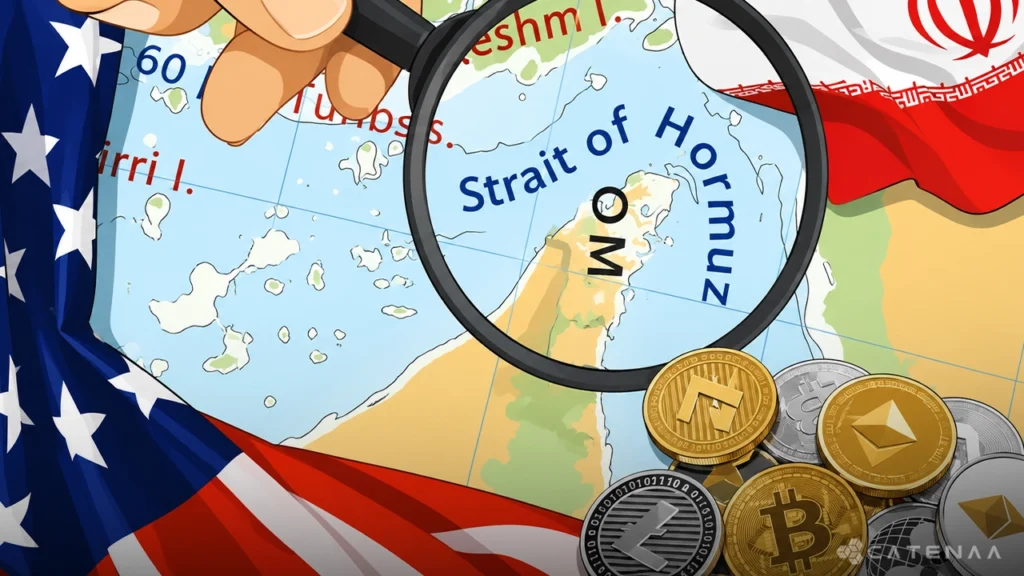


Catenaa, Wednesday, June 10, 2026- Iran is reportedly collecting between $1.5 million and $2 million from vessels transiting the Strait of Hormuz, with some payments allegedly being settled using Tether’s USDT stablecoin, highlighting the growing role of digital assets in geopolitical and maritime disputes.
The Strait of Hormuz remains one of the world’s most strategically important shipping routes, handling roughly one-quarter of global crude oil trade.
According to reports emerging from Iran, shipping companies seeking passage through the waterway have been required to make payments that are deposited directly into the Iranian treasury.
Iranian lawmaker Mohsen Zanganeh reportedly stated that while some transactions have been completed using cash arrangements or barter agreements, others have been settled using USDT, the world’s largest stablecoin by market capitalization.
If confirmed, the development would represent one of the most significant examples of a nation-state incorporating cryptocurrency into international transit and trade operations.
The Strait of Hormuz connects the Persian Gulf to global energy markets and serves as a critical route for oil exports from several Middle Eastern producers.
Any disruption to shipping through the narrow waterway has immediate implications for global energy markets and international trade.
Industry estimates suggest Iran could collect substantial revenues if current payment arrangements continue.
With dozens of commercial vessels passing through the strait regularly, cumulative collections could reach hundreds of millions of dollars annually.
The reported fees come amid heightened geopolitical tensions and continuing disputes over maritime security in the region.
The alleged use of USDT highlights how stablecoins are increasingly being employed in situations where traditional banking channels face restrictions.
Unlike conventional international transfers, stablecoin transactions can move value across borders rapidly without relying on correspondent banking networks.
That characteristic has made digital assets attractive in regions facing sanctions, banking limitations or restricted access to international payment systems.
Blockchain analytics firms have previously noted that cryptocurrencies are becoming an increasingly important component of international financial activity in politically sensitive regions.
If the reports are accurate, this could mark one of the first known cases of a government directly accepting cryptocurrency-linked payments for passage through an international maritime corridor.
The development has attracted attention from US regulators.
The Office of Foreign Assets Control (OFAC), which oversees sanctions enforcement, has warned that maritime companies engaging with sanctioned Iranian entities could face secondary sanctions.
US authorities continue to monitor the use of digital assets in transactions connected to sanctioned jurisdictions.
Financial institutions, shipping operators and commodity traders are increasingly required to conduct enhanced due diligence when handling cryptocurrency-related payments involving high-risk regions.
Compliance experts note that blockchain transactions are publicly traceable, allowing regulators to monitor activity more effectively than some traditional payment methods.
However, identifying the ultimate beneficiaries of transactions can still present challenges.
The reports arrive as stablecoins become a growing focus of policymakers worldwide.
Governments in the United States, Europe and Asia are introducing new regulatory frameworks governing dollar-backed digital assets.
USDT remains the dominant stablecoin globally, with a market capitalization exceeding $150 billion and widespread use across international crypto markets.
Its popularity stems from its liquidity, global accessibility and ability to facilitate rapid transfers.
The alleged use of USDT in a geopolitical dispute could intensify scrutiny from regulators already examining the role of stablecoins in international finance.
Energy analysts continue to monitor developments in the Strait of Hormuz because any disruption affects global oil supplies and transportation costs.
The reported payment system also demonstrates how cryptocurrencies are expanding beyond trading and investment into real-world commercial and geopolitical applications.
Whether the reported stablecoin transactions become a long-term feature of maritime commerce remains uncertain.
However, the situation highlights the growing intersection between digital assets, international trade and national security concerns.
As governments continue developing crypto regulations, cases involving strategic infrastructure and sanctions compliance are likely to play an increasingly important role in shaping future policy decisions.




