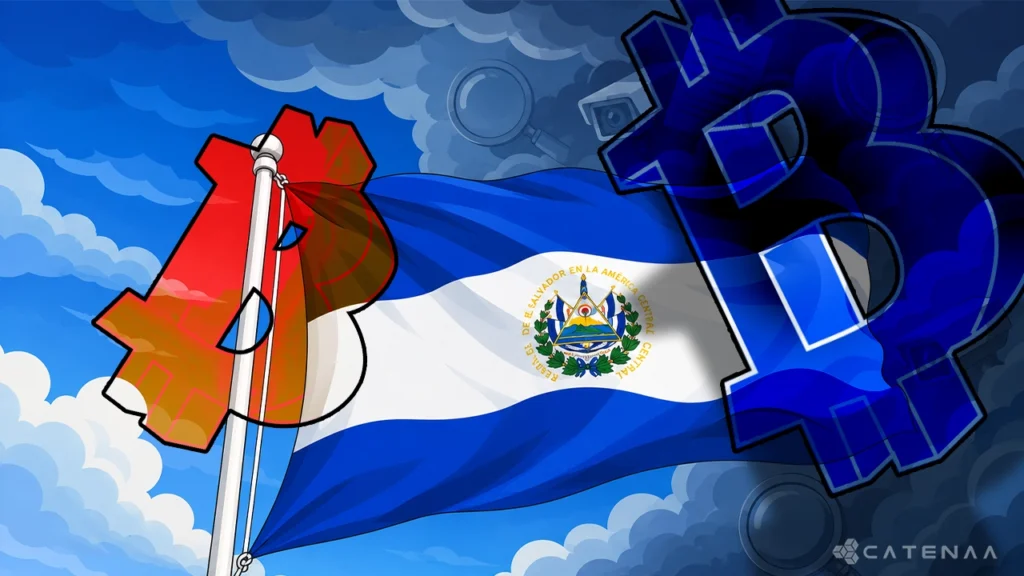


Catenaa, Saturday, July 04, 2026-El Salvador’s Bitcoin strategy is facing renewed international scrutiny as apparent growth in the country’s cryptocurrency reserves collides with International Monetary Fund conditions prohibiting additional voluntary public-sector Bitcoin purchases under a $1.4 billion financing program.
Government data indicate El Salvador’s Strategic Bitcoin Reserve holds 7,696 Bitcoin, valued at approximately $460 million as of June 28. The figure has fueled questions over whether President Nayib Bukele’s administration continues acquiring Bitcoin despite IMF restrictions tied to its Extended Fund Facility.
The IMF maintains that the reported increase does not represent new sovereign purchases. Instead, the Fund says the higher reserve balance reflects the consolidation of Bitcoin already owned by various government entities into a centralized reserve account.
The apparent discrepancy stems from the government’s continued promotion of a one-Bitcoin-per-day accumulation strategy while operating under IMF performance criteria that impose a zero ceiling on voluntary public-sector Bitcoin purchases.
Official records show El Salvador held 5,968 Bitcoin when the IMF program began in December 2024. Public reserve trackers now report holdings of 7,696 Bitcoin, creating the appearance of continued accumulation.
The IMF has explained that the increase results from transferring Bitcoin between government-controlled wallets, including holdings associated with the state development bank BANDESAL, rather than purchases in the open market.
Under international public-sector accounting standards, such internal transfers do not increase the government’s total Bitcoin exposure because all state-controlled wallets are treated as part of a consolidated balance sheet.
The Extended Fund Facility, approved in early 2025, introduced strict conditions governing El Salvador’s cryptocurrency activities as part of broader fiscal reforms.
In addition to prohibiting new voluntary Bitcoin purchases, the agreement bars the issuance of new Bitcoin-denominated or Bitcoin-indexed public debt instruments.
The IMF also required the government to disclose public-sector wallet addresses, reduce its involvement in the Chivo digital wallet platform, wind down the Fidebitcoin trust and publish audited financial statements covering Bitcoin-related public entities.
Compliance with those conditions remains linked to continued IMF loan disbursements.
Bitcoin has become a defining feature of President Bukele’s economic and political agenda since El Salvador adopted the cryptocurrency as legal tender in September 2021.
The policy positioned the country as the world’s first sovereign nation to embrace Bitcoin as an official currency while attracting global attention from cryptocurrency investors and blockchain companies.
Although Bitcoin later lost its mandatory legal tender status under reforms accompanying the IMF agreement, the government has continued promoting its digital asset strategy as a symbol of financial innovation.
Maintaining the narrative of daily Bitcoin accumulation has remained politically valuable even as international financial oversight has tightened.
The debate comes during a weaker period for cryptocurrency markets.
Bitcoin has fallen roughly 19% over the past month, reducing the market value of El Salvador’s holdings from peaks approaching $800 million earlier this year to about $460 million.
The decline has increased attention on the financial risks associated with sovereign cryptocurrency reserves, particularly for countries operating under external lending programs.
Unlike exchange-traded funds or private investment vehicles, sovereign reserves cannot be adjusted quickly without broader fiscal and political implications.
The government’s Bitcoin holdings must coexist with budgetary targets, debt obligations and international lending conditions, making reserve management considerably more complex than corporate treasury strategies.
The next IMF review is expected to examine whether El Salvador has remained fully compliant with the financing program’s cryptocurrency conditions.
While the Fund has accepted that reported reserve growth reflects accounting consolidation rather than new purchases, continued public messaging surrounding daily Bitcoin acquisitions is likely to remain under close scrutiny.
The outcome could influence not only future IMF disbursements but also broader international perceptions of how sovereign governments balance cryptocurrency adoption with fiscal discipline and multilateral lending commitments.
El Salvador became the first country to adopt Bitcoin as legal tender in September 2021 under President Nayib Bukele. The government launched the Chivo digital wallet, accumulated Bitcoin for its national treasury and promoted the country as a global cryptocurrency hub. Following economic pressures, El Salvador secured a $1.4 billion Extended Fund Facility from the International Monetary Fund in early 2025. The agreement required sweeping fiscal reforms, including restrictions on new public-sector Bitcoin purchases and greater transparency over government-held digital assets. While Bitcoin remains part of El Salvador’s reserve strategy, the IMF continues monitoring compliance with those conditions as part of the country’s ongoing financial support program.




