


August 13, 2026 – Goldman Sachs is buying instant scale in crypto-linked income products, but the BlackRock comparison needs careful context.
In Summary
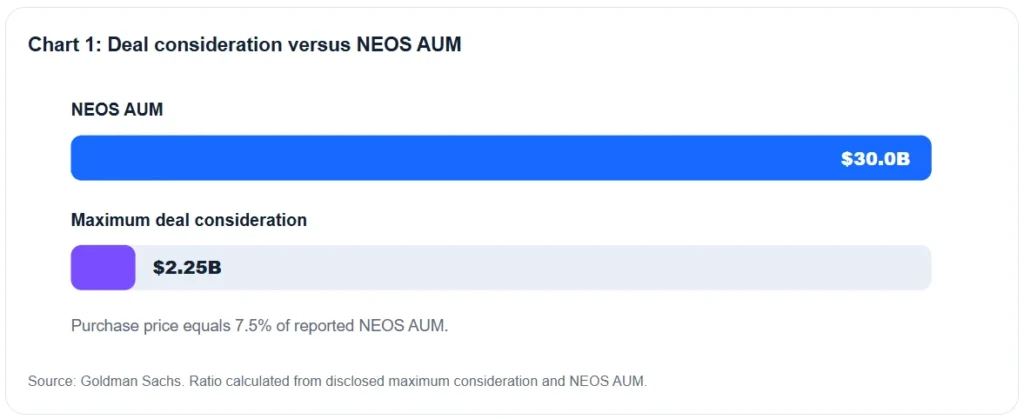
Goldman plans to buy NEOS for up to $2.25 billion, subject to performance and service commitments.
NEOS manages $30 billion across 19 options-based income ETFs as of June 30, 2026.
Three crypto-linked NEOS funds held about $1.29 billion in combined net assets on August 11.
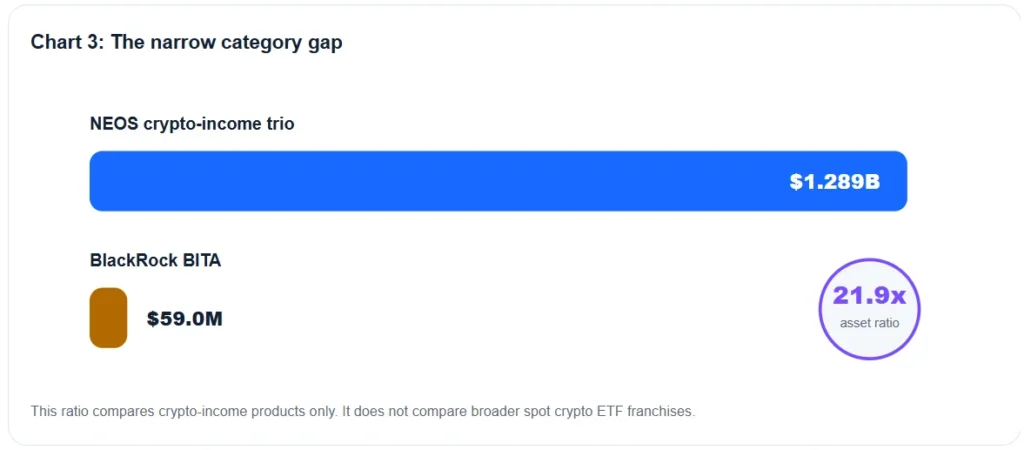
BlackRock’s comparable BITA product held about $59.0 million, making the narrow category gap significant.
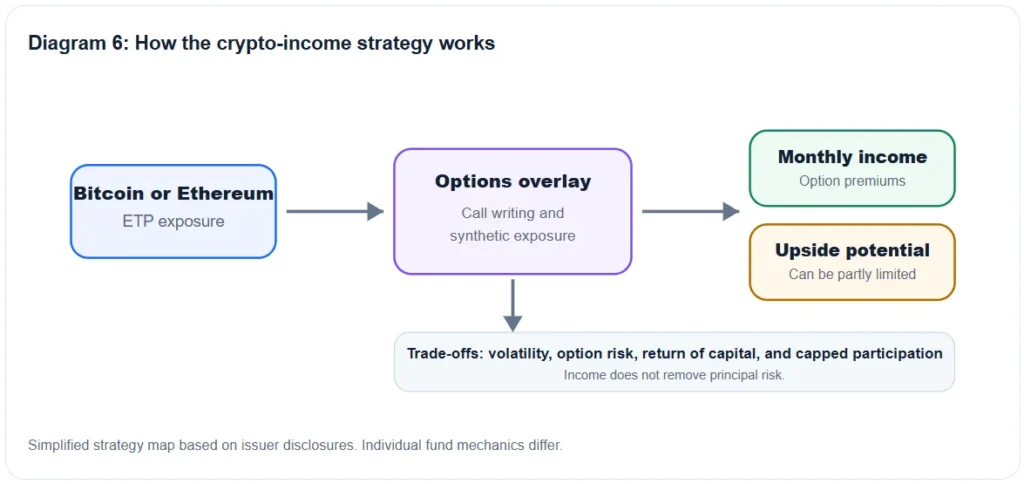
The funds use exchange-traded products and options rather than holding Bitcoin or Ether directly.
Goldman Sachs is accelerating into crypto-linked income products through its planned acquisition of NEOS Investments. The Goldman crypto ETF deal could cost up to $2.25 billion. It gives the bank immediate scale in Bitcoin and Ethereum income strategies.
A $2.25 billion shortcut to ETF scale
Goldman says the transaction should close in the first quarter of 2027. Regulatory approval and customary closing conditions still apply.
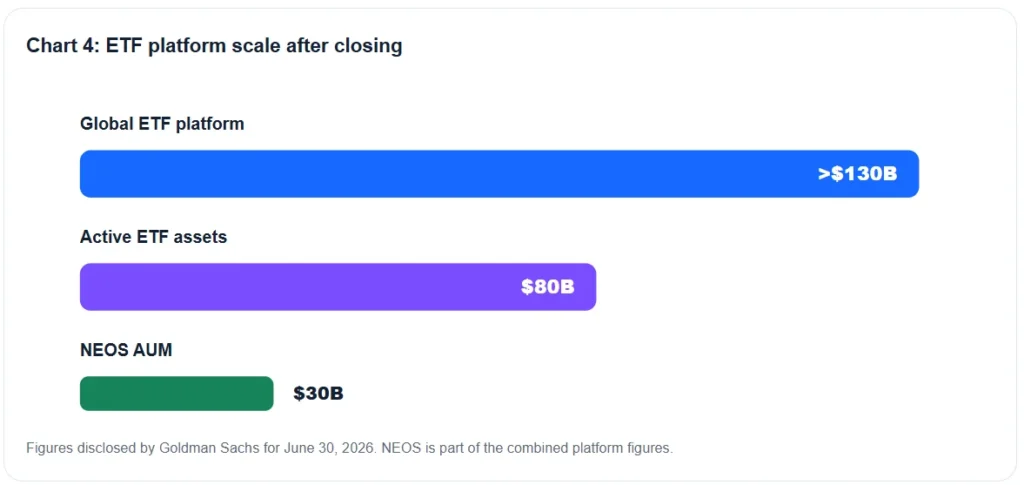
NEOS manages $30 billion across 19 income ETFs. The combined businesses would oversee more than $130 billion across Goldman’s global ETF platform.
About $80 billion would sit in active ETFs after the deal. NEOS therefore represents roughly 37.5% of the resulting active ETF base.
The maximum purchase price equals 7.5% of NEOS assets under management. The ratio is not a conventional valuation multiple.
Still, Goldman gains products, distribution, teams, brands, and established investor relationships.
Crypto income becomes the strategic entry point
The Goldman crypto ETF deal also adds three crypto-linked income products. They are BTCI, XBCI, and NEHI.
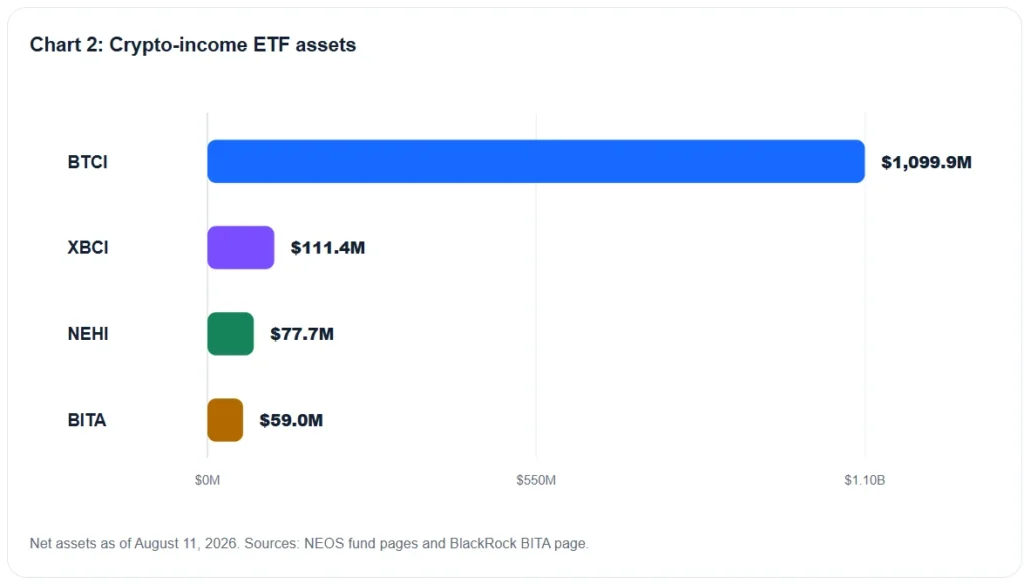
BTCI is the largest. Its net assets reached about $1.10 billion on August 11.
The fund seeks monthly income from Bitcoin-linked exchange-traded products and call options. It does not provide simple spot exposure.
XBCI held about $111.4 million. It combines Bitcoin ETP exposure with synthetic options and a call-writing strategy.
The fund targets up to roughly 150% notional exposure to BTCI’s underlying strategy. However, XBCI does not invest directly in Bitcoin.
NEHI held about $77.7 million. It uses Ethereum-linked ETP exposure with a call option overlay.
NEHI also avoids direct Ether ownership. Together, the three products were worth about $1.29 billion.
The BlackRock comparison needs context
BlackRock launched its iShares Bitcoin Premium Income ETF, BITA, on June 9, 2026. The product held about $59.0 million on August 11.
NEOS’s three crypto-income funds therefore held roughly 22 times BITA’s assets. BTCI alone held nearly 19 times BITA’s assets.
That gives Goldman a large lead within this specific income-focused category after closing. However, the comparison has clear limits.
Goldman would not overtake BlackRock across the broader crypto ETF market. BlackRock already operates a much larger spot Bitcoin franchise.
Therefore, the competitive battle is narrower. It centers on products combining crypto exposure with monthly option income.
Why buying NEOS may beat building internally
Acquiring an established platform can compress years of product development into one transaction. Goldman also gains live performance histories.
Those histories help advisors compare income, volatility, drawdowns, liquidity, and tax characteristics.
NEOS founders Troy Cates and Garrett Paolella are expected to join Goldman as partners. The full client-service team should also move across.
Income rates can hide important trade-offs
Crypto income ETFs are not substitutes for spot Bitcoin or Ether. Options overlays can exchange some upside potential for current income.
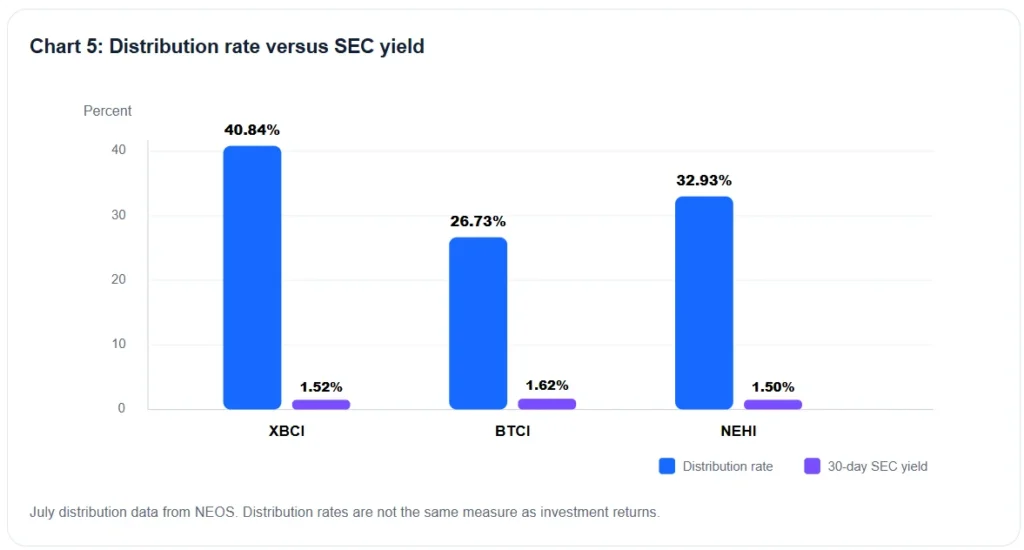
For example, XBCI reported a 40.84% distribution rate for July. Its 30-day SEC yield was only 1.52%.
BTCI reported a 26.73% distribution rate and a 1.62% SEC yield. NEHI showed 32.93% and 1.50%, respectively.
The difference matters because distributions can include a return of capital. Therefore, investors should not equate distribution rates with investment returns.
Volatility remains central to the strategy. High volatility can increase option premiums, but sharp moves can still damage capital values.
What investors should watch next
First, investors should watch regulatory completion before the first quarter of 2027. Delays could change the expected strategic timeline.
Second, fees deserve attention. BTCI lists 0.99% total annual expenses, while XBCI and NEHI list 0.98%.
BITA lists a 0.65% sponsor fee.
Third, flows will show whether Goldman’s distribution network accelerates growth. BTCI already provides a meaningful starting asset base.
Finally, product expansion could become the bigger story. Goldman may apply the income model across more digital assets.
The Goldman crypto ETF deal signals a broader institutional shift. Crypto is moving from standalone exposure into structured portfolio construction.
That evolution could matter more than another spot ETF launch. It brings digital assets deeper into income, derivatives, and wealth management.




