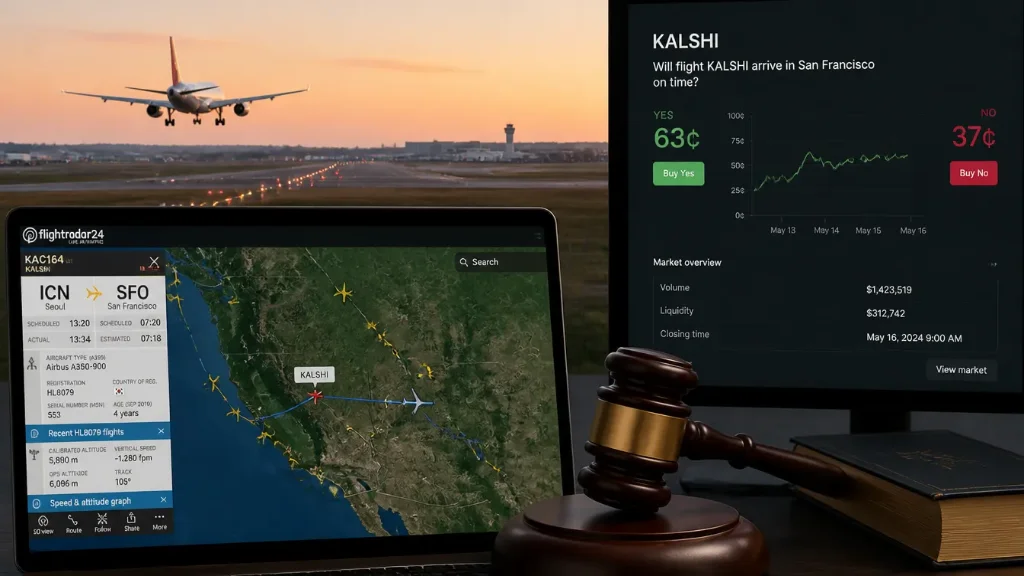


Catenaa, Monday, August 17, 2026- Flight-tracking company FlightAware has sued prediction market operator Kalshi, alleging it used FlightAware data without permission to settle contracts allowing traders to speculate on flight cancellations.
The lawsuit adds a different type of legal risk to the rapidly expanding prediction market industry. Unlike ongoing disputes over whether sports contracts constitute gambling, this case centers on the data used to determine who wins a prediction contract.
Kalshi introduced flight cancellation markets in July. Its platform indicated that results would be verified using FlightAware, according to the complaint filed Monday.
FlightAware alleges it was never informed that its information would be used for those markets. The company also claims Kalshi’s presentation could give customers the impression that the two businesses were working together.
FlightAware is seeking court orders preventing Kalshi from using its data and branding in connection with the markets. Its claims include breach of contract, trademark infringement and unfair competition.
The dispute highlights a growing issue for prediction markets as they expand beyond politics and economic indicators into real-world events.
Every prediction contract needs an authoritative source that determines whether an event occurred. That source can become especially important when money changes hands based on the result.
FlightAware’s complaint suggests platforms could face challenges when they use third-party information as that deciding source without an agreement with the data owner.
The company also raised concerns about incentives created by markets tied to flight cancellations.
Kalshi’s contracts exclude payouts when cancellations result from malicious or security-related incidents. FlightAware nevertheless argued that markets tied to disruption of air travel could create safety and operational concerns.
The lawsuit comes as Kalshi is already fighting several regulatory battles over its sports-related prediction contracts.
New York sued the company in July, alleging it was operating an illegal gambling business. Courts in Washington and Michigan have also temporarily restricted some Kalshi sports contracts.
Minnesota has moved in the opposite direction. A judge there blocked enforcement of a state prediction-market ban while litigation continues.
Behind those cases is a larger dispute over who controls prediction markets.
The CFTC maintains that federally regulated event contracts fall within its authority, while several states argue that sports-related contracts should be subject to state gambling laws.
FlightAware’s case opens another front.
As prediction markets broaden the range of events people can trade, access to reliable third-party data could become almost as important as regulatory approval itself.




