


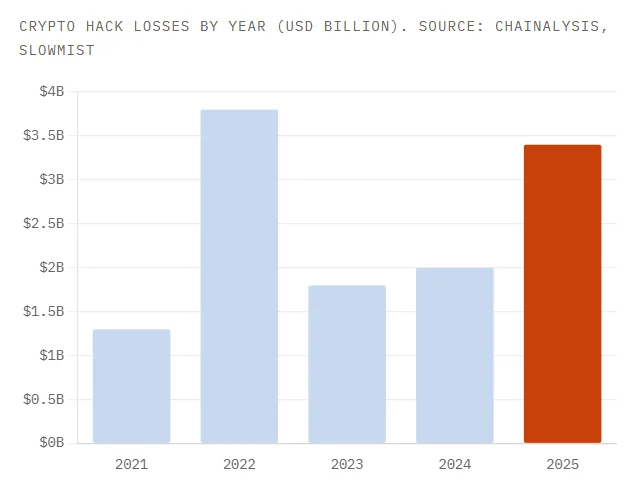
May 14, 2026 – A new industry-wide protocol replaces cryptic transaction hex code with plain-English summaries. The move targets the vulnerability behind over $3.4 billion in crypto losses in 2025.
In Summary
Clear Signing replaces unreadable hex data with plain-English transaction summaries.
ERC-7730 is the open standard powering the new format.
The EF’s 1TS Initiative will host and maintain the descriptor registry.
Adoption is voluntary; wallets choose which registries to trust.
Existing contracts can adopt the standard without redeployment.
The Ethereum Foundation has unveiled Clear Signing, a new industry standard. Specifically, it is designed to stop users from unknowingly approving harmful transactions. The announcement arrived on May 12, 2026, backed by major wallet providers and hardware makers.
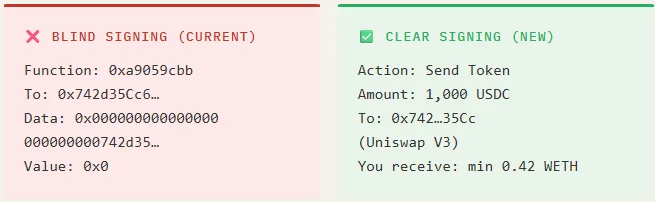
The initiative is a direct response to “blind signing”, a long-standing security gap in Ethereum. For example, when users approve transactions today, wallets display long strings of unreadable hex code. Most users click “confirm” without knowing what they are approving.
What Is Blind Signing and Why It Is Dangerous
Blind signing happens when a wallet cannot decode raw transaction data into plain language. As a result, the user sees only encoded calldata, which is a wall of numbers and letters. Attackers then exploit this gap by hiding harmful instructions inside real-looking data.
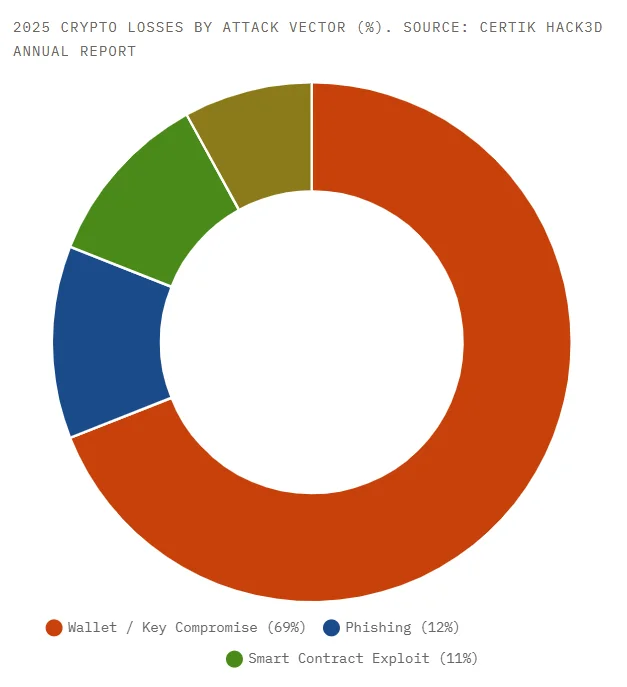
Chainalysis recorded $3.4 billion in crypto theft during 2025. In fact, wallet breaches linked to blind signing made up the largest share of losses. The $1.5 billion Bybit hack was the biggest single incident in crypto history.
“When users can’t understand what they’re signing, security becomes much more difficult. This standard changes that, and every wallet provider should embrace it.”
-Tomáš Sušánka, CTO, Trezor
How ERC-7730 Makes It Work
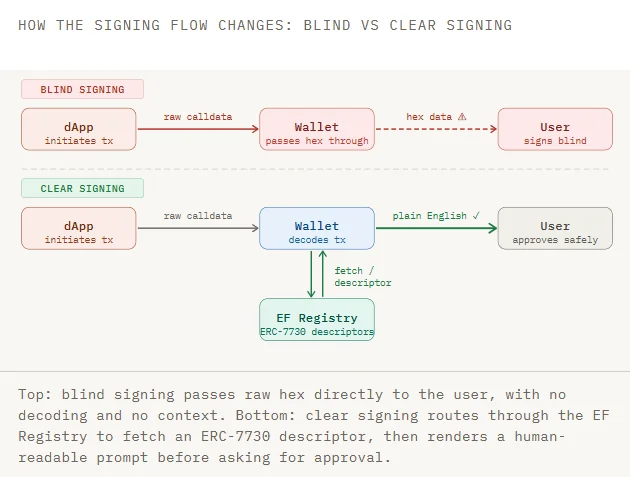
The core of Clear Signing is ERC-7730, an open standard for structured transaction data. Specifically, it defines a JSON format that describes the functions of a smart contract. Therefore, app developers write a “descriptor” file once, and every wallet that supports the standard can use it.
How ERC-7730 Works
A developer publishes a descriptor file for their smart contract. The file then maps raw function inputs to readable labels. For example, a uint256 field becomes “1,000 USDC” instead of a 32-byte number. Wallets also fetch this descriptor from the EF registry at signing time. No redeployment of the contract is needed. As a result, existing protocols can adopt it right away.
The Ethereum Foundation’s Trillion Dollar Security (1TS) Initiative will host and maintain the descriptor registry. Moreover, the 1TS grant programme funds Rust and TypeScript tools for developers. Developers can submit entries via pull requests at clearsigning.org.
Industry Backing and Wallet Adoption
Clear Signing began as a Ledger security project in 2021. Ledger then pushed the effort forward through 2024 under the Clear Signing Initiative. Since then, the Ethereum Foundation has taken over neutral oversight of the standard.
The group behind the launch includes WalletConnect, Sourcify, Fireblocks, and Ledger. Security experts are also invited to review and sign off on each descriptor file. Furthermore, multiple sign-offs increase trust in any given descriptor.
What Clear Signing Does Not Fix
However, the standard covers only transaction clarity, not the entire attack surface. ERC-7730’s own spec warns of “registry poisoning” and input injection attacks. A well-formed but misleading descriptor could still fool users. Therefore, sign-offs from security auditors are the planned fix.
Adoption is voluntary. Wallets on their own decide which registries to trust. Developers must verify contracts on Sourcify before submitting to the official registry. The foundation also expects the standard to grow as new threats appear.
Why This Matters for Mainstream Adoption
Ethereum’s growth depends on reaching users who are not very tech-savvy. Blind signing has long been a barrier and a serious risk. For instance, the Bybit attack, traced to a hacked Safe Wallet UI, exploited exactly this gap.
The Ethereum Foundation sees Clear Signing as groundwork for large-scale crypto adoption. With $3.4 billion stolen in 2025, improving the last line of security is no longer optional. Clear Signing is not a full solution. Still, it closes a gap that attackers have used for years.




