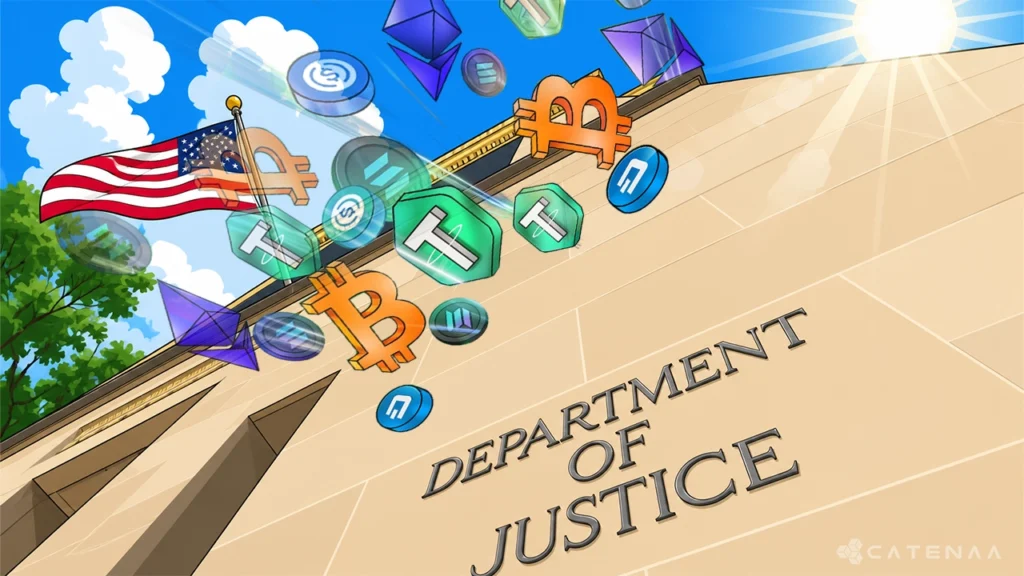


Catenaa, Monday, May 04, 2026-Acting US Attorney General Todd Blanche said late last week the Justice Department had changed its approach to crypto-related prosecutions.
The move is seen as indicating that software developers who do not assist criminal activity will not face charges, as federal authorities continue high-profile cases tied to digital asset platforms.
Policy Shift Signal
Blanche spoke at the Bitcoin 2026 conference alongside Kash Patel. He addressed concerns from developers about legal exposure linked to open-source software.
He said individuals building software without intent to support illegal use would not be targeted. Enforcement will instead focus on actors involved in sanctions evasion or money laundering.
The remarks come as the Justice Department recalibrates its stance on crypto enforcement. Officials are drawing clearer lines between coding activity and criminal conduct.
Ongoing Cases
The comments follow legal action against Roman Storm tied to the Tornado Cash protocol. He was previously found guilty on one charge linked to unlicensed money transmission.
Jurors did not reach decisions on more serious allegations tied to laundering and sanctions violations. The case remains a focal point for crypto policy debate.
In a related matter, Keonne Rodriguez and William Lonergan Hill were sentenced after operating a bitcoin mixing service.
Both cases were initiated under the Biden administration and have continued under President Donald Trump.
Industry Reaction
Crypto advocates have rallied behind developers involved in these cases. Industry figures argue that prosecuting code creators risks chilling innovation.
Executives, including legal leaders at Coinbase, have pushed for clearer guidance. They seek boundaries that separate infrastructure development from illegal use.
Blanche’s remarks appear to respond to these concerns. They suggest a narrower enforcement scope focused on direct involvement in crime.
Enforcement Focus
Blanche previously issued guidance discouraging prosecutions that impose regulatory structures through criminal law. He has argued oversight should rest with designated regulators.
Authorities are also intensifying action against fraud networks. Patel highlighted efforts to combat romance-related crypto scams, often referred to as pig butchering.
These schemes involve building trust with victims before directing them into fraudulent investments. Enforcement operations are expected to expand in Southeast Asia.
Legal Implications
The updated stance could shape how developers approach privacy tools and decentralized protocols. Reduced legal uncertainty may encourage continued software development in the sector.
At the same time, enforcement agencies are maintaining pressure on illicit finance channels. Cases involving laundering and sanctions breaches remain a priority.
The distinction between neutral software creation and active facilitation of crime is expected to guide future prosecutions.
US authorities have increased scrutiny of crypto services linked to anonymity features over the past several years. Mixing services such as Tornado Cash and Samourai Wallet have drawn attention due to their use in concealing transaction flows.
Regulators and law enforcement agencies have debated how to apply existing financial laws to decentralized systems. Some officials have pushed for strict enforcement, while others have called for clearer regulatory frameworks.
The debate has intensified as crypto adoption expands globally. Developers, exchanges and policymakers continue to negotiate the balance between innovation and compliance in digital finance.




