

June 18, 2026 – Uniswap and Aster lead a fresh DeFi rally. Meanwhile, a bold bank forecast and an aggressive buyback program are reshaping the narrative.
In Summary
Uniswap (UNI) jumped nearly 20% over the past 24 hours, reaching $3.63. Therefore, it now leads the DeFi blue chips.
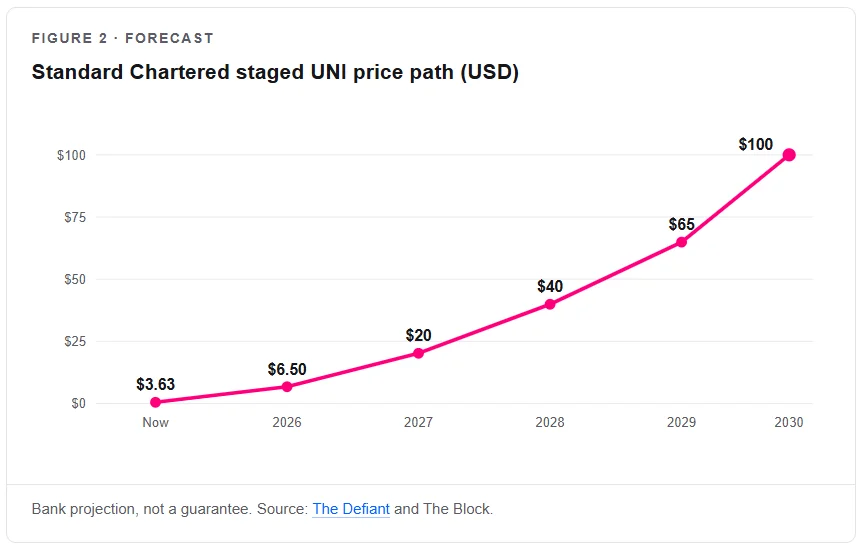
Standard Chartered set a $100 UNI target for 2030. Moreover, the bank sees $6.50 by year end.
Aster (ASTER) trades near $0.65. Furthermore, the perpetual DEX now routes 99% of fees into token buybacks.
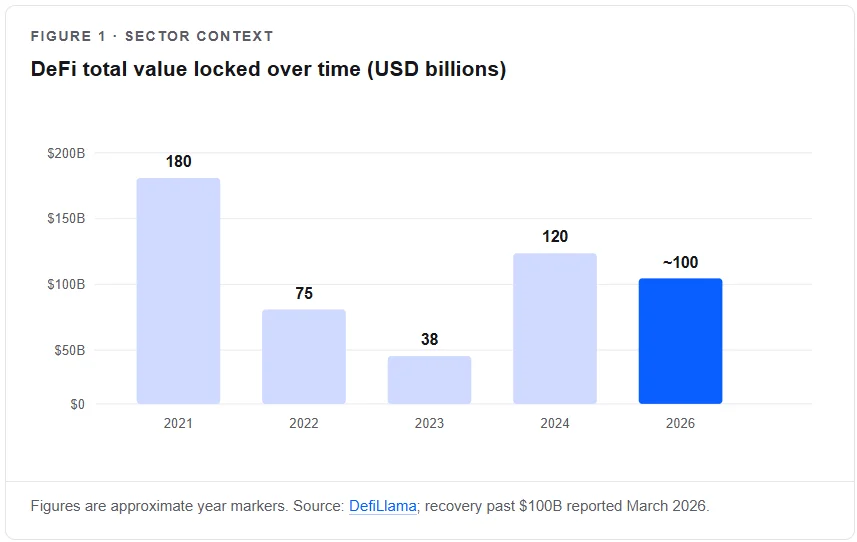
DeFi total value locked sits around $100 billion. However, that figure remains far below the 2021 peak.
Decentralized finance is back in focus this week. Uniswap and Aster both posted strong gains on Wednesday. As a result, traders are watching whether the move can hold.
The sector’s recovery is backed by hard numbers. DeFi total value locked (TVL) crossed $100 billion in March 2026, according to DefiLlama data. Consequently, momentum has returned to the largest protocols.
Uniswap leads on a bold bank call
Uniswap rallied hardest among the majors. UNI climbed roughly 20% in 24 hours to about $3.63, Decrypt reported. In addition, the token gained close to 48% over the week.
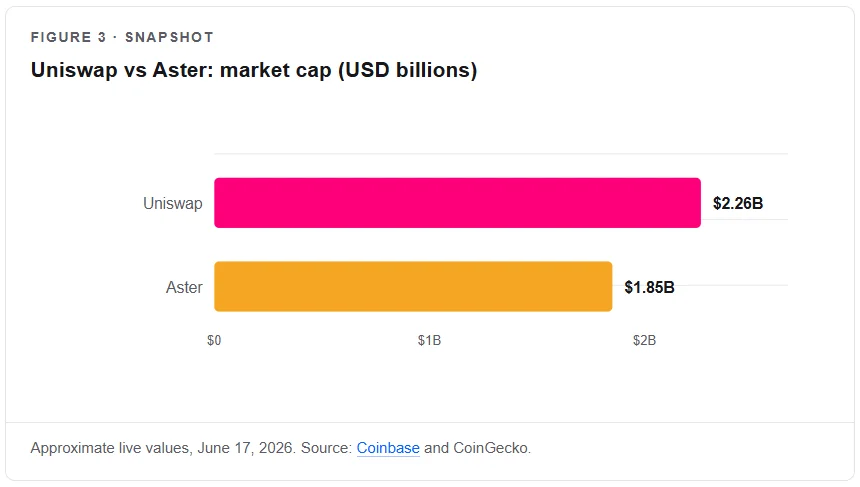
The move lifted Uniswap’s market cap to roughly $2.26 billion. Trading volume sat near $864 million. Notably, UNI outpaced both Bitcoin and Ethereum during the session.
One catalyst stands out. Standard Chartered initiated coverage of Uniswap with a $100 price target for 2030, The Block noted. That target implies a near 40-fold gain from current levels.
“The next opportunity for generational wealth in digital assets is going to come via the DeFi protocols,” said the bank’s Geoff Kendrick.
The bank laid out a staged path for the token. It sees $6.50 by year-end, then $20 in 2027 and $40 in 2028. Afterward, it projects $65 in 2029 before $100 in 2030.
Why the bank is bullish
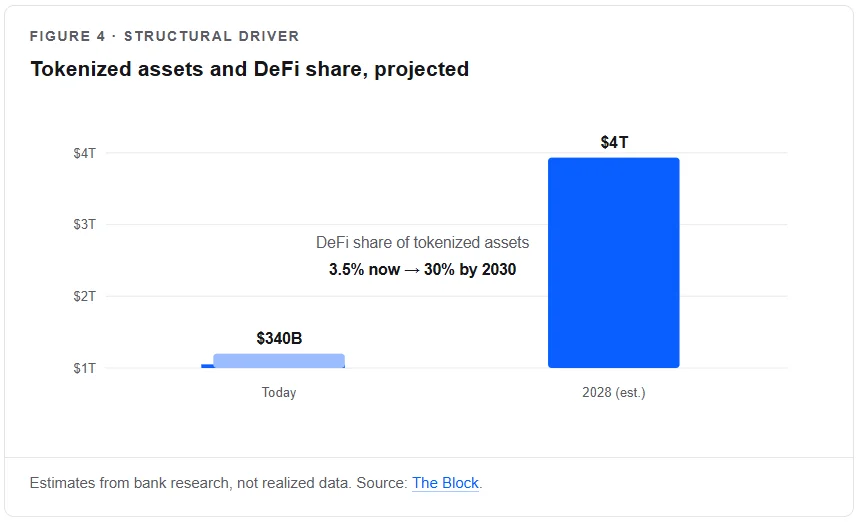
The thesis rests on tokenization. Standard Chartered expects tokenized assets to grow from about $340 billion today to $4 trillion by 2028. Meanwhile, the DeFi share of those assets could climb from 3.5% to 30% by 2030.
That shift could push DeFi assets toward $2.7 trillion by 2030. Because Uniswap is the default liquidity layer, it could capture a large slice of that flow. However, one risk remains clear.
UNI governs the protocol but does not yet directly capture fees. Still, a late-2025 fee-switch upgrade now burns roughly 1% of the supply each year. As a result, total supply has fallen to about 895 million from 1 billion.
Product momentum helps too. Uniswap launched tokenized securities on June 12. Consequently, tokenized stocks such as Apple, Tesla, and NVIDIA became tradable across its app and API.
Aster builds momentum on aggressive buybacks
Aster is the second altcoin worth watching. ASTER trades near $0.65, with a market cap around $1.85 billion, per CoinGecko data. The token serves a fast-growing perpetual DEX.
The project leans on tokenomics to drive demand. Aster now directs 99% of platform fees into ASTER buybacks. Furthermore, the team targets a 5-billion-token burn over time.
This buyback expansion sparked a fresh rally. The news sent the price up about 10% in a single session. Therefore, traders are tracking whether the burn schedule sustains the move.
The tokenization engine behind the rally
Both stories share one driver: tokenization. Banks now frame on-chain assets as a multi-trillion-dollar shift. Therefore, DeFi venues stand to gain if real-world assets move on-chain at scale.
The projected jump is steep. Standard Chartered models tokenized assets rising more than tenfold by 2028. As shown below, the DeFi share of that base could nearly nine-fold by 2030.
What to watch next
Several signals will test the rally. First, watch whether UNI holds above the $3.00 zone. Second, track Aster’s burn pace and fee revenue. Third, monitor overall DeFi TVL near the $100 billion mark.
Macro factors still matter as well. Crypto prices remain sensitive to interest-rate expectations and broad risk appetite. Nonetheless, the structural tokenization story gives both tokens a clear long-term narrative.
For now, the data points one way. DeFi is rebuilding, and these two altcoins sit at the center of the move.