

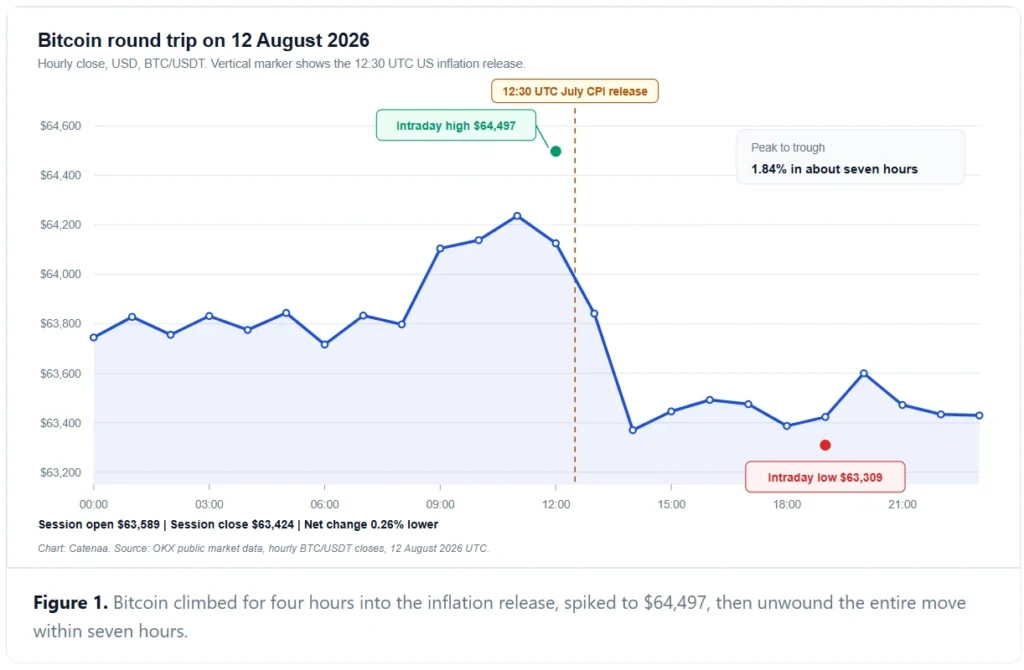
August 13, 2026 – Bitcoin spiked to $64,497 on the July inflation print. It then surrendered the entire gain before the session closed.

In Summary
Bitcoin rallied to an intraday high of $64,497 on the July CPI release, then closed the UTC session at $63,424.
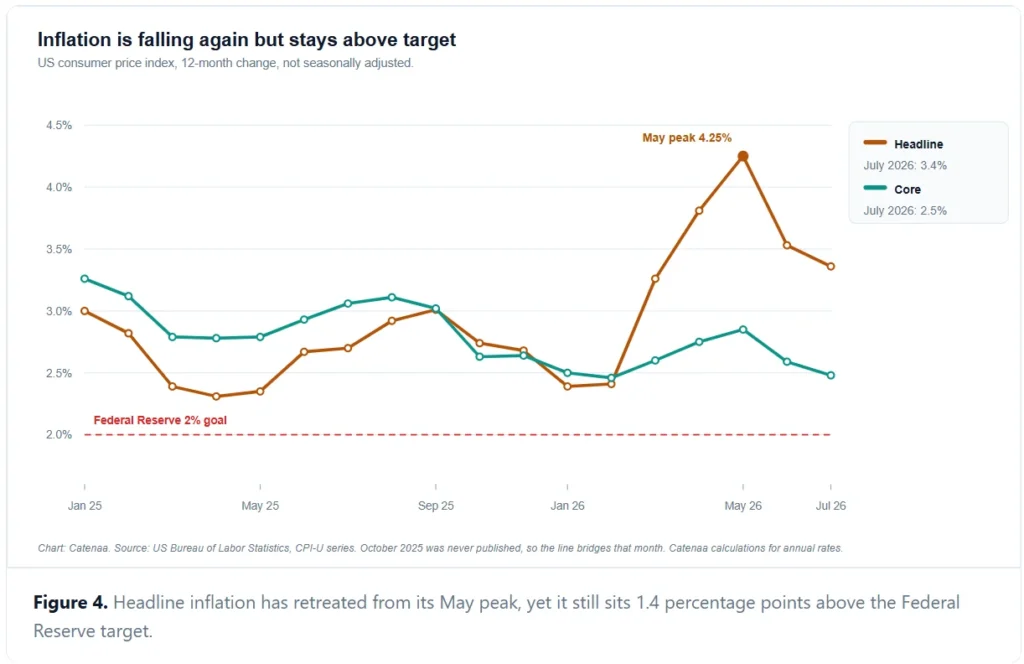
US headline inflation eased to 3.4% year on year, while core inflation slipped to 2.5%.
Futures traders cut September rate-hike odds to roughly 42%, leaving policy risk firmly in play.
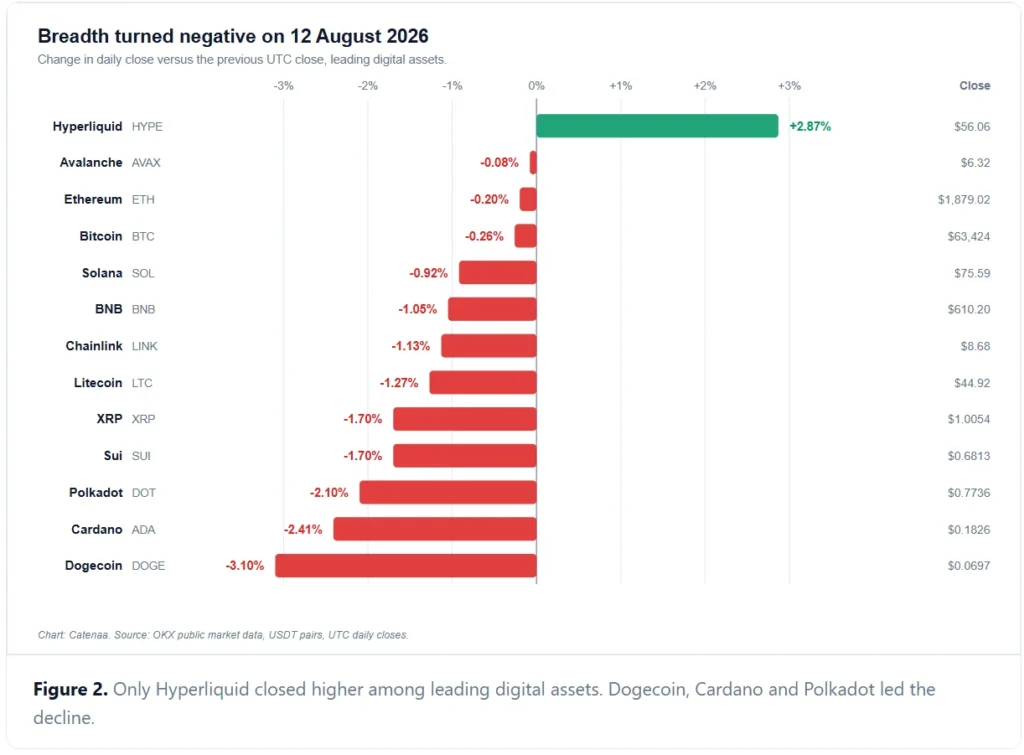
Only Hyperliquid gained among leading tokens, rising 2.87%, while Dogecoin fell 3.10%.
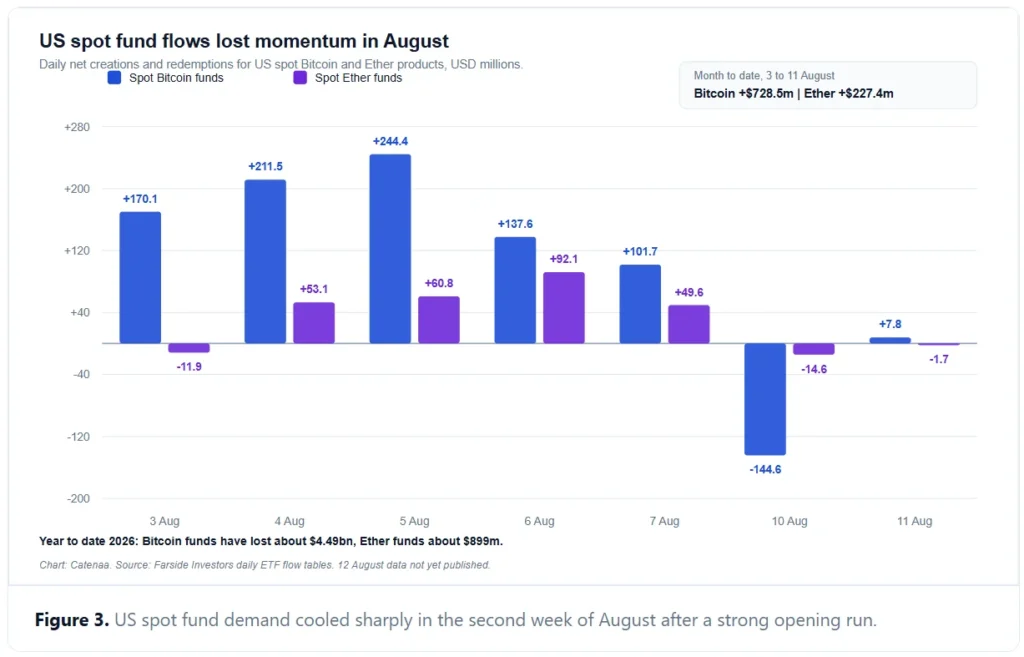
US spot Bitcoin funds have still lost about $4.49bn across 2026 despite a positive August start.
The Securities and Exchange Commission votes on 14 August on a proposed crypto offering regime.
The crypto market spent Wednesday, August 12, proving how little a friendly inflation number now buys. Traders bid Bitcoin higher for four straight hours into the 8:30 a.m. Eastern release. Moments later, they sold it. By the close, all digital assets together were worth about $2.26 trillion. That marked a 0.34% decline over 24 hours.
Bitcoin opened the UTC session at $63,589 and finished at $63,424. On paper, that reads as a quiet 0.26% drift lower. However, the path between those two prices told a far more revealing story.
A round trip that flattered nobody
Momentum built steadily through the European morning. Bitcoin cleared $64,000 by 09:00 UTC. It then pushed to an intraday peak of $64,497 in the hour containing the data release. Seconds later, the bid vanished. Within two hours, the price sank to $63,318, an unwind of 1.8% from the top.
Ether followed the same script almost exactly. It peaked at $1,925.01 before sliding to $1,873.67, a drop of 2.7%. Volume confirmed the reversal rather than contradicting it. Ether turnover in the release hour reached roughly seven times the overnight average. Consequently, the fade looked like real profit-taking, not a thin-liquidity air pocket.
Inflation cooled, but not nearly enough
The Bureau of Labor Statistics reported that consumer prices rose 0.1% in July. Over 12 months, headline inflation eased to 3.4% from 3.5% in June. Core prices, which strip out food and energy, climbed 0.2% for the month. Annual core inflation slipped to 2.5%.
Shelter accounted for roughly two-thirds of the monthly headline increase. Energy costs fell 1.5% during July. Yet they still sit 14.7% above year-ago levels after the spring supply shock. That single figure explains why the crypto market cannot simply celebrate a soft monthly print.
Inflation at 3.4% remains well above the Federal Reserve’s 2% goal. Moreover, the July jobs report already showed American payrolls contracting. Policymakers therefore face an awkward blend of sticky prices and a cooling labour market.
The 2026 drawdown gives the print context
Context matters here more than the daily percentage. Headline inflation began 2026 near 2.4%. It then climbed sharply to 4.25% by May as energy prices surged.
Two consecutive soft readings have since pulled that rate down to 3.4%. Nevertheless, the damage to digital asset valuations already happened during the spring. Bitcoin lost more than a quarter of its value across those months.
Traders consequently treat each cooler print as necessary rather than sufficient. They want evidence of a durable trend before rebuilding leverage. One month of good news simply does not clear that bar.
Rate risk still caps the upside
The Federal Open Market Committee held its target range at 3.50% to 3.75% on July 29. Notably, three regional presidents dissented and preferred a quarter-point increase. Beth Hammack, Neel Kashkari, and Lorie Logan all voted against the hold.
After Wednesday’s data, futures traders trimmed September hike odds to roughly 42%. Even so, a two-in-five chance of tighter policy weighs heavily on risk assets. Digital assets pay no coupon. Higher real rates therefore hurt them more directly than most alternatives.
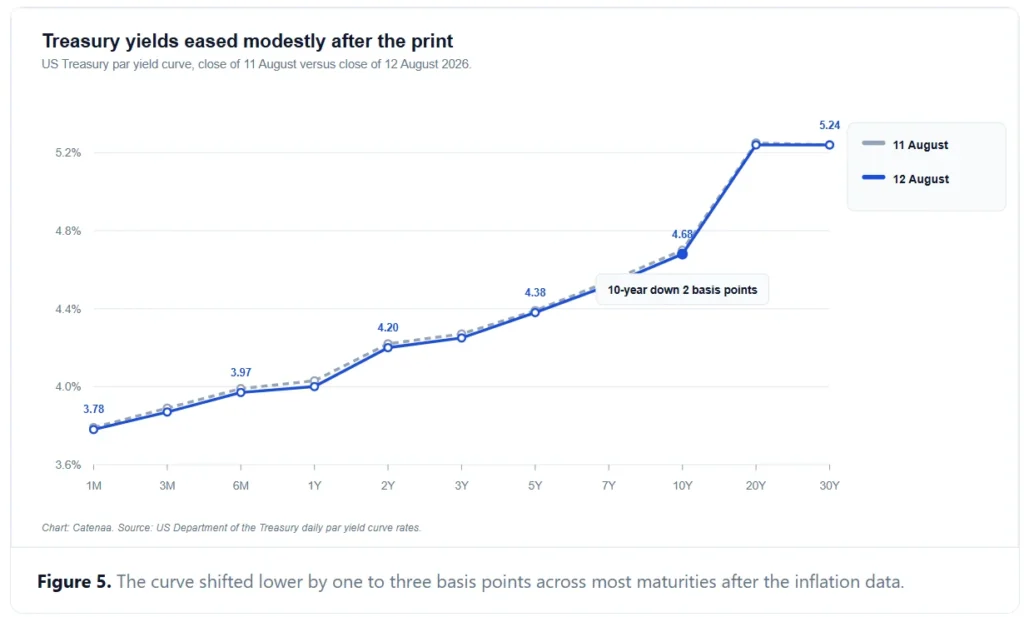
Treasury markets echoed the same cautious relief. The 10-year yield slipped two basis points to 4.68%. Meanwhile, the two-year eased to 4.20% from 4.22%. Such modest moves suggest bond desks read the print as reassuring rather than decisive.

Crypto market breadth turned decisively negative
Losses spread wider than the headline numbers implied. Dogecoin lost 3.10%, and Cardano gave up 2.41%. Polkadot shed 2.10%, while XRP dropped 1.70% to $1.0054. Solana eased 0.92% to $75.59.
BNB slipped 1.05%, and Chainlink fell 1.13%. Litecoin retreated 1.27%, and Sui lost 1.70%. Avalanche held almost flat at 0.08% lower. Hyperliquid stood alone among major names, climbing 2.87% to $56.06.
Bitcoin dominance held at 56.25%, with Ether at 10.02%. In other words, capital stayed defensive instead of rotating outward. Total 24-hour turnover across the crypto market reached about $51.8 billion. That is a thin base for any sustained advance.
Geography also shaped the tape. Asian and European hours produced the entire advance. American hours then erased it completely. Such a split usually signals that domestic institutions, not offshore leverage, drove the selling.
Fund flows show hesitant institutions
United States spot Bitcoin funds have delivered an uneven August. They absorbed $728.5 million between August 3 and August 11. However, August 10 alone produced a $144.6 million outflow. August 11 then managed only $7.8 million in net creations.
Ether products tell a similar story. They gathered $227.4 million so far this month. Yet they posted a small $1.7 million redemption on August 11. Flow figures for August 12 had not been published at the time of writing.
Zoom out, and the picture darkens further. Spot Bitcoin vehicles have shed roughly $4.49 billion during 2026. Ether funds gave back about $899 million over the same stretch. Allocators clearly remain unconvinced by the current setup.
These flows matter because they replaced retail speculation as the marginal buyer. Regulated funds now set the tone during American trading hours. Their reluctance therefore explains much of the afternoon weakness on Wednesday.
On-chain liquidity barely flinched
Stablecoin circulation edged up to about $306.2 billion, a gain of nearly $1 billion on the day. Total value locked across decentralised finance dipped slightly to roughly $75 billion. Neither series suggests panic.
Ethereum still anchors that capital with about $41.2 billion locked. BNB Chain, Tron, Solana, and Base each hold between $4.6 billion and $5 billion. Stable balances imply that participants parked funds rather than leaving the ecosystem entirely.
Washington now sets the next catalyst
Attention shifts quickly to regulators. The Securities and Exchange Commission meets on Friday, August 14, at 10:00 a.m. Eastern. Commissioners will decide whether to propose a tailored offering regime for certain crypto asset investment contracts.
Approval would open a comment period rather than install a finished rule. Nevertheless, the vote matters. The Senate has stalled on statutory market-structure reform, and its first procedural vote waits until mid-September.
Two further dates frame the rest of the quarter. Chair Kevin Warsh speaks at Jackson Hole between August 27 and August 29. The FOMC then delivers its next rate decision on September 16.
A clear rulemaking path could lift sentiment independently of monetary policy. Equally, a divided commission or a weak proposal would disappoint quickly. Either way, the crypto market gains a domestic catalyst it has lacked for weeks.
Bitcoin remains roughly 27% lower for 2026. It also trades about 49% below its October 2025 record of $126,080. Until inflation drifts closer to target, relief rallies will probably keep fading. Wednesday delivered a clean illustration of that pattern.




