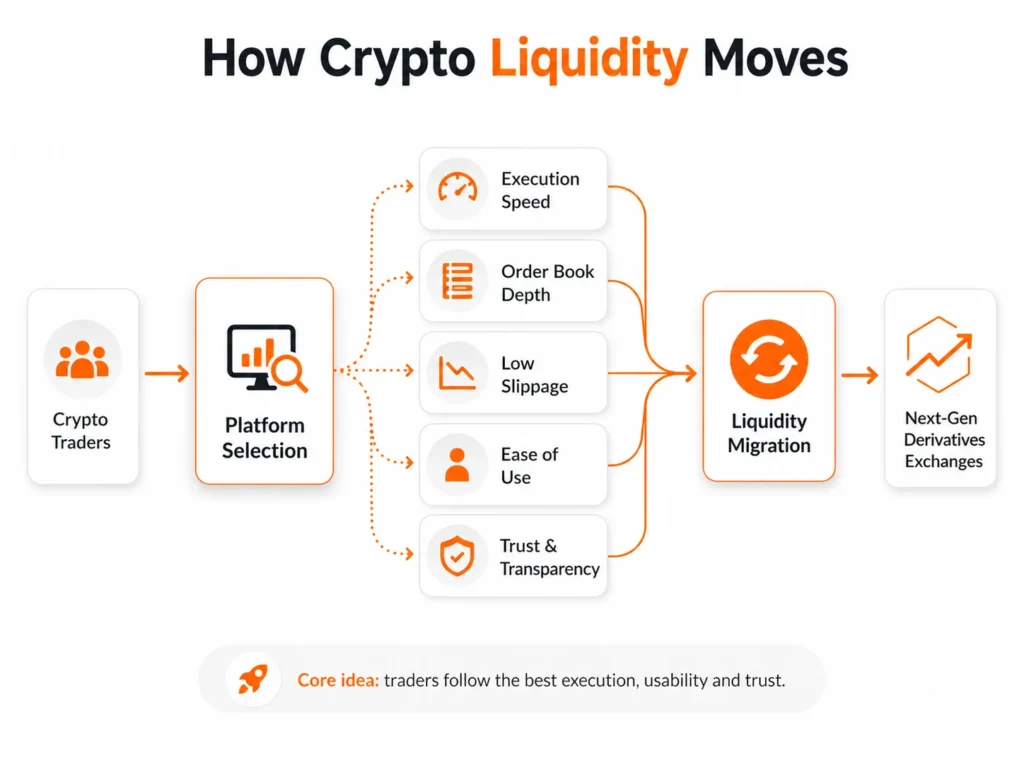


April 26, 2026 – The crypto market is entering a new phase. Trading volume is no longer only about Bitcoin rallies or token listings. It is now about execution, liquidity depth, speed and trust.
In Summary
Crypto derivatives now dominate market activity
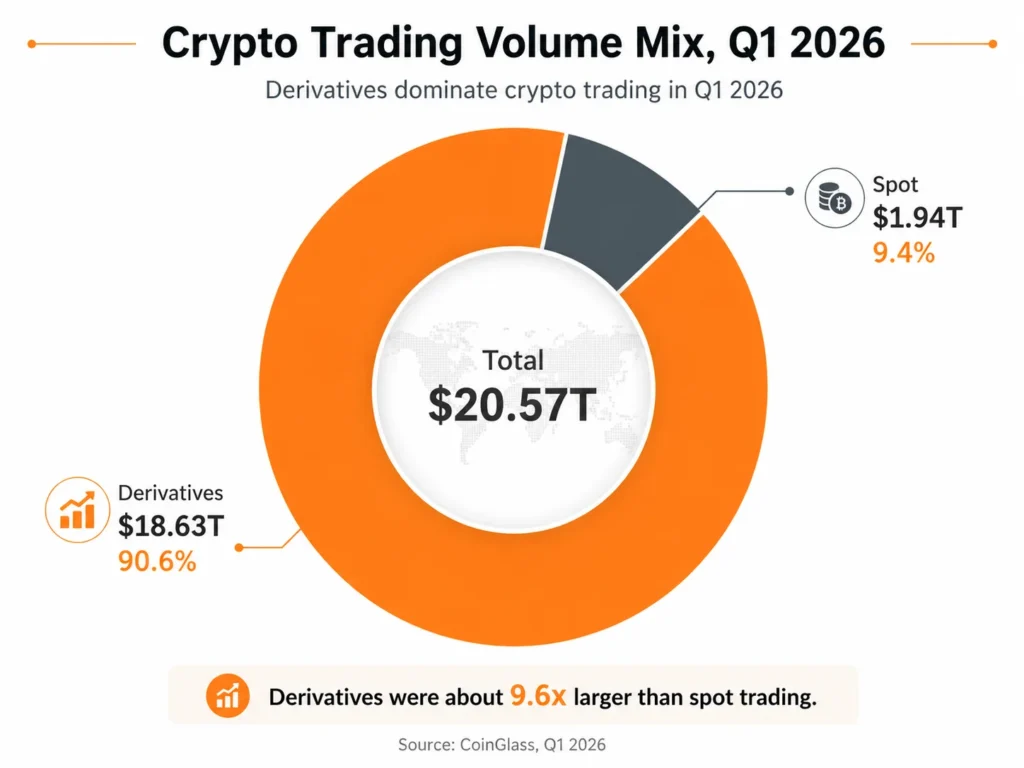
Crypto derivatives reached around $18.63 trillion in Q1 2026, far above spot trading volume of $1.94 trillion.
Derivatives trading was about 9.6 times larger than spot trading
This shows that crypto liquidity is increasingly moving toward leverage, hedging and active trading strategies.
Zoomex is positioning itself around execution quality
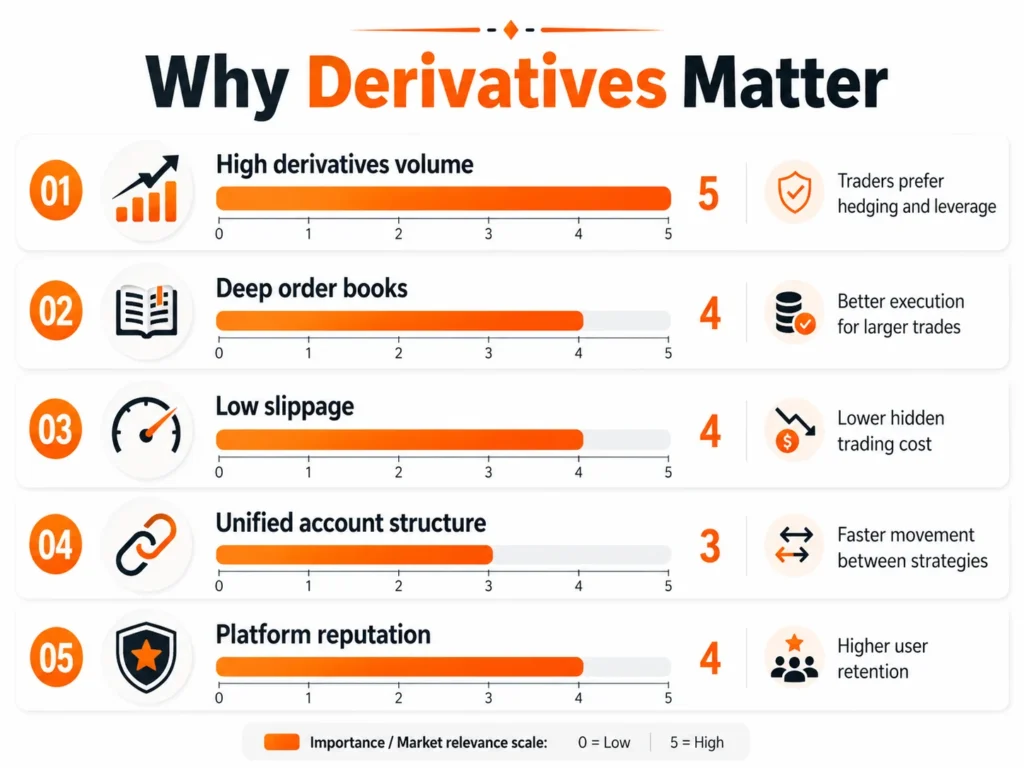
The exchange is promoting speed, order-book depth, low slippage and a simplified trading experience.
Liquidity depth is becoming a competitive advantage
Traders now look beyond brand size. They also assess how efficiently large orders can be executed.
Low slippage matters for professional traders
Lower slippage can reduce hidden trading costs, especially during large or fast-moving trades.
Ease of use is becoming important
Traders increasingly prefer platforms that enable faster movement across spot, derivatives, and portfolio strategies.
Institutional interest is raising the standard
Traditional finance players are becoming more active in crypto-linked trading markets. This increases competition.
The crypto exchange race is shifting
The next winners may not be the largest exchanges alone. They may be platforms offering better liquidity, trust and execution.
That shift is central to Zoomex’s latest market positioning. In a sponsored press release published by Bitcoin.com, Zoomex argued that liquidity in crypto trading is moving away from legacy dominance. The company said traders now care more about execution quality than exchange size.
The timing is important. According to CoinGlass, total crypto trading volume reached about $20.57 trillion in Q1 2026. Derivatives accounted for $18.63 trillion, while spot trading reached only $1.94 trillion. That means derivatives were about 9.6 times as large as spot trading.
This is not a small market rotation. It is a structural change in crypto trading behaviour.
Derivatives now drive crypto liquidity
Crypto derivatives are contracts linked to digital assets. Traders use them to hedge, speculate or manage leverage. In 2026, they have become the market’s main liquidity engine.
CoinGlass data show that derivatives accounted for almost 90% of total Q1 crypto trading activity. This confirms that crypto markets are becoming more trading-led than holding-led.
That creates a new battlefield for exchanges. The winning platform is not always the one with the most tokens. It is the one with better depth, lower slippage and faster execution.
CCData also reported that combined spot and derivatives volumes on centralised exchanges reached $5.61 trillion in February 2026. However, this marked the lowest activity since October 2024. Spot volumes fell to $1.50 trillion, while derivatives volumes stood at $4.11 trillion.
This shows a clear message. Even when activity cools, derivatives remain the dominant market segment.
Why Zoomex is focusing on execution
Zoomex is trying to position itself around three themes: liquidity, speed and simplicity.
The exchange said it offers more than 590 perpetual contracts and a unified account structure. This allows users to move between spot and derivatives strategies with less friction.
The company also highlighted the order book depth across major assets. Its cited figures include more than 62.7 million USDT in BTC spot depth, around 29.8 million USDT in ETH depth, and more than 20.5 million USDT in SOL depth.
These numbers matter because depth affects execution quality. A deep order book can reduce slippage during large trades. This is critical for active traders and institutions.
Zoomex also claimed that a 1 BTC market order results in about 0.03% slippage on its platform.
That is the core of its pitch. The exchange is not only selling access. It is selling a more predictable trading experience.
Institutional interest is reshaping the market
The shift to crypto derivatives is also attracting traditional finance.
Reuters reported that Intercontinental Exchange, the parent company of the New York Stock Exchange, invested $600 million in Polymarket. The investment formed part of ICE’s plan to invest up to $2 billion in the prediction markets platform.
This matters beyond Polymarket. It shows that major exchange operators are closely monitoring crypto-native trading flows.
Reuters also noted that prediction markets may become a new frontier for derivatives trading. Analysts expect these products to attract retail users and increase trading volumes.
For platforms like Zoomex, this raises the competitive bar. Crypto exchanges must now compete with both crypto-native rivals and institutional market operators.
Usability is becoming a trading advantage
Speed and liquidity are not enough. Users also want platforms that feel simple and reliable.
The UK Financial Conduct Authority found that ease of use was a major factor in platform selection for crypto users. Its consultation paper also cited platform reputation, safety and transaction cost as key considerations.
This supports Zoomex’s strategic messaging. The company is focusing on a simplified interface, faster execution and transparent order records.
However, the exchange still faces a larger market question. Can smaller or emerging platforms win liquidity from larger incumbents?
Binance remained the clear market leader in Q1 2026. CoinGlass reported Binance derivatives volume of about $4.90 trillion, representing around 34.9% of the top-10 exchange market.
That dominance will not disappear overnight.
Market outlook: speed, depth and trust will decide winners
The 2026 crypto market is not just about higher prices. It is about where liquidity chooses to trade.
Zoomex is betting that traders will prioritise execution quality, lower friction and visible transparency. That could help it attract sophisticated users.
But the challenge is significant. Crypto derivatives remain highly competitive. Market share is still concentrated among major exchanges.
The next phase may not be won by the biggest brand alone. It may be won by the platform that delivers the best execution for traders.
In that environment, liquidity in crypto derivatives will remain the most important signal to watch.