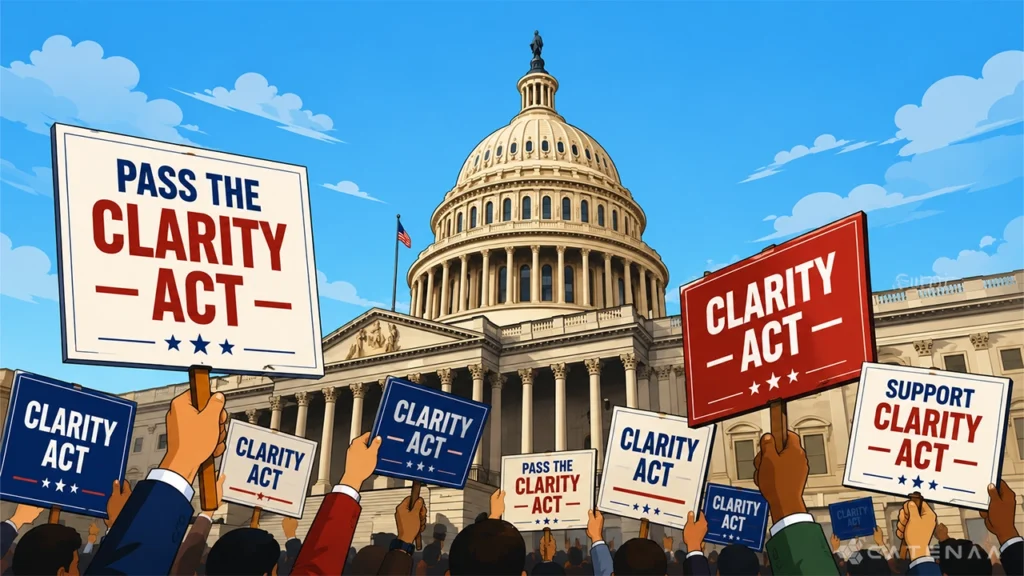


June 28, 2026 – A four-week window now decides whether landmark crypto rules reach a Senate floor vote.
In Summary
Crypto firms are racing to win a Senate floor vote before the August recess.
The CLARITY Act would split oversight between the SEC and the CFTC.
Section 604 and ethics rules remain the bill’s two hardest sticking points.
The largest US crypto companies are escalating a coordinated lobbying campaign this week. Their goal is straightforward. They want the Senate to vote on the Digital Asset Market CLARITY Act before lawmakers leave Washington in August.
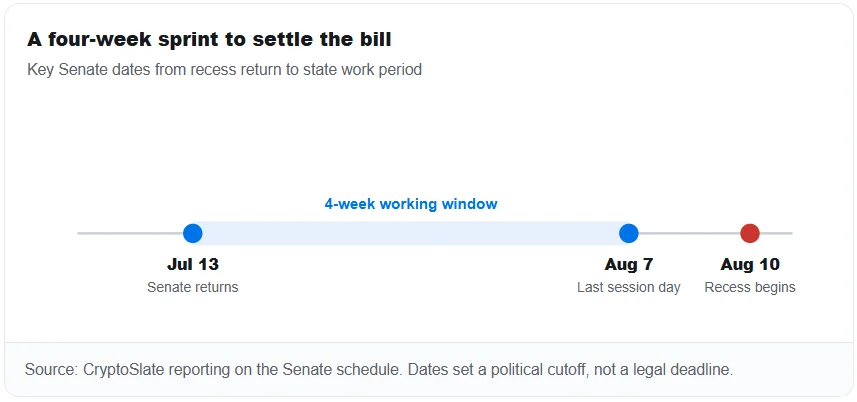
Moreover, the calendar is tightening fast. Senators return from recess on July 13. They then stay in session only through August 7. Consequently, supporters see a narrow but real path to passage.
This campaign has been years in the making. Therefore, firms are now converting committee wins into a push for floor action.
A broad coalition mobilizes
The effort turned visible when Ripple sent a branded “Clarity Truck” through the capital. Furthermore, the message targeted lawmakers directly as they prepared to leave town.
Earlier this month, more than 200 companies and advocacy groups signed a joint letter to Senate leaders. Signatories included Coinbase, Ripple, Kraken, Circle, and Andreessen Horowitz. In short, the industry wants a scheduled vote.
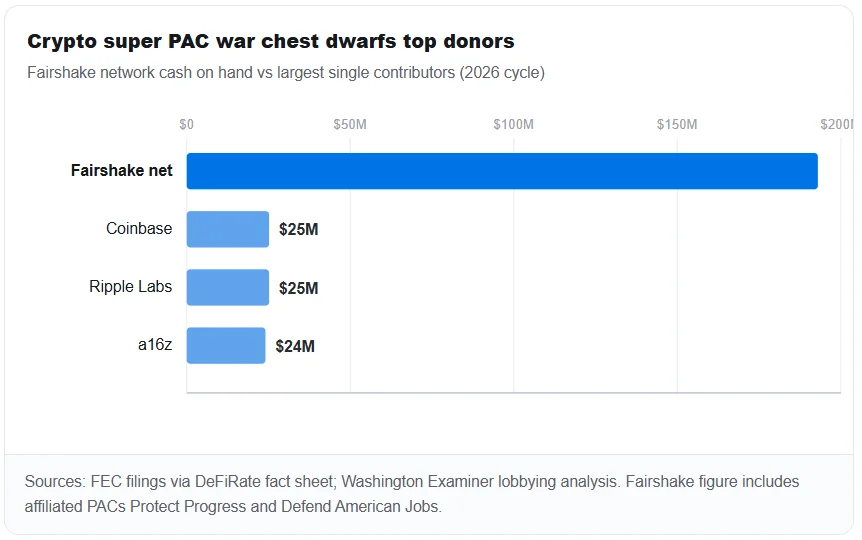
Notably, the financial firepower behind this push is substantial. The crypto super PAC network entered the 2026 cycle with a large war chest. As a result, lawmakers face clear electoral stakes.
The coalition repeatedly argues a core point. Without a federal framework, firms face competing reads from regulators and courts. Therefore, clearer registration paths could keep jobs and capital onshore.
Clearing the legislative hurdles
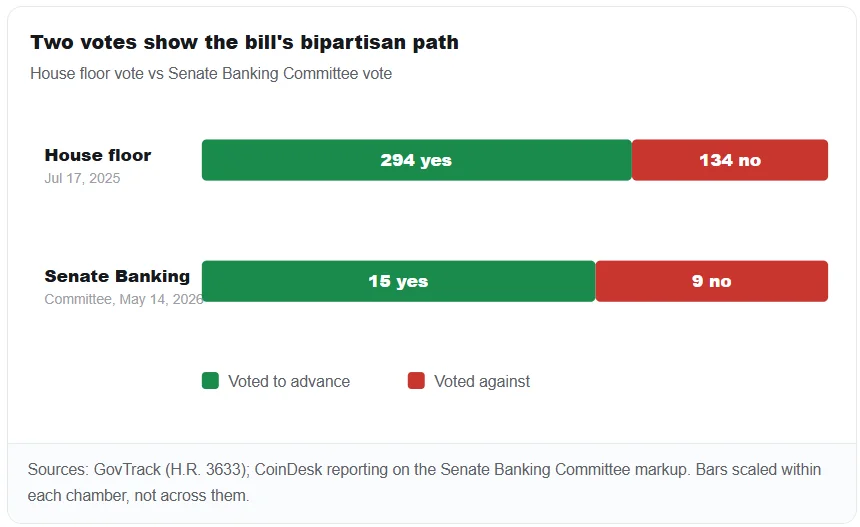
The bill has already cleared two major checkpoints. First, the House passed H.R. 3633 by a 294 to 134 vote on July 17, 2025. That tally included 78 Democrats alongside 216 Republicans.
Later, the Senate Banking Committee advanced a revised version. The panel approved it 15 to 9 on May 14, 2026. Two Democrats crossed over to support it.
The Senate framework would divide oversight by asset type. Specifically, the SEC retains authority over securities and investment contracts. The CFTC, meanwhile, would supervise spot markets for digital commodities.
This structure aims to replace regulation by enforcement. For years, firms struggled to know which regulator held jurisdiction. Thus, clearer rules form the industry’s central demand.
The proposal also builds on the GENIUS Act stablecoin framework. Specifically, it bars yield paid solely for holding a payment stablecoin. However, it still allows rewards tied to platform use and transactions.
That distinction matters to banks. Lenders warned that interest-like payments could pull deposits away from them. Meanwhile, crypto firms called for a broad ban, calling it anticompetitive.
The illicit-finance dispute
Despite this progress, one fight stands out. The dispute centers on Section 604, the Blockchain Regulatory Certainty Act. This language protects noncustodial software developers from money-transmitter rules.
However, four law enforcement groups warned against it. They argued the exemption could create oversight gaps. By contrast, industry groups call that reading a misunderstanding.
Lindsay Fraser of the Blockchain Association defended the text. According to her, Section 604 shields only developers who never have custody of assets. Additionally, prosecutors keep their power over fraud and money laundering.
To show broad backing, the association released a separate letter. In it, 160 former national security officials urged senators to advance the bill.
Ethics roadblocks remain
A second dispute proves more political. Democrats want stronger ethics rules covering officials and their families. Scrutiny has increased due to President Trump’s family’s crypto ventures.
The committee rejected an ethics amendment in May. Yet the issue will likely return before any floor vote. Republican leaders still need Democratic votes to reach 60.
Reid MacInnes Cuming of Ground On-chain framed the stakes clearly:
“The ethics provisions are the real obstacle; if unresolved before August, the bill stalls past the midterms, and innovation pays the price.”
The window narrows
The Senate calendar now magnifies every open issue. A delay past August would push the bill into the midterm season. During that period, floor time grows scarce, and votes get harder.
Still, some supporters stay optimistic. Solana Policy Institute president Kristin Smith sees enough runway. In her view, tight deadlines often force the compromises that negotiators resist.
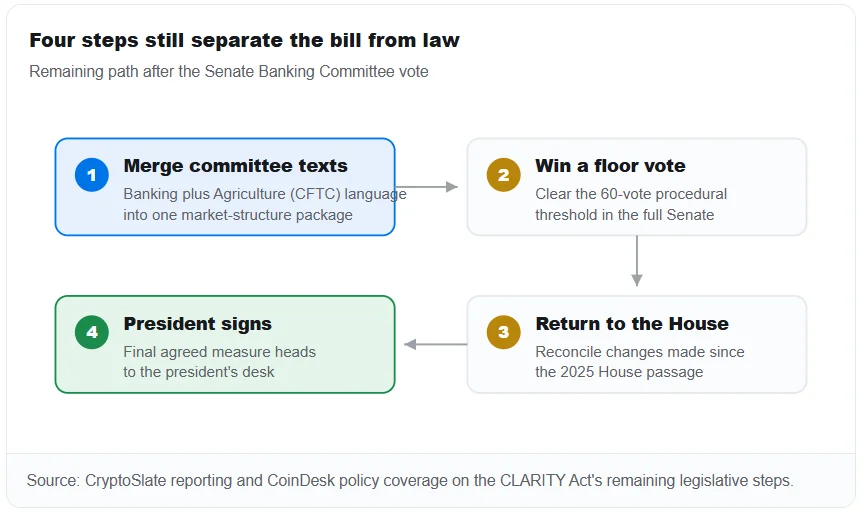
Even an early passage would leave work undone. The Senate must still merge texts, reconcile with the House, and reach the president. For now, the industry is betting that the deadline does its job.