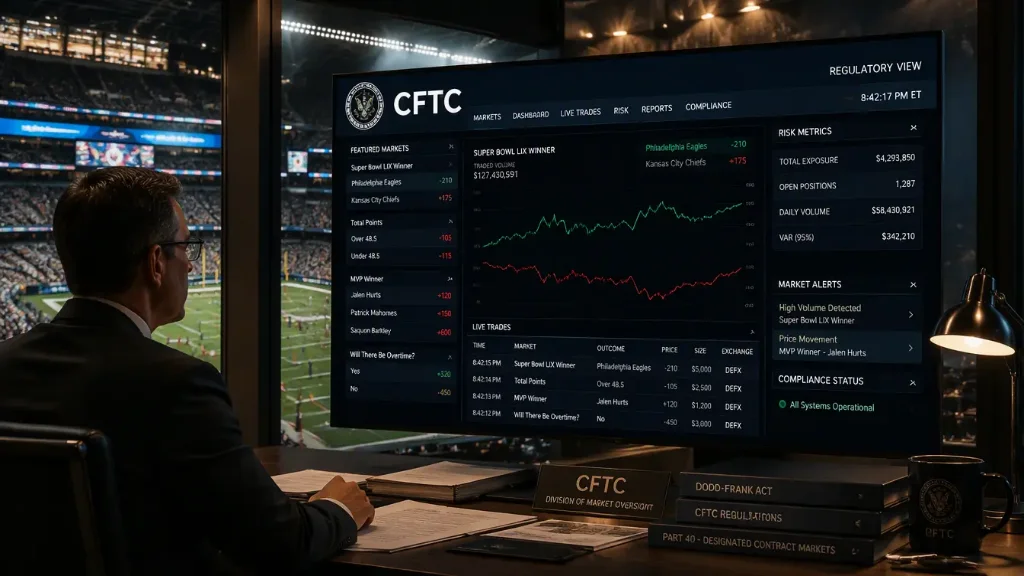


Catenaa, Wednesday, August 12, 2026- The US Commodity Futures Trading Commission has warned regulated prediction markets against presenting contracts using American-style betting odds, tightening scrutiny as sports prediction trading expands rapidly.
The warning targets so-called moneyline odds commonly used by US sportsbooks.
Unlike prediction-market prices, which typically show the probability of an outcome in cents, moneyline formats display potential winnings using positive or negative numbers.
For example, a prediction contract priced at 40 cents broadly signals a 40% implied probability. Sportsbooks can express similar information through betting odds, but the presentation and terminology differ.
That distinction is becoming increasingly important for prediction platforms as they move deeper into sports-related markets.
The CFTC reportedly instructed regulated entities to avoid practices that could mislead customers when contracts are listed, marketed or promoted.
The regulator cited research suggesting American-style betting formats can encourage greater risk-taking among sports bettors.
Kalshi said it would comply with the regulator’s guidance. The federally regulated prediction market has become one of the largest US platforms allowing users to trade contracts based on future events.
The warning arrives amid a much larger regulatory dispute over what prediction markets actually are.
CFTC Chair Michael Selig has maintained that federally regulated event contracts fall under the commission’s authority. The agency has defended that position against challenges from states seeking to apply their own gambling laws.
That fight has become particularly important as prediction platforms expand into sports.
State gaming authorities argue that contracts based on sporting outcomes can resemble conventional sports wagers and should therefore fall under state gambling rules.
Prediction-market operators have taken a different position. They argue their contracts are financial instruments traded on federally regulated markets rather than traditional sportsbook bets.
The latest CFTC warning creates an unusual dividing line.
A platform may offer a contract linked to a sporting event, but presenting that contract like a conventional sportsbook wager could attract additional regulatory attention.
The dispute could shape how companies such as Kalshi and Polymarket design their platforms as prediction markets move further into mainstream finance and entertainment.
It could also determine whether sports prediction markets eventually develop as a separate financial product or increasingly resemble the regulated betting industry they are challenging.




