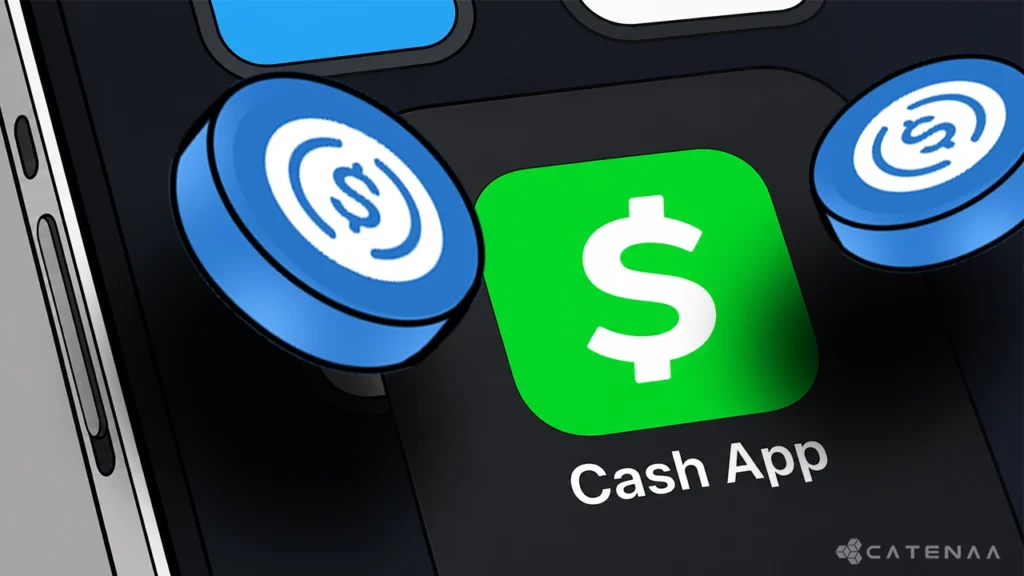


Catenaa, Tuesday, June 02, 2026-Cash App has expanded its cryptocurrency services by allowing users to send and receive USDC stablecoins across multiple blockchain networks including Solana, Ethereum, Polygon and Arbitrum.
The move marks one of the largest crypto upgrades for the Block-owned payment platform since its earlier integration of bitcoin services and reflects intensifying competition among fintech firms entering the stablecoin market.
Block’s Bitcoin Product Lead Miles Suter said users can transfer USDC directly from existing US dollar balances without managing separate wallets, blockchain bridges or additional setup requirements.
The company also said transfers would carry no extra fees.
Cash App, operated by Jack Dorsey’s fintech company Block Inc., serves roughly 59 million monthly active users.
The platform historically focused heavily on bitcoin products, including self-custody wallet systems, mining infrastructure and open-source bitcoin development projects.
Its latest stablecoin expansion however places Cash App more directly into the growing market for blockchain-based digital payments and cross-chain financial services.
USDC, issued by Circle, remains the largest regulated US-based stablecoin and one of the most widely used digital dollar assets globally.
The expansion also comes as major payment firms including Visa, Mastercard and PayPal deepen investments in stablecoin payment infrastructure.
Meanwhile, the broader stablecoin market recently surpassed $300 billion in total circulating supply.
Analysts said the integration could accelerate mainstream stablecoin adoption by removing much of the technical complexity associated with blockchain transfers.
By embedding stablecoin functionality directly into a major consumer payments app, Cash App may expose millions of traditional fintech users to blockchain-based settlement systems without requiring separate crypto exchange accounts.
The decision also signals growing convergence between traditional payment networks and decentralized financial infrastructure.
However, the move carries strategic tension because Block and Jack Dorsey historically positioned bitcoin rather than stablecoins as the future of internet-native money.
Suter reiterated that bitcoin remains the company’s long-term priority, describing stablecoins as a transitional bridge between traditional fiat systems and future digital money infrastructure.
Industry researchers said stablecoins increasingly function as the operational backbone of blockchain finance because of their relative price stability and rapid settlement capabilities.
Others noted that user-friendly fintech integration remains one of the biggest barriers preventing stablecoins from reaching broader mainstream adoption.
Some analysts also suggested the expansion reflects broader market recognition that stablecoins currently offer stronger everyday payment utility than highly volatile cryptocurrencies.
Stablecoins emerged initially as tools for crypto trading and exchange liquidity management before expanding into remittances, decentralized finance and cross-border commerce.
Major financial institutions and payment providers increasingly view stablecoins as potential infrastructure for future global payment systems.
Regulators globally meanwhile continue debating how stablecoins should be supervised as they become increasingly integrated into mainstream financial services.