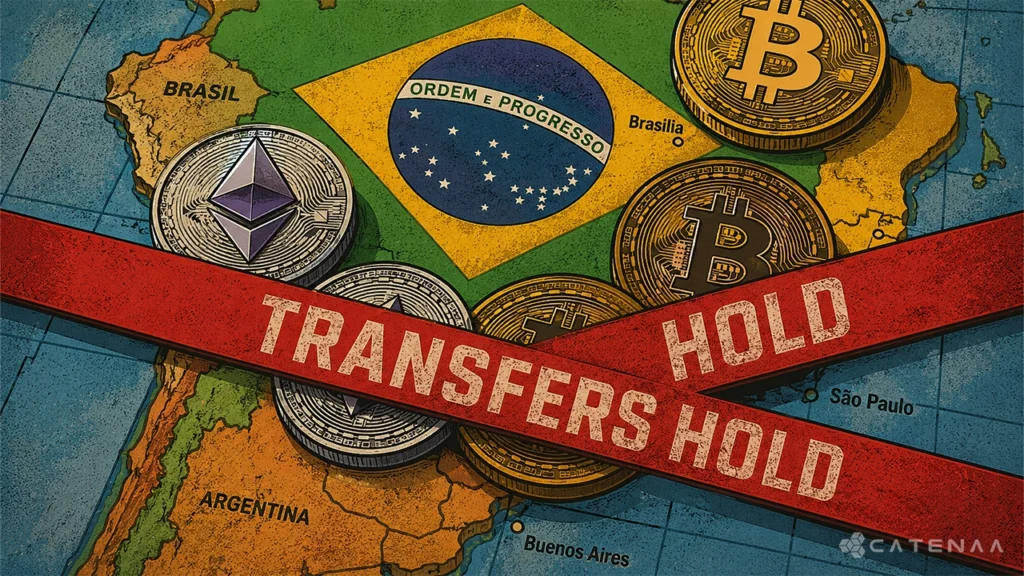


Catenaa, Wednesday, August 12, 2026- Brazil will require crypto firms to delay certain transfers to self-custody wallets and offshore platforms for 24 hours from Jan. 1, 2027, extending its fraud-prevention regime deeper into digital assets.
The Central Bank of Brazil introduced the requirement under Resolution 584, published Friday.
The rule applies when a single transfer, or a customer’s combined transfers during one day, exceeds $10,000 after funds are deposited into an account.
Transactions below the threshold may also be held when a crypto service provider identifies potential fraud risks.
The central bank said the 24-hour period is precautionary rather than an asset freeze. It is intended to give providers time to assess suspicious transactions before crypto leaves regulated platforms.
After the review period, providers must release the transaction immediately or reject it.
The regulation is notable because it places additional controls at the point where assets move from regulated intermediaries into self-custody.
Providers must assess the customer’s risk profile, transaction characteristics, receiving party and jurisdiction involved.
Customers must also be informed when a transaction is held and told why the precautionary review was imposed.
The rules cover conventional cryptocurrencies as well as fiat-pegged stablecoins.
Firms can release transactions before the 24-hour period expires following a documented review.
However, providers that fail to comply could face tougher restrictions. The central bank could impose holds exceeding 24 hours, apply controls to transactions below $10,000 or restrict early releases.
Resolution 584 expands fraud-prevention rules introduced for payment providers in 2021 into Brazil’s growing regulated crypto sector.
Companies will also have to maintain daily records of crypto fraud and attempted fraud and document measures taken to prevent losses.
The move follows broader regulations that took effect in February requiring crypto service providers to obtain authorization and meet governance, cybersecurity, anti-money laundering and counterterrorist financing requirements.
Brazil has also brought fiat-backed stablecoins and certain international crypto transfers within its foreign exchange framework.
The tougher controls carry weight because Brazil is one of the world’s largest crypto markets.
The country ranked fifth in Chainalysis’ 2025 Global Crypto Adoption Index and received about $318.8 billion in cryptocurrency between July 2024 and June 2025.
That represented nearly one-third of Latin America’s crypto activity during the period.
The new rule illustrates a wider regulatory challenge as crypto adoption grows: preserving users’ ability to move assets into self-custody while giving regulated platforms time to stop suspected fraud before transactions become difficult to reverse.