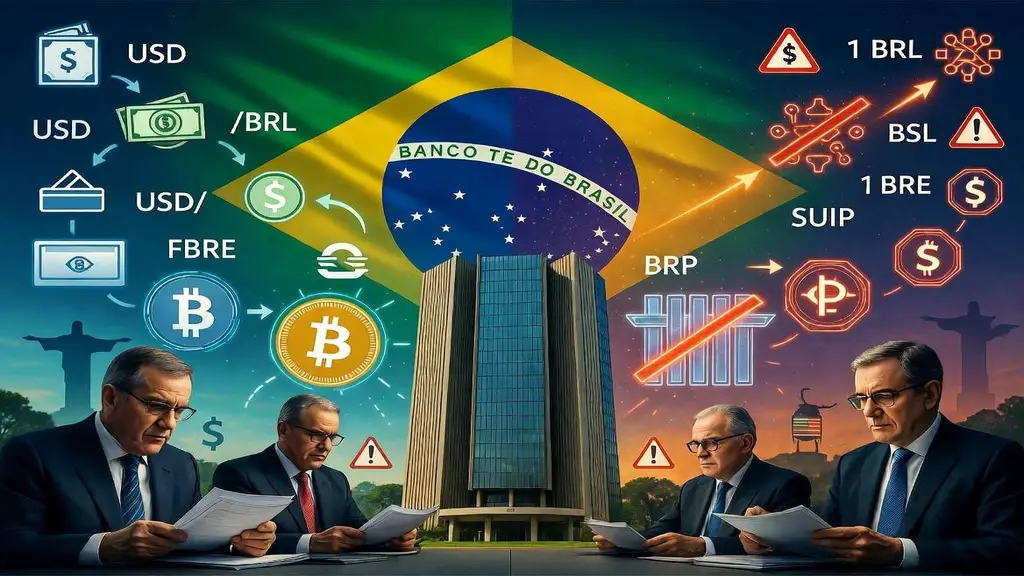


Catenaa, Sunday, May 03, 2026- Brazil’s central bank has barred the use of cryptocurrencies in regulated crossborder payments, tightening control over international money flows and reinforcing reliance on the country’s formal foreign exchange system.
The Banco Central do Brasil issued Resolution No. 561 on Thursday, updating its electronic foreign exchange framework to require that all crossborder transactions pass through traditional FX channels or regulated Brazilian real accounts. The rule excludes cryptocurrencies, including stablecoins, from use within the regulated system.
Authorities did not prohibit crypto transfers outright. Instead, the measure removes digital assets from the regulated payments framework, signaling the central bank’s intent to keep international transactions within monitored and traceable channels.
The move follows rapid growth in crypto usage across Brazil, particularly in stablecoins, which account for a large share of transaction flows. Officials have flagged concerns about oversight, capital movement and financial stability as usage expanded over recent years.
Part of Broader Regulatory Push
The latest rule builds on earlier efforts to bring the sector under tighter supervision. In November 2025, regulators required virtual asset service providers to obtain authorization and comply with financial sector standards, including governance, cybersecurity and antimoney laundering rules. Those requirements took effect in February with a transition period for compliance.
Recent Actions Signal Firmer Stance
Additional steps have reinforced the policy direction. Authorities paused a planned consultation on crypto taxation in March and recently blocked major prediction market platforms, citing investor protection and market integrity concerns.
Latin America’s Largest Crypto Market
Brazil remains the region’s largest crypto market and ranks among the top globally in adoption. The central bank has reported sustained growth in digital asset usage over the past three years, underscoring the scale of activity now being brought under closer oversight.
The new framework reflects a broader strategy to integrate crypto activity into existing financial systems while limiting risks tied to unregulated crossborder flows. Regulators appear focused on maintaining transparency and control without fully restricting domestic crypto use.




