


June 19, 2026 – The covered call fund pays monthly income and undercuts rivals on fees.
In Summary
BlackRock launched the iShares Bitcoin Premium Income ETF on Nasdaq under the ticker BITA.
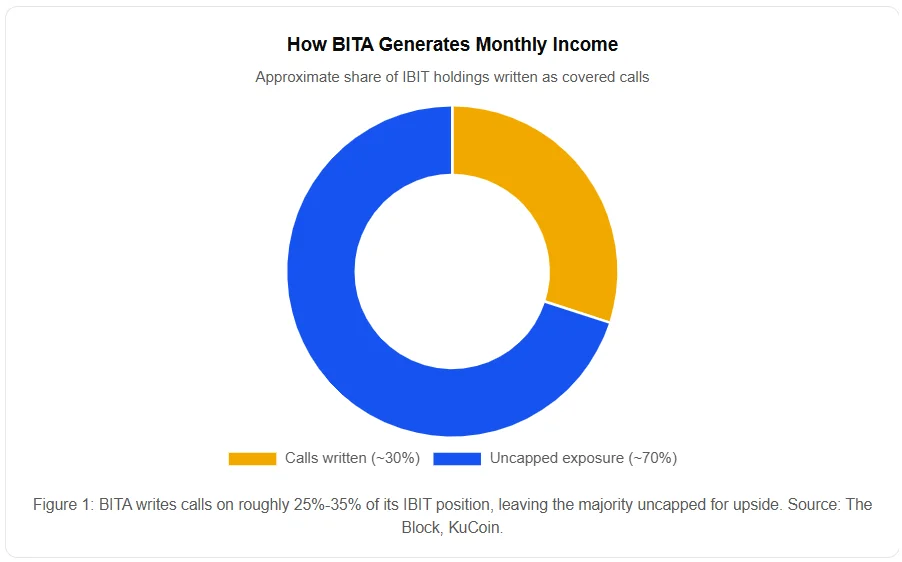
The fund sells call options on 25% to 35% of its IBIT holdings to generate monthly income.
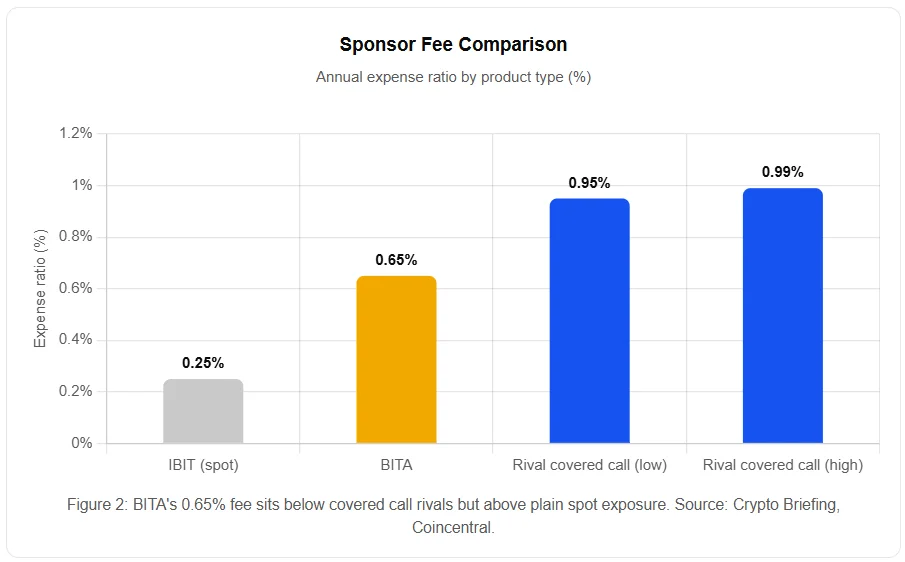
BITA charges a 0.65% fee, well below the 0.95%-0.99% fees charged by rival covered call products.
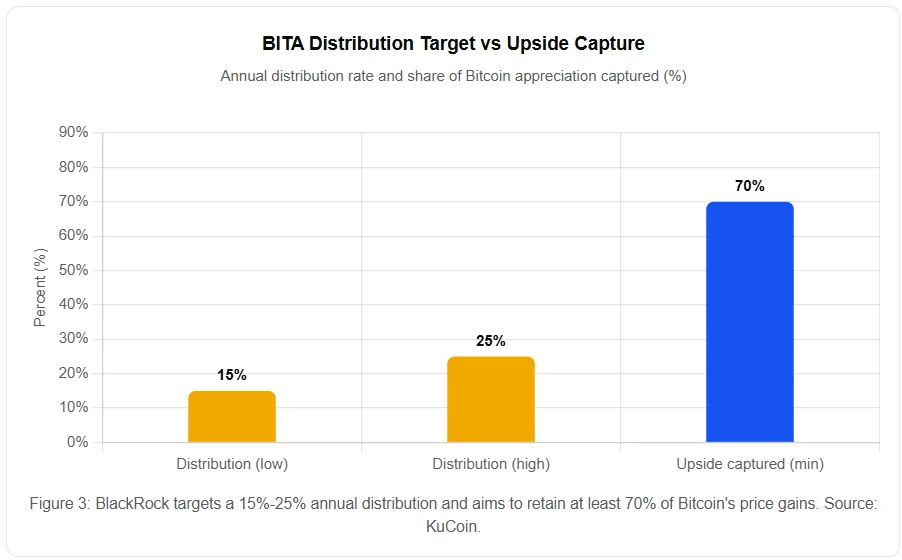
BlackRock targets an annual distribution of 15% to 25% while keeping most Bitcoin upside.
The launch arrives roughly two weeks before Goldman Sachs enters the same market.
BlackRock has entered a fast-growing corner of the crypto market. On June 16, the asset manager launched the iShares Bitcoin Premium Income ETF. The fund trades on Nasdaq under the ticker BITA.
Moreover, BITA provides investors with Bitcoin exposure and monthly cash flow. It does this through a covered call options strategy. Therefore, it appeals to holders who want yield from a non-yielding asset.
How the BITA Fund Works
BITA holds two things at its core. First, it directly owns spot Bitcoin. Second, it holds shares of BlackRock’s flagship iShares Bitcoin Trust (IBIT).
Next, the fund writes call options on part of that exposure. Specifically, it sells calls on 25%-35% of its IBIT holdings. As a result, it collects option premiums each month. Furthermore, those premiums are distributed to investors.
A covered call works simply. The fund owns the asset and sells someone the right to buy it later. If Bitcoin stays calm, the fund keeps the premium. However, if Bitcoin surges, gains above the strike price get capped.
A Clear Fee Advantage
Fees set BITA apart from the pack. The fund carries a 0.65% sponsor fee. Meanwhile, rival covered call Bitcoin ETFs charge between 0.95% and 0.99%, according to Crypto Briefing.
Consequently, BlackRock undercuts competitors by about 30 basis points. That gap matters to income investors. Even so, BITA still costs more than plain IBIT, which charges just 0.25%.
Targeting Yield-Hungry Investors
BlackRock built BITA for a specific crowd. It targets income-focused investors and Bitcoin holders seeking cash flow. In addition, it courts skeptics of assets that pay nothing.
The fund aims high on yield. It targets an annual distribution rate of 15% to 25%, per KuCoin. Furthermore, it seeks to capture at least 70% of Bitcoin’s price appreciation. Still, the yield is not guaranteed.
Robert Mitchnick, BlackRock’s head of digital assets, explained the logic. He said many clients want Bitcoin while also focusing on income. Therefore, BITA allows them to keep most of the upside while earning premiums.
Why the Timing Matters
BITA builds on a giant foundation. IBIT launched in January 2024 and now holds roughly $49 billion to $51 billion in assets. Indeed, it ranks as the largest spot Bitcoin ETF.
BlackRock also dominates the broader space. The firm captured about 90% of all U.S. digital asset ETP flows in 2025, according to Bitcoin Magazine. Moreover, it now oversees more than $130 billion across digital asset products.
The launch also beats a key rival to market. Goldman Sachs filed for a similar fund in April. However, analysts expect that product around July 1. By moving first, BlackRock gains an early edge with income investors.
The Bigger Picture
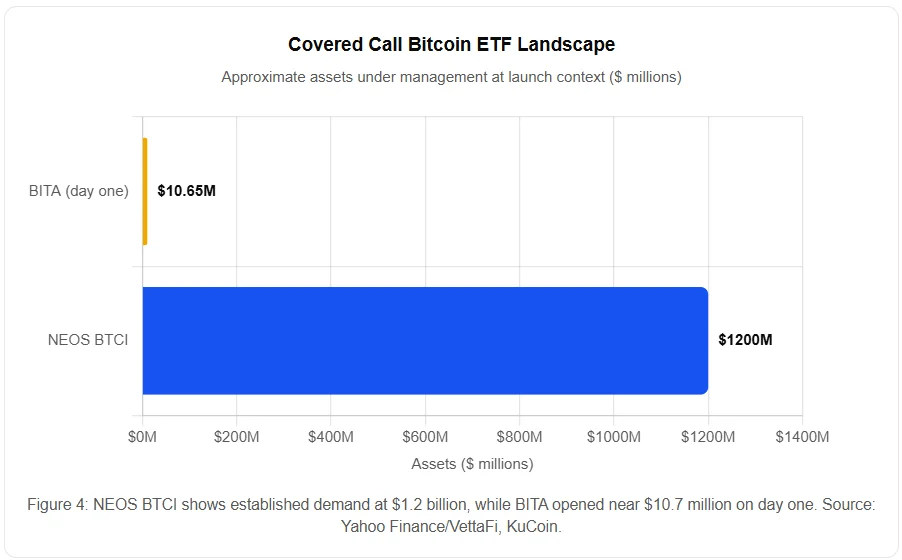
BlackRock is the first mega-issuer to launch a covered-call Bitcoin ETF. Analysts see strong client appetite for these products. For instance, the NEOS Bitcoin High Income ETF reached $1.2 billion since October 2024, VettaFi research told Yahoo Finance.
Bitcoin’s own protocol offers no native yield. Unlike Ethereum or Solana, it cannot generate returns through staking. Consequently, options strategies fill that gap for income seekers.
BITA opened with about $10.65 million in net assets. That figure is modest for now. Nevertheless, BlackRock’s reach could quickly grow the fund. Investors should still watch market swings and fund flows closely.




