

July 04, 2026 – Large holders soaked up a record wave of U.S. fund selling in June. That split has often marked past cycle lows.
In Summary
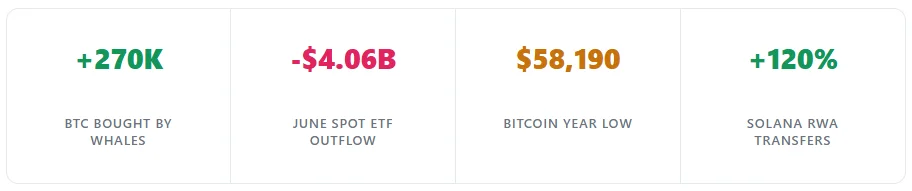
Bitcoin whales added more than 270,000 BTC, worth about $16.7 billion, in just two weeks.
U.S. spot Bitcoin ETFs shed a record $4.06 billion in June, their worst month since launch.
Whales buying while funds sell has shown up near past cycle lows before recoveries.
Solana broke from the pack, rising 15% as tokenized asset transfers jumped 120% to $8.53 billion.
The next U.S. inflation print now looms as the key swing factor for Bitcoin.
Bitcoin whales bought more than 270,000 BTC over two weeks. That stash is worth about $16.7 billion at current prices. Meanwhile, big U.S. funds sold at a record pace. This clear split now shapes the whole Bitcoin market.
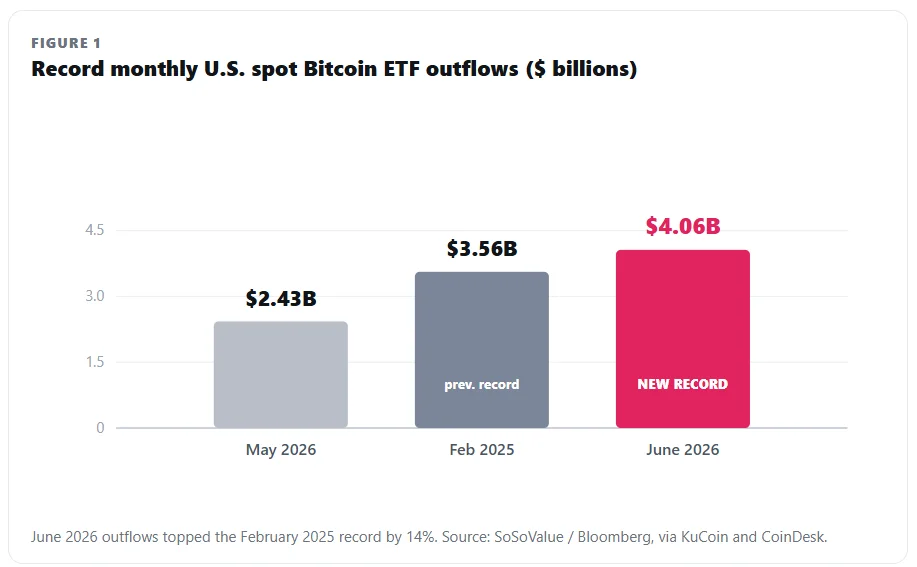
U.S. spot Bitcoin ETFs shed $4.06 billion in June. So the funds posted their worst month since they began in January 2024. Moreover, that total beat the prior record of $3.56 billion from February 2025. The heavy selling also pushed 2026 net flows into the red.
Bitcoin whales absorb record ETF selling
Large wallets, often called whales, went the other way. Analysts at Bitfinex flagged the shift in a note on Friday. Notably, these buyers added coins even as the spot premium remained negative. That gauge shows how hard U.S. desks are bidding. Therefore, the demand plainly came from elsewhere.
BlackRock’s IBIT drove most of the exits. In fact, the single fund made up about 75% of June’s total. As a result, total ETF assets fell hard during the month. Smaller issuers now face tougher questions about fees and size.
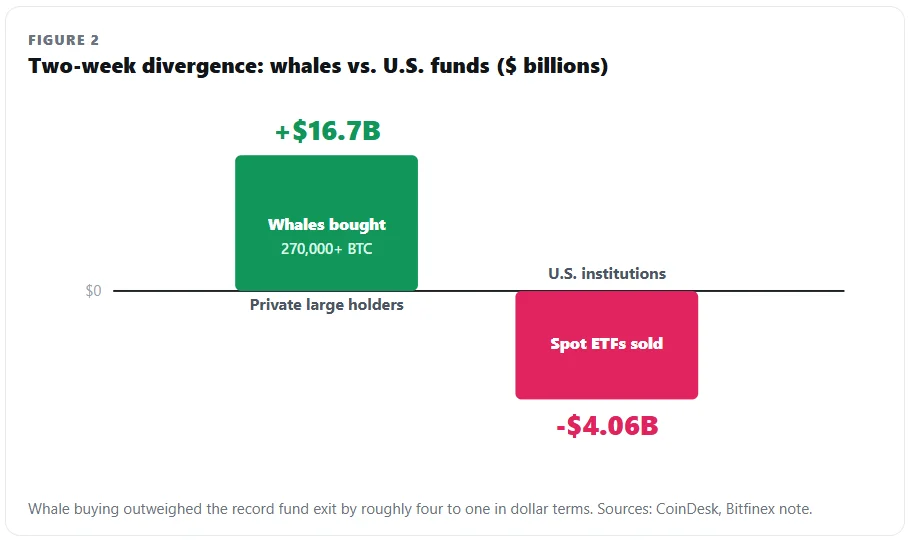
The dollar math shows the gap. Whales added about $16.7 billion in Bitcoin. By contrast, the funds let go of about $4.06 billion. So private buyers soaked up more than the fund sold. This move gradually shrinks the remaining coins for trade.
Pressure eased only near month-end. On Thursday, the funds booked a $221 million inflow. As a result, a long outflow streak finally broke. Still, one green day cannot erase a rough month.
A divergence that echoes past bottoms
Big funds selling while whales buy is a familiar setup. In the past, this pattern showed up near market cycle lows. During those windows, patient holders take coins off, nervous sellers. A price rebound then tends to come later, not at once.
Whales added $16.7B while U.S. funds released $4.06B. That kind of split has marked past cycle lows.
-Pattern flagged by Bitfinex analysts
Recent trading fits that script well. Bitcoin slid to a year low near $58,190 in June. That marked its weakest level in 21 months. However, buyers soon stepped back in. Afterward, the token reclaimed $62,000 to open July.
Analysts still urge care, though. Early buying has sometimes come before deeper drops. For example, whales bought hard in 2018 before prices sank further. Even so, every big recovery has started with large holders buying first.
History offers some useful markers here. Whales also bought near the 2020 crash low. Later, Bitcoin rallied from under $4,000 to new record highs. They stacked coins through the 2022 FTX collapse too. Each time, the payoff came months after the buying.
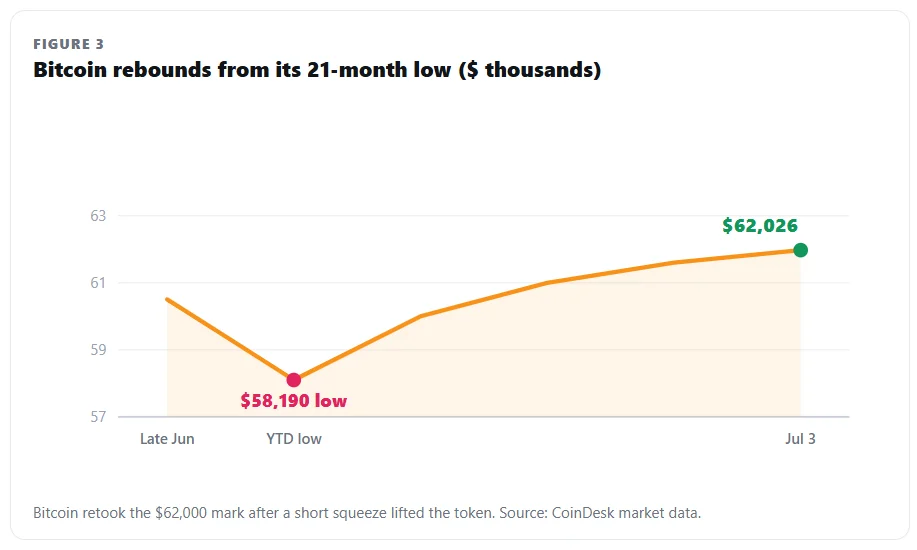
Retail traders face a harder read, though. Whales rarely move to the bottom of the day. Yet they often mark the zone where selling fades. So patient buyers watch these flows for early clues.
Solana breaks from the pack
Most major tokens fell alongside Bitcoin. Solana stood out as the clear exception. SOL has climbed about 15% since early June. Network upgrades helped power that gain. In addition, onchain activity surged across the chain.
Tokenized real-world asset transfers on Solana jumped 120% to $8.53 billion. This growth shows rising demand for onchain stocks and bonds. Meanwhile, traders rewarded the chain that handles most of that flow. As a result, SOL outpaced every other major coin.
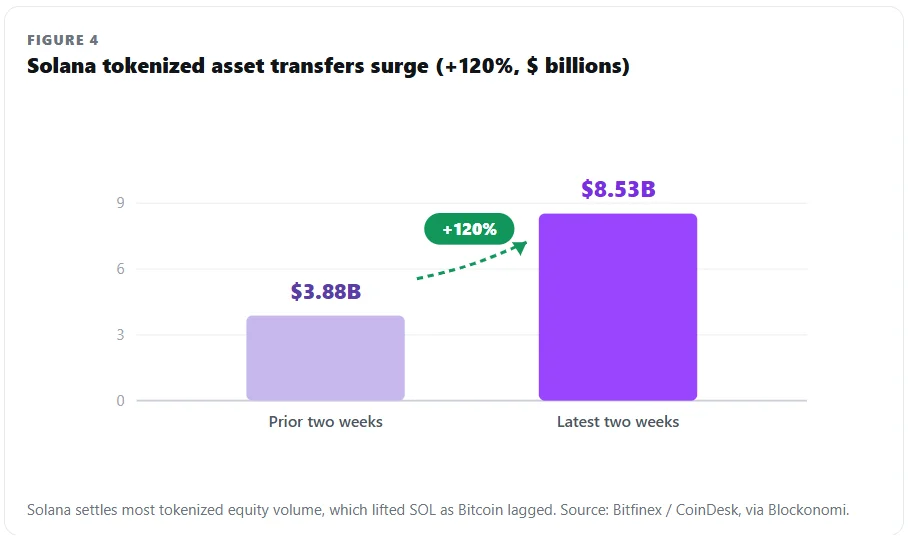
The rotation points to a wider theme. Capital is more and more favoring chains with real use. Solana now settles the bulk of tokenized stock volume. Ethereum still leads in total tokenized value, though. Yet its scaling networks now face fresh fee pressure.
Not every altcoin shared the upside, however. Some Ethereum layer-2 tokens sank to record lows. Optimism took a sharp hit here. Base, Coinbase’s network, dropped Optimism’s shared tech. So the fee-capture case behind those tokens weakened. Traders then cut their bets across several scaling projects.
Analysts frame the split as a healthy sign. Alts often sell off first and bounce back first. Solana’s strength may suggest that the worst is over. Still, weak links like Optimism warn against a blanket call.
Inflation data becomes the next pivot
The next inflation reading now steers the mood. May inflation ran hot at 4.2%. But softer official comments on price risks lifted assets a bit. A cooler print would ease the rate story that hurt Bitcoin.
That macro backdrop matters for the whale thesis. Lower rates would help riskier bets, including crypto. On the other hand, sticky inflation could stretch the selling. Traders therefore watch the Federal Reserve’s next meeting closely.
Supply data adds weight to the bull case. Fewer coins now sit ready on exchanges to sell. So each wave of buying bites harder than before. This setup often appeared before previous price floors.
For now, the divergence stays the sharpest signal. Whales keep buying, while big funds keep trimming. Whether this marks a real floor remains unproven. Even so, history shows large holders often move early.




