

August 01, 2026 – The Bitcoin price outlook weakened after a sharp Friday retreat. Hawkish policy signals, sticky inflation, and crowded , positions drove the move.
In Summary
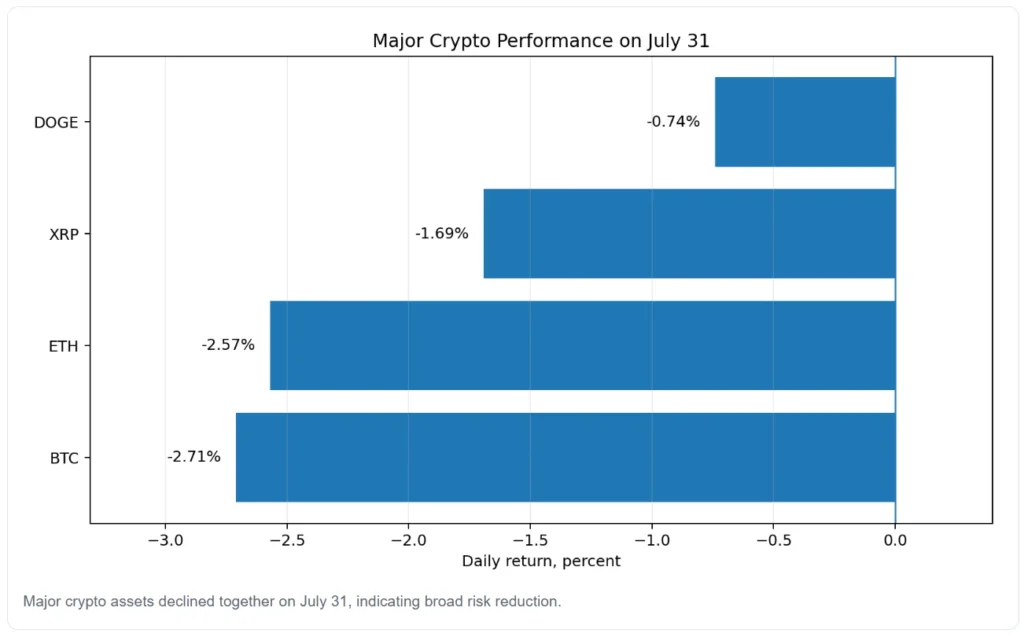
Bitcoin closed July 31 near $63,023, down 2.7% from the previous session.
Ethereum fell 2.6%, while XRP and Dogecoin lost 1.7% and 0.7%.
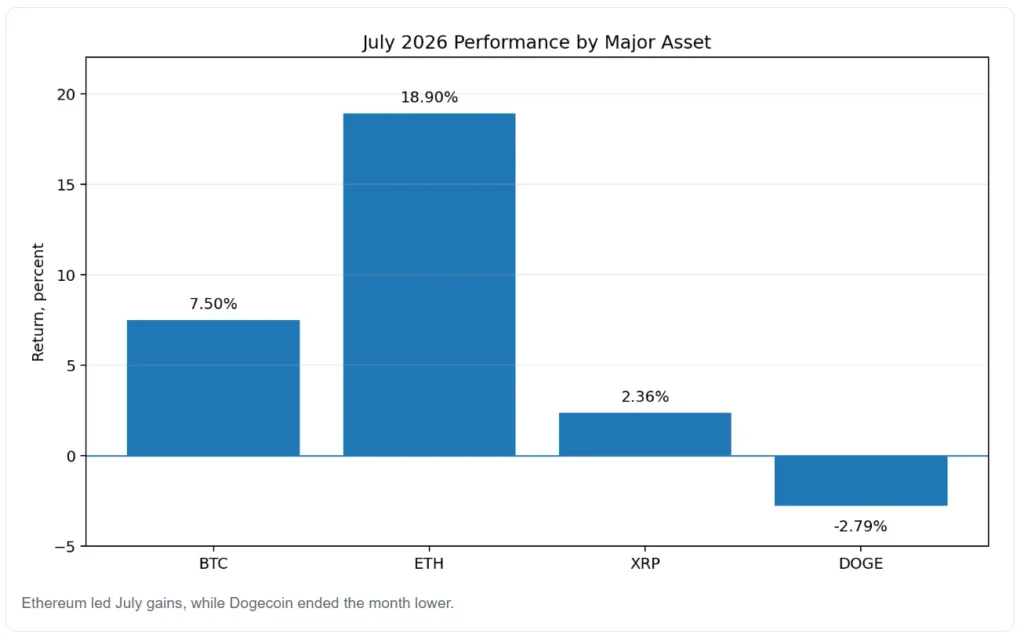
Bitcoin still gained 7.5% during July, showing that broader demand remained intact.
A divided Federal Reserve vote increased the risk of tighter policy and weaker liquidity.
Bitcoin price outlook turns cautious
Bitcoin failed to hold its rebound above $65,000 on Friday. Official exchange data showed a close near $63,023. The session produced a 2.7% daily loss.
Ethereum closed near $1,869, down 2.6%. XRP ended near $1.0646, while Dogecoin settled around $0.0701. The synchronized decline suggested broad risk reduction rather than a token-specific shock.
Altcoins usually carry higher volatility than Bitcoin. Therefore, weaker liquidity can cause larger percentage moves. Ethereum’s stronger July gain also created more room for profit-taking. XRP and Dogecoin followed the same risk pattern, although their daily losses remained smaller.
However, July remained positive for several major assets. Bitcoin gained 7.5% from its July opening level. Ethereum advanced 18.9%, while XRP added 2.4%. Dogecoin slipped 2.8% during the month.
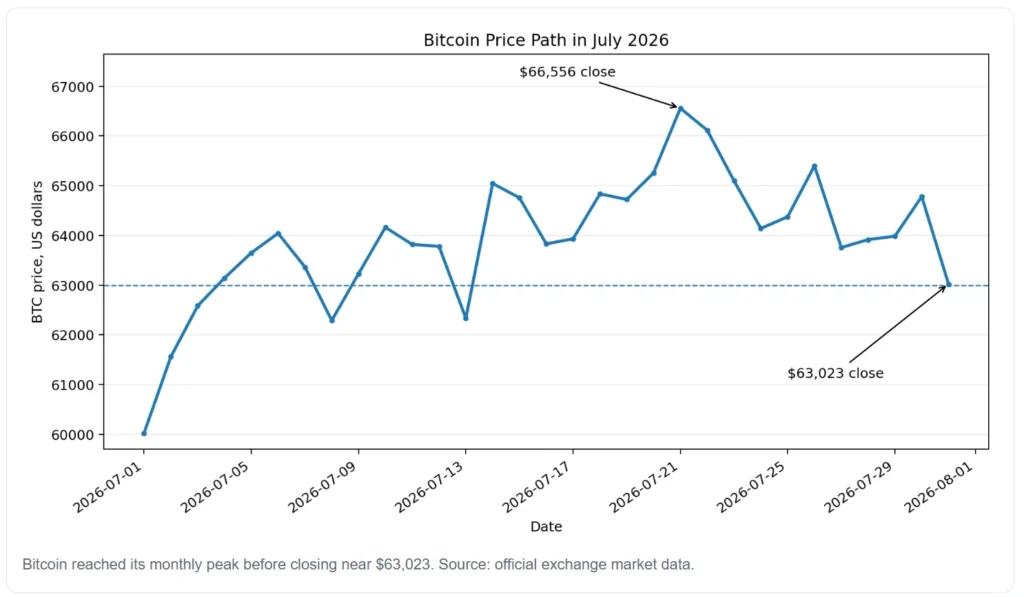
Bitcoin also traded across a wide monthly range. The lowest point reached $57,800, while the monthly high touched $66,956. Therefore, the range measured almost 16%.
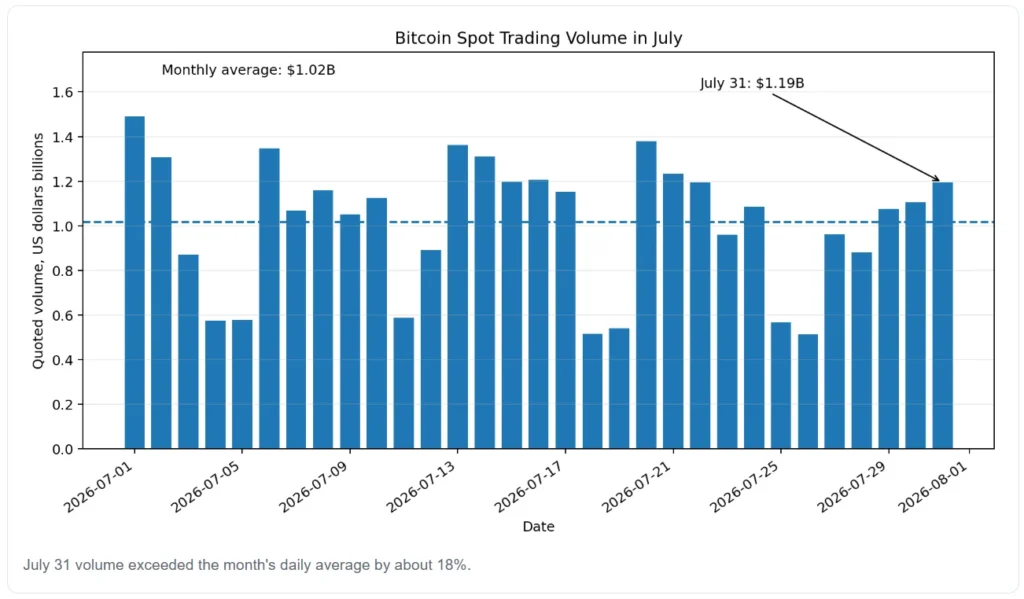
Friday’s trading volume reached about $1.19 billion on the selected spot market. That level exceeded July’s daily average by roughly 18%. Higher volume confirmed stronger selling pressure near month-end.
Hawkish Fed vote changes the tone
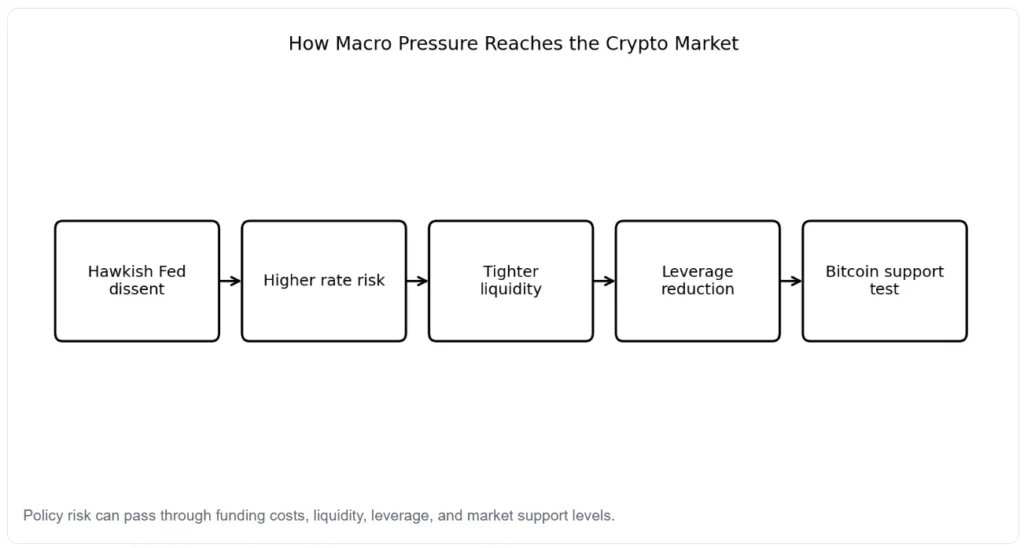
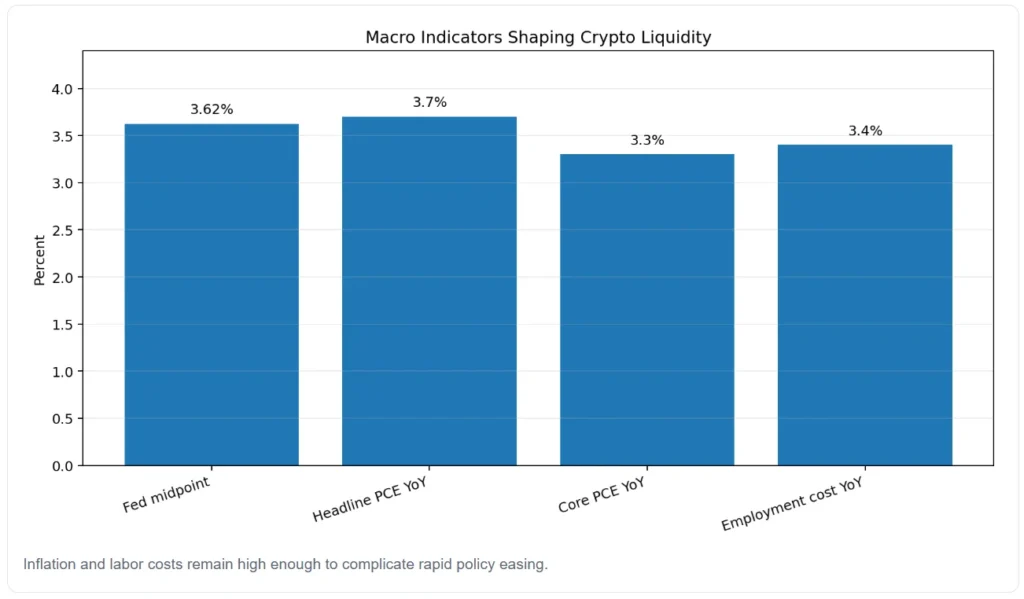
The Federal Reserve kept its policy range at 3.50% to 3.75% on July 29. However, the decision passed by only nine votes to three.
Three officials preferred a quarter-point increase. That dissent delivered a clearer hawkish signal than a routine hold. It also challenged hopes for near-term monetary easing.
Crypto markets remain sensitive to dollar liquidity and real yields. Higher policy expectations can lift funding costs. They can also reduce demand for leveraged positions.
Bitcoin fell almost 6% from July’s peak by the monthly close. The timing suggests macro policy became an important catalyst. Still, technical selling also amplified the decline.
Inflation data sends mixed signals
The latest spending report offered both relief and caution. The headline PCE price index fell 0.1% in June. Core PCE increased only 0.1% during the month.
Yet annual inflation remained high. Headline PCE stood at 3.7%, while core PCE reached 3.3%. Both rates remained above the Federal Reserve’s 2% goal.
Labor costs also stayed firm. The Employment Cost Index rose 0.9% during the second quarter. Total compensation increased 3.4% over twelve months.
Private wages increased 3.1% annually. However, inflation-adjusted private wages fell 0.4%. This mix creates a difficult policy balance.
The data weakens the case for rapid rate cuts. Consequently, speculative assets may face tighter liquidity for longer.
Derivatives show crowded positioning
CFTC data showed 20,527 open Bitcoin futures contracts on July 21. Open interest increased by 1,142 contracts within one week.
Non-commercial traders held 16,402 long contracts and 13,348 short contracts. Both sides expanded, which signals growing conviction and rising leverage.
Net speculative positioning remained positive by 3,054 contracts. However, larger gross exposure can increase liquidation risk during sudden price moves.
This structure helps explain Friday’s fast decline. When support breaks, leveraged traders often reduce exposure together. Spot selling can then reinforce futures pressure.
Technical levels now matter
Bitcoin closed below its July peak by 5.9%. It also ended below the $64,000 area, which had acted as short-term support.
The next important zone sits between $62,000 and $63,000. A stable base there could preserve July’s broader advance.
However, a decisive break may expose the $60,000 region. That level carries psychological importance and sits near recent consolidation.
On the upside, Bitcoin must reclaim $65,000 first. A move above $66,956 would restore stronger momentum.
What traders should watch next
The market now faces three linked tests. First, traders will assess whether inflation continues to cool. Second, they will watch Federal Reserve communication.
Finally, positioning must reset without deeper forced selling. Lower leverage could create a healthier base for August.
Bitcoin’s July gain remains intact. Nevertheless, Friday showed that macro policy still controls short-term risk appetite.




