


July 04, 2026 – Bitcoin’s latest on-chain signal looks uncomfortable. More coins now sit at a loss than in profit. That shift often appears near painful cycle lows. However, it does not guarantee an immediate rebound.
In Summary
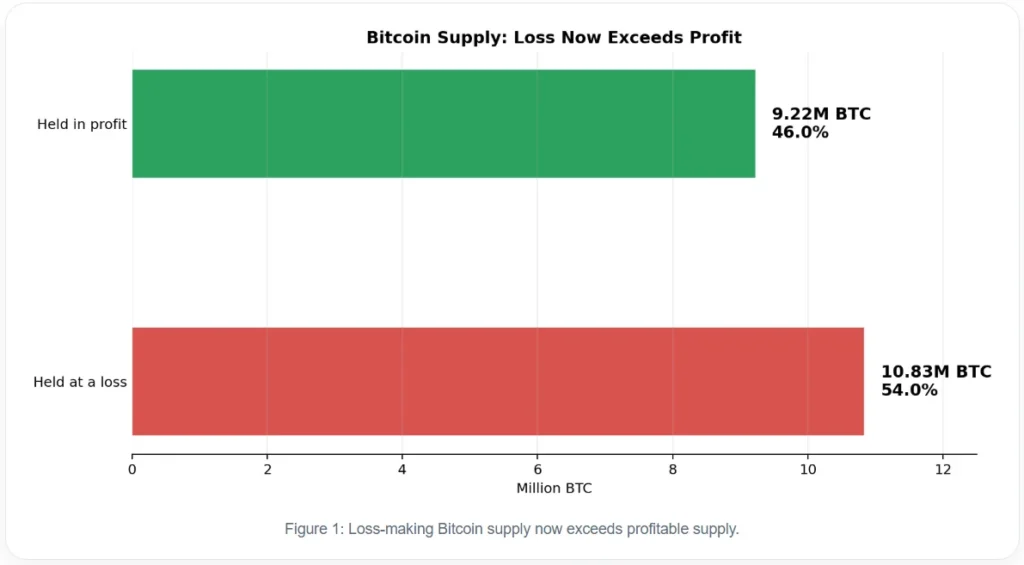
About 10.83 million BTC now sit underwater, against 9.22 million BTC in profit.
Loss-making supply now holds a slight majority of measured Bitcoin supply.
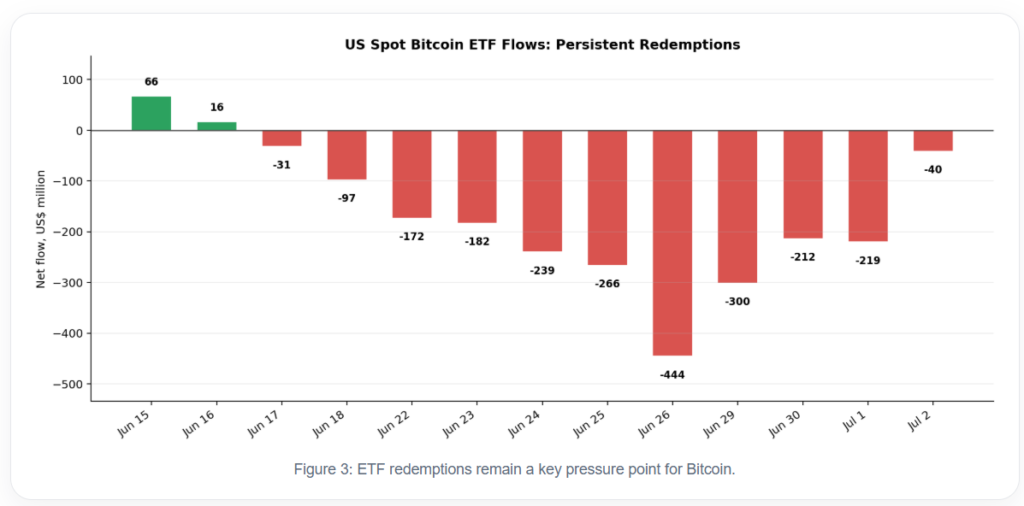
ETF redemptions show institutions remain defensive, despite long-term holder accumulation.
Bitcoin needs stronger spot demand before this signal becomes a durable bottom.
Why the Bitcoin loss signal matters
The Bitcoin loss signal has moved into rare territory. Roughly 10.83 million BTC were bought above the latest market price. Only 9.22 million BTC remain in profit, according to recent on-chain profitability data.
That means underwater supply now exceeds profitable supply. This is a psychological threshold. It shows that the average market participant feels pressure.
Still, the signal needs context. In previous cycles, similar crossovers appeared near stress points. Yet markets are often based on them for months. Therefore, investors should treat this as a warning and an opportunity signal.
Price has reset, but not fully repaired
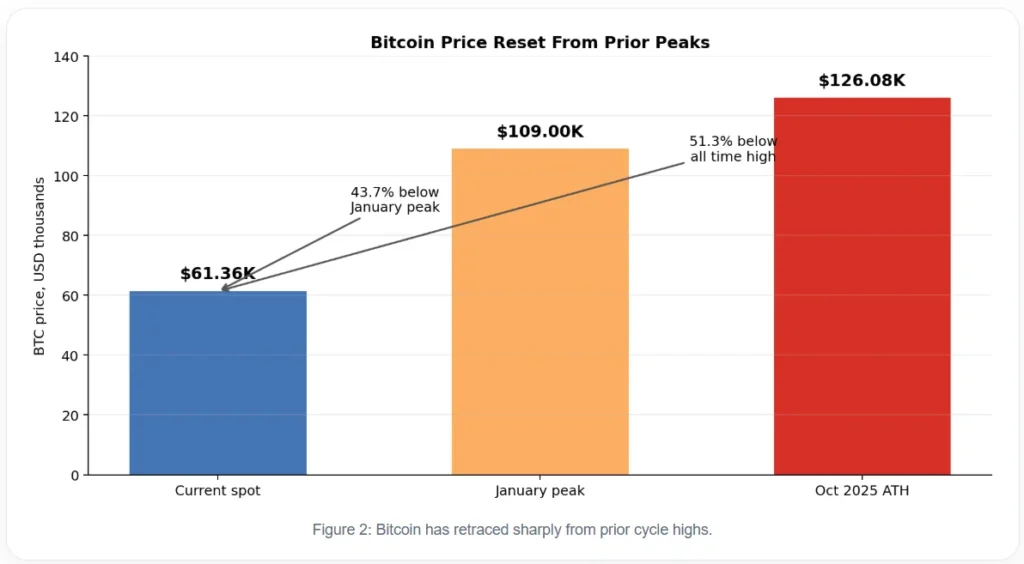
Bitcoin traded near the low $60,000 area on July 3. That level remains far below its prior highs. Market price data places Bitcoin around 51% below its October 2025 all-time high.
The drawdown matters because price recovery now faces heavy overhead supply. Many holders may sell near breakeven. As a result, rallies can fade before momentum returns.
However, a deep drawdown also changes ownership. Coins often move from short-term buyers to patient holders. That transfer can support a future base.
ETF flows still create the main drag
The biggest weakness sits outside the blockchain. US spot Bitcoin ETFs have seen repeated redemptions. Daily ETF flow data shows multiple negative sessions through late June and early July.
That matters because ETFs shaped the last major demand wave. When those vehicles lose money, spot demand loses force. This creates a gap between on-chain accumulation and institutional caution.
Long-term holders are buying again. Smaller wallets and 100 to 1,000 BTC cohorts also show stronger accumulation. Nevertheless, ETF stabilization may be the cleaner confirmation signal.
Macro pressure has eased, not disappeared
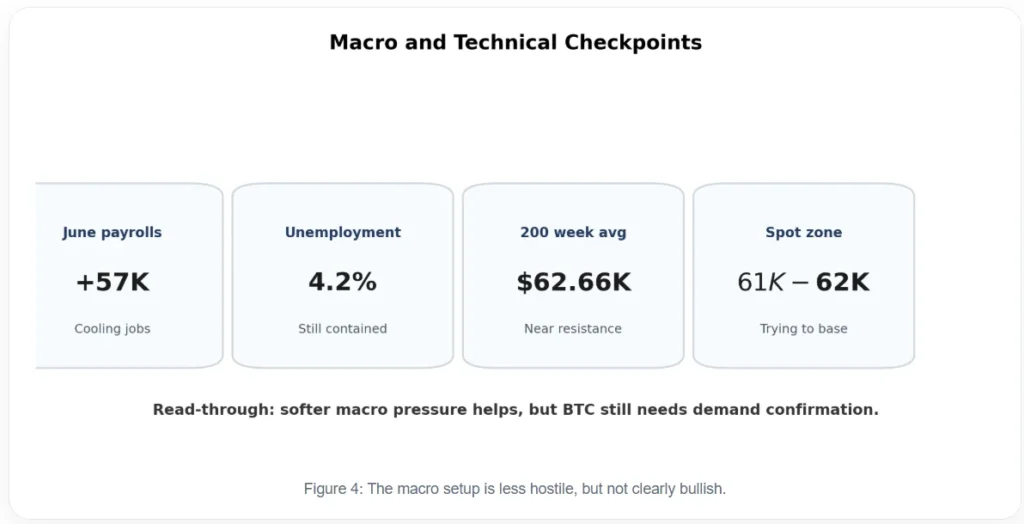
The macro backdrop now looks mixed. The US economy added only 57,000 jobs in June. The unemployment rate stood at 4.2%.
Softer jobs data can help risk assets. It reduces pressure for tighter financial conditions. However, inflation concerns and rate expectations still matter for Bitcoin.
Traders also track Fed Funds futures probabilities for rate expectations. If rate risk falls, liquidity-sensitive assets may recover. If rate risk returns, Bitcoin may retest lower support.
What would confirm a bottom?
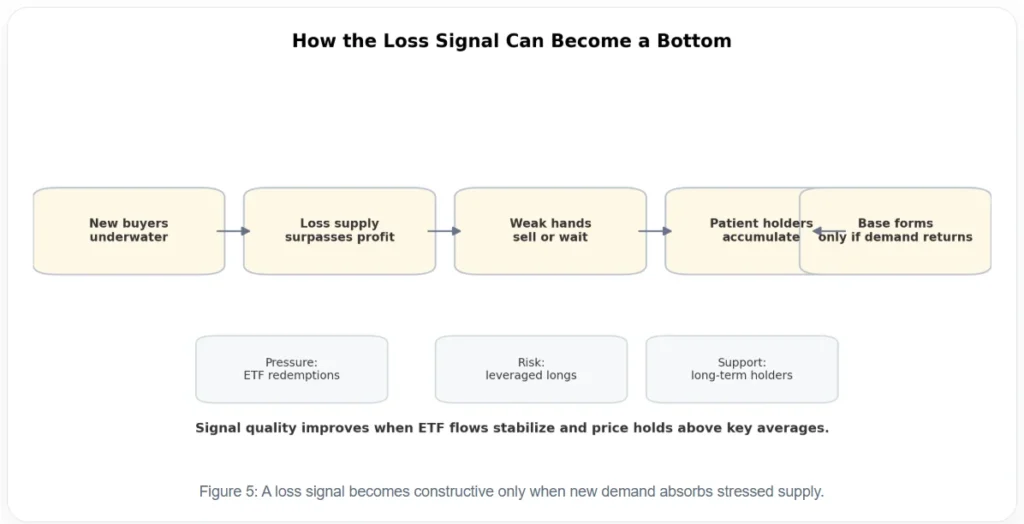
A bottom needs more than pain. It needs absorption. First, Bitcoin must hold the $60,000 area with lower realized selling. Second, ETF flows should stop bleeding. Third, price should reclaim key moving averages.
The 200-week average near $62,660 is important. A decisive move above it would improve sentiment. More importantly, it would show buyers can absorb breakeven selling.
Options markets also matter. Elevated put demand indicates investors are still buying downside protection. That can limit panic if hedging becomes crowded. Yet it can also reflect an unresolved fear.
Risk case investors should watch
The bearish case is simple. If Bitcoin loses $60,000 again, underwater holders may feel fresh pressure. Leveraged long positions could then unwind quickly. That would turn a slow correction into another volatility spike.
The bullish case also has a clear path. Patient holders are already absorbing coins. If ETFs turn positive, that demand could meet thinner selling. In that case, the loss signal may become an early cycle-low marker.
So, timing matters. The signal is useful, but confirmation matters more than the headline number.
Market outlook
The Bitcoin loss signal is powerful because it measures investor pain directly. It does not rely only on price. Instead, it compares market value with the holder’s cost basis.
That gives the signal real analytical value. It shows stress has moved from charts into portfolios. However, it also warns that trapped supply may cap rallies.
For now, Bitcoin appears to be shifting from distribution toward early accumulation. That is constructive, but still fragile. A stronger view needs confirmation from ETF inflows, spot buying, and a cleaner macro backdrop.
Therefore, the near-term message is balanced. Bitcoin may be forming a base. Yet the market has not proved that the base can carry a sustainable uptrend.