

June 22, 2026 – Bitcoin held near $66,000 through Japan’s biggest rate move since 1995. The harder liquidity test arrived a day later, from Washington.
In Summary
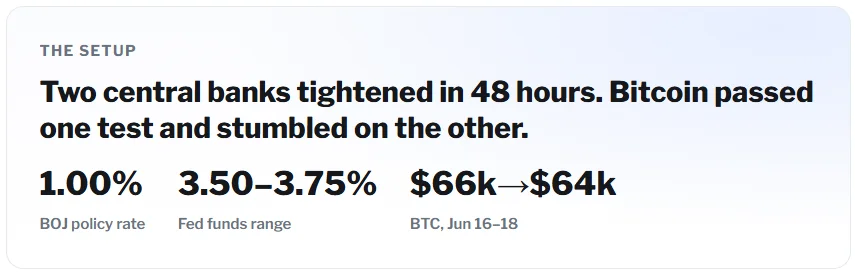
The Bank of Japan raised its benchmark rate to 1%, its highest level since 1995.
Bitcoin held near $66,000 after the hike, breaking a long run of sharp selloffs.
The Federal Reserve then turned hawkish, and Bitcoin slid toward $64,000 within two days.
Japan’s gradual exit from cheap money continues to reshape global crypto liquidity.
A historic hike that crypto barely noticed
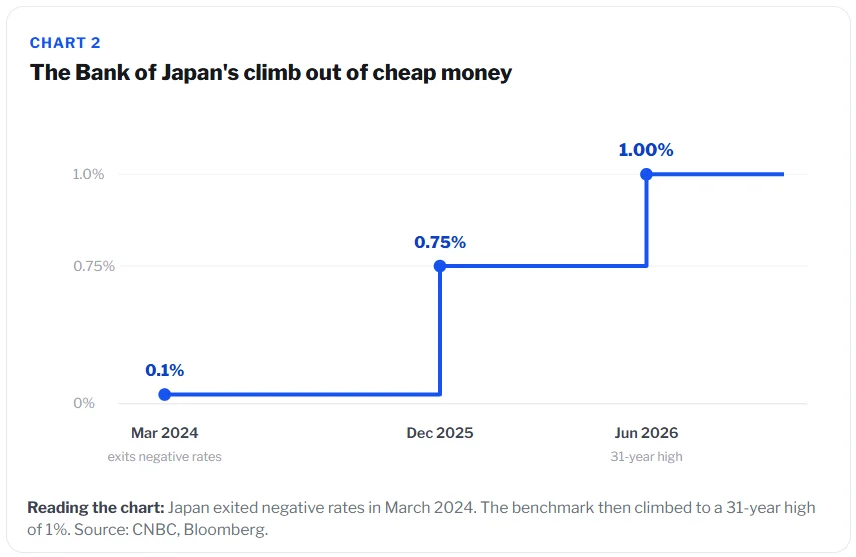
The Bank of Japan raised its benchmark interest rate to 1% on June 16. The level marks the highest since September 1995. Moreover, it pushes Japan deeper into a slow normalization campaign. For three decades, the country leaned on near-free money. This increase was the fourth since March 2024. The board approved it in a 7-1 vote. Governor Kazuo Ueda missed the meeting while recovering in hospital.
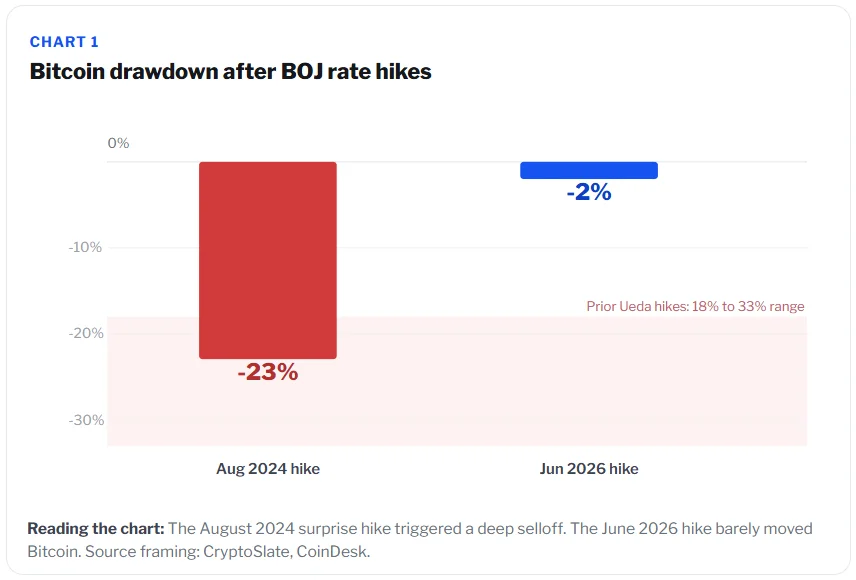
History pointed toward trouble for crypto. Every Ueda hike since March 2024 sparked a Bitcoin drawdown of 18% to 33%. The August 2024 surprise move hit hardest. It drove the price from about $64,000 to $49,000 within 48 hours. That crash erased roughly $600 billion in crypto value.
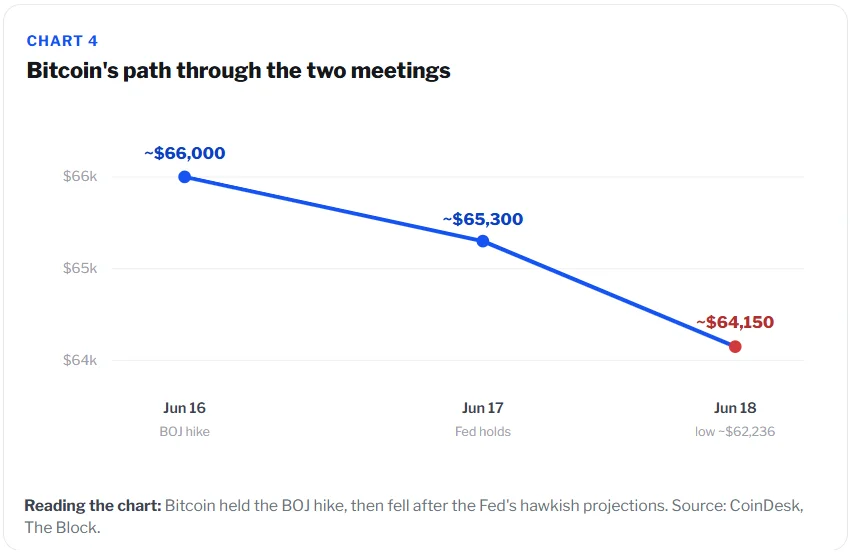
This time, the familiar pattern broke. Bitcoin dipped briefly during the Asian session. However, prices quickly recovered to trade near $66,000. Bitcoin returned close to where it sat before the decision.
Why a Tokyo rate call moves crypto worldwide
Japanese policy reaches Bitcoin through the yen carry trade. For years, investors borrowed yen at near-zero rates. Then they swapped that cash into dollars or higher-yielding assets. Finally, they pocketed the spread.
That borrowed money flowed into stocks, emerging-market debt, and crypto. Meanwhile, the same leveraged funds often held long positions in Bitcoin. So a higher Japanese rate threatens the entire structure. As borrowing costs climb, the yen tends to strengthen. Consequently, funds trim exposure across many assets at once.
Bitcoin usually feels like selling first. It trades around the clock inside leveraged books. Therefore, traders dump it fast to raise cash. The August 2024 cascade proved the danger, with over $1 billion in liquidations.
Positioning raised the stakes this time too. Speculative yen shorts had climbed to about 115,000 contracts. That total was the highest since November 2017. A sudden yen rally could have forced another painful unwind.
The carry pool has shrunk, though. Bank for International Settlements data showed yen foreign-currency credit fell 4.9% in 2025. A smaller carry complex softens the blow from any forced exit. That shift partly explains Bitcoin’s calmer response.
How the BOJ softened the shock
One detail in the statement calmed markets. Alongside the hike, the BOJ paused its bond-buying taper. Furthermore, it pledged to buy about 2 trillion yen in government bonds each month starting in April 2027. Investors read the move as a cap on long-term yields.
Long-dated Japanese yields drive much of the global leverage stress. Capping them blunted an otherwise hawkish decision. In addition, traders had already priced in the hike as near certain. Prediction markets put the odds around 97% beforehand. A cooling US-Iran conflict also pulled energy risk off the table.
Energy still shaped the call. Japan’s producer prices jumped 6.3% year-on-year in May. Yet headline inflation held at 1.4% in April, below the 2% target. The yen had drifted back toward 160 per dollar. As a result, policymakers feared imported inflation would spread into everyday goods. The Nikkei 225 rose after the vote, while the currency barely moved.
Washington delivered the harder test
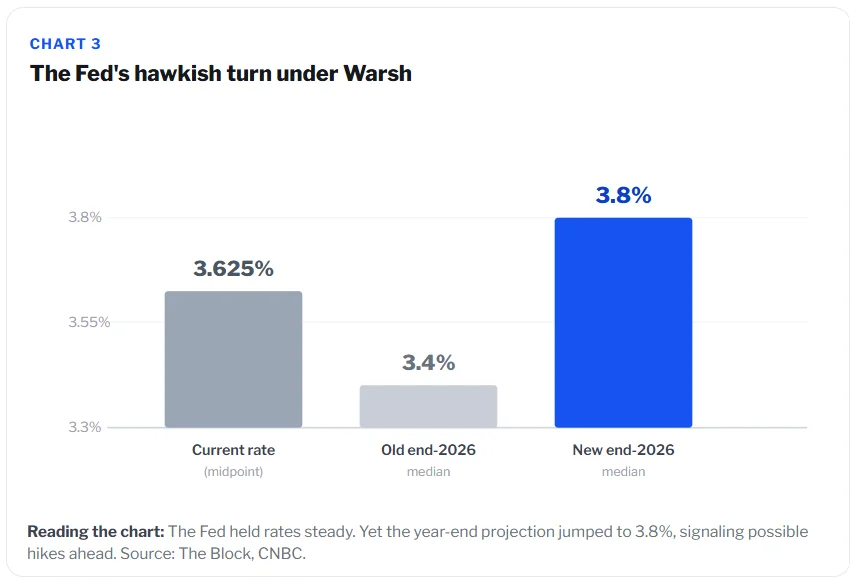
The real pressure landed one day later. On June 17, the Federal Reserve held its rate at 3.5% to 3.75%. Kevin Warsh chaired his first meeting as the new chair. Still, the decision itself shocked nobody.
The projections changed everything. Warsh stripped the easing bias from the statement. Moreover, the median year-end forecast climbed to 3.8% from 3.4%. Nine of 18 officials now expect at least one 2026 hike. Policymakers also lifted the PCE inflation forecast to 3.6%.
Markets price the expected path of rates, not just today’s level. For a year, crypto had leaned on hopes of 2026 cuts. The hawkish reversal erased that easing bet overnight. So assets priced for cheaper money repriced lower. Rising real yields also make non-yielding Bitcoin less appealing.
Crypto treated that shift as the bigger threat. Bitcoin slid toward $64,000 by June 18. Prices even touched an intraday low near $62,236. Spot Bitcoin and Ether ETFs shed a combined $111 million on decision day. A signed US-Iran peace deal lifted equities, yet crypto still dropped.
A liquidity map with two anchors now
The carry-trade stress test passed cleanly. However, the tightening it warned about arrived from across the Pacific. Japan’s weight in crypto rests on funding and regulation. The country runs about 16 licensed exchanges, including bitFlyer and Coincheck. IMARC valued that exchange market at nearly $3.66 billion in 2025.
Tokyo keeps tightening its rulebook as well. On June 11, Japan’s lower house passed a bill to treat digital assets more like securities. Analysts at IMARC expect the exchange market to reach about $28 billion by 2034. That target implies annual growth above 25%.
One structural signal also supports bulls. Research firm K33 noted a record 79% of Bitcoin supply now sits with long-term holders. Such tight holding can cushion sharp macro shocks. Even so, thin order books leave smaller tokens more exposed.
The bigger risk is cumulative, not sudden. A single 1% hike leaves Bitcoin standing. Yet a string of hikes could drain the cheap-money pool. Rising Japanese yields can also pull capital back home. Consequently, global investors may rethink their bond allocations.
Traders now track two liquidity gauges instead of one. Japan sits beside the Fed on every macro screen. Both central banks continue to steer away from easy money. Therefore, each step quietly redraws the map Bitcoin trades inside.




